
Spider wattle faces extinction from altered fire frequency
A single shift in fire management
The spidery wattle (Acacia araneosa) faces extinction because one key environmental factor has changed. This rare Australian plant relies on a specific fire frequency to trigger seed germination and clear competing vegetation. [1] Without the right interval between bushfires, its seeds cannot break dormancy and new plants cannot establish. The entire life cycle of this species depends on a single parameter: the timing of fire.
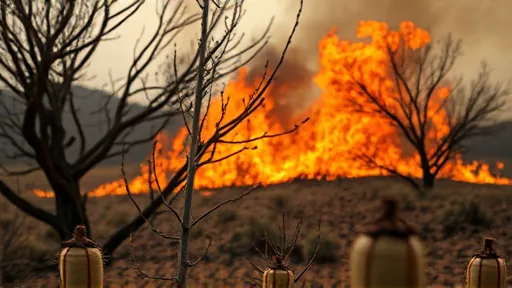
Fire management practices in South Australia have altered the natural burn patterns that once sustained the wattle. Controlled burns and fire suppression have disrupted the ecological rhythm the plant evolved with over millennia. The result is a growing gap between the fire regime the wattle needs and the fire regime it now experiences. This mismatch is pushing the species toward the brink.
A century of botanical mystery
Botanists formally described Acacia araneosa in the early twentieth century, naming it for its spidery, leaflike phyllodes — the flattened leaf stems that perform photosynthesis. The plant was named for its spidery, leaflike phyllodes — the flattened leaf stems that perform photosynthesis — and it shares the same iconic golden flowers as Australia’s floral emblem, the golden wattle (Acacia pycnantha). For decades, researchers observed its limited distribution but could not explain why it remained so rare.
The question of what controlled the wattle’s survival remained open for nearly a hundred years. Scientists noted that the species occurred only in a small area of South Australia, but the underlying mechanism stayed unclear. Only recently have studies pinpointed fire frequency as the critical factor. [1] This long uncertainty highlights how slowly ecological knowledge accumulates for rare species.
Conservation must shift from passive to active

The spidery wattle is a national treasure on the verge of disappearing. The plant’s dependence on a narrow fire window means that current conservation strategies must be redesigned. Simply protecting existing habitat is not enough; active fire management is required to mimic the natural burn intervals the wattle needs. This finding shifts the focus from passive preservation to dynamic intervention.
Yet the research leaves crucial questions unanswered. Scientists still do not know the exact fire interval that maximizes seed germination and seedling survival. They also lack data on how climate change will alter future fire seasons in the wattle’s range. Without these details, conservationists cannot design precise fire management plans. The species remains at risk until these gaps are filled.