What the Peeling Knife Was Really Removing
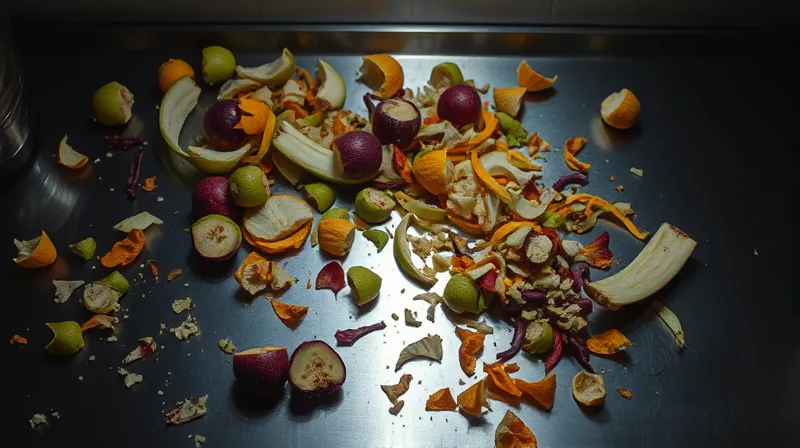
For generations, the routine in home kitchens and catering halls has followed the same choreography: wash the produce, cut away the skin, scoop out the seeds, trim the stalks, and send the flesh to the pan. The discarded parts went into the bin without a second look. The assumption underneath that habit was simple and rarely questioned — the good stuff, the part worth eating, is the soft interior. The peel and the core were treated as packaging, not food.
Rachel Gibson at King’s College London and her colleagues put that assumption on a scale. [1] They measured the fibre content of twelve fruits and vegetables, including butternut squash, kiwi fruit, watermelon, broccoli and bell pepper. For each one, they analysed two samples: the parts people normally eat, and the parts that usually go to waste.
In ten of the twelve produce types, the normally discarded components held more fibre than the commonly consumed parts. Butternut squash seeds and skin carried 9.25 grams of fibre per 100 grams, against 2 grams per 100 grams of squash flesh. The gap is not marginal: the discarded parts carried more than four times the fibre of the flesh.
Pineapple tells the same story in sharper numbers. The skin and core of a pineapple contain 450 per cent more fibre than the flesh. A fruit bought for its sweet interior gives away its fibre-richest parts at the cutting board. “We’ve really got to shift our purchasing habits to buy whole fruits and vegetables, and then use all of the fruits and vegetables in dishes,” Gibson says. [1] The finding is a correction of an inherited habit, and it needs no supplement, no fortification and no new crop.
Tough Textures Are Not a Dead End

The obvious objection is texture. Squash peel, watermelon rind, pineapple core — these are the parts that resist the tooth. A recommendation to eat them raw would be a recommendation people quietly ignore. The researchers address this directly: the tough components can be blended, grated or roasted to make them more palatable.
That matters because the gap between the recommendation and the plate is where most dietary advice dies. The shortfall is large. Just 4 per cent of British adults meet the recommended minimum daily intake of 30 grams of dietary fibre. The average adult consumes around half that per day, roughly 15 grams.
Against that baseline, the peel and core are not a rounding error.
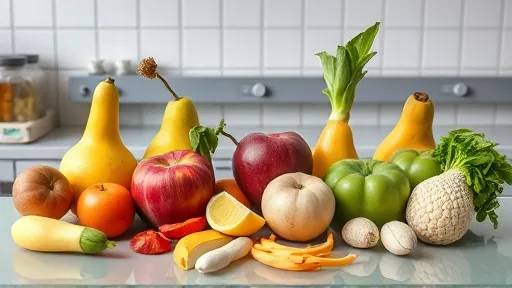
The pilot at King’s College London’s canteen in May 2025 shows what the shift looks like on a menu. Meals included a West African peanut stew made with all of a butternut squash, kale stalks and leek tops, and a watermelon salad featuring pickled watermelon rind. These are ordinary plates, not austerity dishes or laboratory formulations. They are ordinary plates built from the whole plant, and the rind that would have been thrown out became an ingredient with a name.
Gibson frames the larger stake in a single sentence: “Everything we pull out of the ground that we can eat, we should be eating.” [1] The claim covers the harvest as a whole, not any one fruit. What the kitchen discards is a fraction of the food system, and that fraction carries a measurable nutritional signature.
The Carbon Ledger Has a Different Winner
Gibson attaches a second argument to the fibre finding: eating a larger proportion of each harvested fruit and vegetable, she says, improves the resilience of the food system in the face of climate shocks.
Christian Reynolds at City St George’s University of London calls the research an “exciting investigation.” Then he draws the line. The most carbon-intensive food waste is meat and dairy products. Reducing fruit and vegetable waste is therefore “part of the solution, but it’s not the only thing we need to do,” he says.
On fibre, the peel and the core win in ten of the twelve produce types tested. On carbon, the discarded squash skin is not the heaviest item in the bin: Reynolds notes that meat and dairy waste carries the most carbon, so cutting fruit and vegetable waste is part of the solution, not the whole of it.