CAR T cell therapy enables healthy pregnancies in autoimmune patients
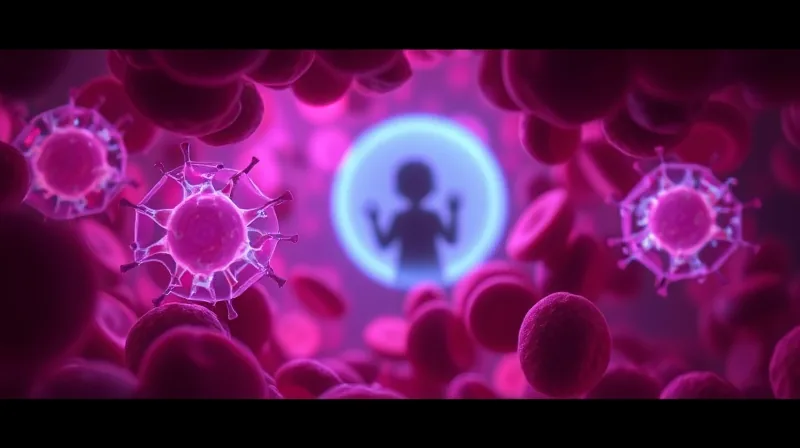
The human immune system is a paradox. It defends the body with remarkable precision, yet in autoimmune diseases, that same defense system turns inward and attacks healthy tissue. For decades, the standard approach was suppression — dampening the entire immune response with drugs that carry their own heavy toll. But a single parameter changed everything. Instead of broadly silencing the immune system, researchers learned to reprogram it. They engineer specific immune cells, called T cells, into targeted destroyers of other immune cells, the B cells, which are the ones mistakenly attacking the body. The bone marrow then replenishes the B cell supply with a fresh generation that lacks the self-sabotage capability. This is CAR T cell therapy, and it has shifted the entire framework from chronic management to potential reset.
The therapy was first pioneered as a cancer treatment, but its application to autoimmune diseases is newer and arguably more profound. Immunologist Georg Schett, of Friedrich-Alexander-Universität Erlangen-Nürnberg in Germany, led a team that in 2022 reported on five patients with lupus who received the therapy and went into remission. [1] That early success hinted at something larger. Now, a new study published July 29 in the New England Journal of Medicine offers the largest snapshot to date of what this reset means for one of life’s most vulnerable processes: pregnancy. [1] The findings are striking. Women who received CAR T cell therapy for autoimmune diseases went on to have healthy pregnancies and healthy newborns.
The stakes could not be higher. Untreated autoimmune diseases pose serious risks to pregnancy, including miscarriage, preterm birth, and low birth weight. The study tracked women from Germany, Belgium, China, Switzerland, France, and the United States who gave birth in 2025 and 2026. [1] All had undergone CAR T cell therapy for autoimmune diseases, largely for lupus, and all were in remission. The women became pregnant naturally, some as soon as one month after treatment, others as long as three and a half years later. The central question was whether pregnancy would trigger a relapse of the autoimmune disease, or whether lingering effects of the therapy might harm the fetus.
Seven Newborns, Zero Relapses
The results defied the fears that shadowed the research. None of the women in the study experienced a reactivation of their autoimmune disease during pregnancy. [1] This is not a small detail — it is the core promise of the therapy made real in the most demanding of biological contexts. Pregnancy alters the immune system profoundly, and for women with lupus, it has historically been a period of heightened risk. That none of these women relapsed speaks to the durability of the remission induced by CAR T cell therapy.
The seven women who gave birth had newborns with normal weights. The babies did not have infections at birth, and their immune protein levels matched those seen in healthy newborns. In further testing of five of the newborns, researchers found the expected immune cell allotments. [1]. These are the markers that pediatricians and immunologists look for when assessing whether a newborn’s immune system is developing properly. The babies were, by every measurable standard, healthy.
Five more women were experiencing regular pregnancies as of late May, according to the researchers. [1] This adds a forward-looking dimension to the study, suggesting that the findings are not a fluke of a small sample but a pattern that may continue to hold. The study is the largest of its kind to date, but it remains small in absolute numbers. [1] Still, for a field that had almost no data on pregnancy after CAR T cell therapy, this is a significant leap forward.
A Parallel Path From Cancer Care
The scarcity of pregnancy data after CAR T cell therapy for cancer is telling. Often, those patients are no longer in their reproductive years, or they are taking other toxic drugs that preclude safe conception. The therapy’s journey from oncology to autoimmune disease treatment opened a door that cancer care could not. Autoimmune patients tend to be younger, and their reproductive years are often still ahead of them. This is why the new study matters beyond its immediate results — it addresses a population that cancer research could not reach.
Schett and his team have been at the forefront of this shift. Their 2022 report on five lupus patients who went into remission laid the groundwork. The new study extends that work across multiple countries and a larger patient group. The international scope — Germany, Belgium, China, Switzerland, France, and the United States — suggests that the approach is replicable across different healthcare systems and patient populations. This is not a single-center anomaly; it is a converging body of evidence.
The treatment regimen itself is not without risk. Patients undergoing CAR T cell therapy face the possibility of infection and other potentially serious side effects. The engineering process is complex and the period immediately following treatment requires careful monitoring. But the trade-off, for these women, was remission that held through pregnancy. The risk profile of the therapy must be weighed against the risks of untreated autoimmune disease, which include not only pregnancy complications but also organ damage over time.
The Limits of Current Measurement
The study’s findings are encouraging, but they are constrained by the tools available to measure long-term outcomes. The researchers tested five of the newborns for immune cell allotments and found them normal. They checked immune protein levels and found them matching healthy newborns. [1]. But these measurements capture a moment in time. What they cannot yet reveal is how these children will fare as they grow. The immune system is not static; it develops and responds to the world over years, not weeks.
The women became pregnant as soon as one month and as long as three and a half years after treatment. This wide range raises questions that current data cannot answer. Does the timing of conception after therapy matter for long-term outcomes? Is there an optimal window? These are questions for future research, with larger cohorts and longer follow-up periods.
The study is a snapshot, not a complete picture. The babies were healthy at birth, but the full arc of their development remains unwritten. The mothers were in remission during pregnancy, but whether that remission holds for years or decades is unknown. The therapy resets the immune system, but how that reset interacts with the hormonal and immunological demands of pregnancy and postpartum life is only beginning to be understood. The next steps require more data, more time, and more precise measurement — the slow, careful work of science building on what these seven healthy newborns have already shown is possible