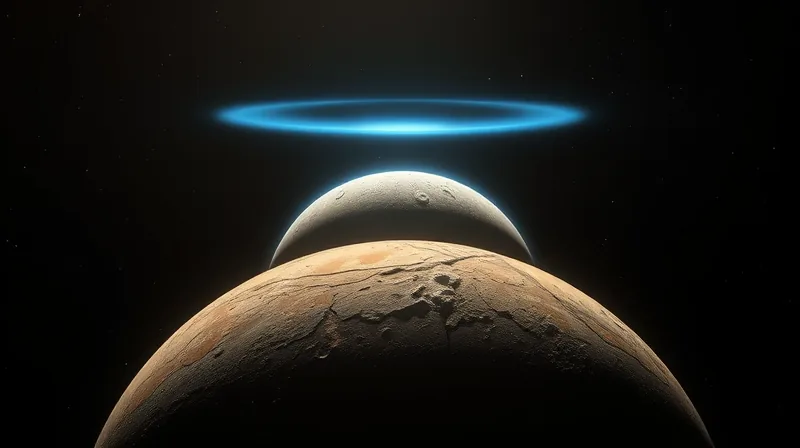
Rocky exoplanet in habitable zone shows atmosphere
A New Method Catches Escaping Helium
For years, astronomers have stared at rocky exoplanets and seen only bare rock or faint, indecipherable haze. The question was not whether such planets could have atmospheres — theory predicted they could — but whether those atmospheres could be detected. The technical challenge has been immense. Most rocky exoplanets are small, their atmospheres thin, and their host stars drown out the faint signals. Previous efforts had detected atmospheres only on gas giants or on larger “sub-Neptune” planets, which are not rocky. Some of those sub-Neptunes appeared to be in the process of losing their atmospheres, becoming bare rocks. But a rocky planet in the habitable zone — the region where liquid water can exist on the surface — had remained elusive. Now, a team led by planetary astronomer Collin Cherubim of the Harvard-Smithsonian Center for Astrophysics in Cambridge, Massachusetts, has used a different approach. [1]
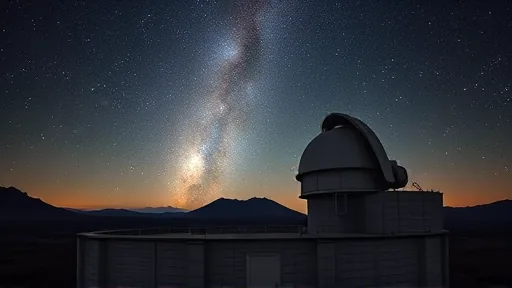
Cherubim and his colleagues did not try to observe the atmosphere directly. Instead, they used an infrared spectrograph mounted on the Magellan Clay telescope at Las Campanas Observatory in Chile. [2] They watched LHS 1140b as it passed in front of its host star — a small red dwarf in the constellation Cetus, about 49 light-years from Earth. Just before this transit began, and for a little while after, the researchers observed the molecular fingerprint of excess helium gas absorbing light from the star. That excess is a sign of helium streaming away from the planet’s atmosphere. The detection of escaping helium indicates that the planet has an atmosphere from which gas is escaping This method had been used before on larger planets, but never on a rocky world in the habitable zone.
The data were captured in 2024. The team was able to rule out other possible explanations for the helium signal, including contamination from Earth’s atmosphere. However, when they observed LHS 1140b again in 2025, the helium signal was absent. Cherubim described that as a shock. It caused him and others to re-analyze the initial findings. Every false positive they could think of, they have confidently ruled out. The variability of the signal itself is interesting — it shows how the exoplanet’s atmosphere reacts to the high extreme ultraviolet radiation of its host star. The star, a cool, dim M dwarf, is smaller and dimmer than our sun but releases a greater proportion of its energy as ionizing radiation. These stars produce notoriously harsh environments, emitting brutal stellar flares that could strip their planets’ atmospheres away. The open question has been whether rocky exoplanets can even keep their atmospheres around M dwarfs.
Connecting the Laboratory Result to the Real-World Phenomenon
The detection of helium escaping from LHS 1140b is not just a technical achievement. It directly addresses a fundamental question about planetary habitability. For Earth-like life to exist, scientists generally agree that three ingredients are required: an atmosphere, liquid water, and a rocky surface. LHS 1140b now appears to have at least two of those three. The planet has a mass 5.6 times that of Earth and a radius 1.73 times Earth’s size. Those dimensions are consistent with an Earthlike composition shrouded in a gaseous atmosphere, or perhaps a global ocean of water. It orbits far enough from its star that its surface temperature could support liquid water. The star itself is quiet, with few flares, which improves the chances for habitability.
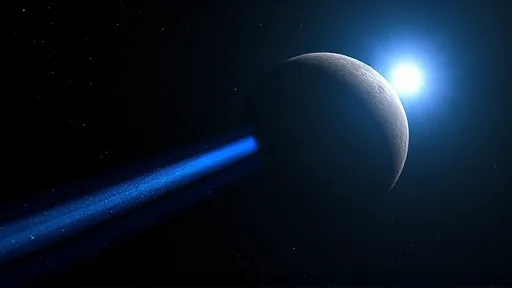
“This is the first time that we’re seeing a rocky, Earth-like planet that could still have an atmosphere,” said Jason Dittmann, a study co-author and assistant professor of astronomy at the University of Florida, in a press release. [3] Dittmann was part of the team that discovered LHS 1140b in 2016. The planet is quite old — more than 3 billion years old — which typically means most of its atmosphere would have already been lost to space. But the detection of helium escaping indicates that the planet may have an atmosphere that is replenishing its gases. The composition of the planet’s inner atmosphere is still unknown. However, Cherubim noted that the planet is similar to Earth in some ways — such as its overall composition and temperature — but differs in others. For example, it is tidally locked, could have far more water, and probably has a very different atmosphere.
The findings mark the first direct identification of an atmospheric species for any rocky exoplanet, whether in a habitable zone or not. “Really, the most exciting thing here is that the planet has an atmosphere at all,” Cherubim said. Previous studies had found signs of helium escaping from larger planets called mini-Neptunes, which may be in the process of losing their atmospheres and becoming bare rocks. LHS 1140b is losing helium too, but at a much lower rate. It is cooler than those mini-Neptunes. Cherubim calculates that the planet has already held on to its atmosphere for more than 3 billion years and could be stable for a billion more. Even then, the planet could maintain an atmosphere made of heavier gases like carbon dioxide or nitrogen. The planet now checks off at least two of the three life-sustaining boxes: an atmosphere and a rocky surface. All that remains is the detection of liquid water.
The Question of Scalability That Remains Open
While the discovery is a major step, it does not yet answer the broader question of how common such atmospheres are. The team searched for an atmosphere around LHS 1140c — another rocky planet orbiting the same star — and found none. This suggests that even within the same planetary system, conditions for retaining an atmosphere can vary dramatically. The host star is an M dwarf, the most common type of star in the galaxy. If most M dwarf planets cannot retain atmospheres, then the number of potentially habitable worlds in the galaxy would be far smaller than optimistic estimates. But this discovery shows that at least one rocky planet in the habitable zone of an M dwarf has managed to keep an atmosphere.
“This is a really exciting discovery because I think it really puts LHS 1140b at the forefront as the best, most promising, exciting laboratory for studying astrobiology and habitability outside of our solar system,” Cherubim said. The planet is relatively nearby, making it accessible for detailed follow-up observations. The James Webb Space Telescope will be used to determine other features of the atmosphere, such as how much helium it contains and what other molecules are present. Another detection would also confirm the atmosphere is really there. Astronomer Laura Kreidberg of the Max Planck Institute for Astronomy in Heidelberg, Germany, said she feels more optimistic now about the chances of habitable environments beyond the solar system. [4]
Jayne Birkby, a professor of astrophysics at the University of Oxford, called the work a fantastic discovery. [5] She noted that while small red dwarf planets are the most common type of star and hence our best chance for studying nearby rocky exoplanets in their habitable zone, they are often very active — stripping away the atmospheres from the planets they host. “That makes this discovery of an atmosphere surrounding LHS 1140b a crucial step towards understanding what it’s like living with a red dwarf,” she said. [5] The variable signal also raises questions about how the exoplanet’s atmosphere reacts to the high radiation of its host star, and how that changes the planet’s surface conditions. This raises questions about whether life could thrive there and what adaptations would be necessary to survive the star’s radiation For now, the study cannot say for sure whether water is present on the exoplanet, and does not verify the exact composition of the planet’s inner atmosphere. The results will need to be replicated in future observations of exoplanets Nevertheless, the findings constitute an “amazing missing piece of the puzzle” as to whether rocky exoplanets can have atmospheres, said Sara Seager, an astrophysicist at the Massachusetts Institute of Technology.
Sources
1. Harvard-Smithsonian Center for Astrophysics