RNA Nanostars Show Why Basic Research Takes Decades
The simplest explanation for a breakthrough is often the wrong one. When mRNA vaccines arrived in record time during the pandemic, it looked like a sudden triumph of funding and urgency. But the real story began decades earlier, in quiet laboratories where RNA molecules were studied with no practical goal in sight. Those researchers were not chasing headlines; they were building a foundation that would only become visible under the pressure of a global crisis.
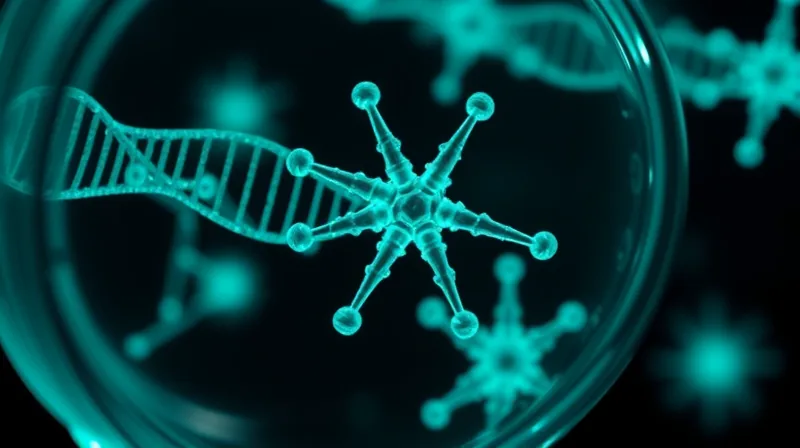
That foundation includes the work of Fabrini and colleagues, who engineered RNA nanostars — tiny star-shaped structures built from RNA that can assemble themselves in precise patterns. These nanostars are not a vaccine themselves, but they represent the kind of fundamental discovery that later becomes a tool. The microscope image of these structures, published in Nature Nanotechnology in 2024, shows intricate geometry that nature itself uses. Understanding how RNA folds, bends, and locks into place is the prerequisite for using it as a delivery vehicle.
The pandemic vaccines succeeded because two separate streams of research finally merged. One stream was RNA biology: learning how to modify messenger RNA so it would not trigger an immediate immune reaction. The other stream was nanoscale delivery: figuring out how to wrap that fragile RNA in lipid nanoparticles so it could survive the journey into human cells. Neither stream alone was enough. Both had been flowing for years, often with no obvious application, funded by grants that required patience rather than promises.
What the rapid vaccine development obscured was the fragility of the pipeline that produced it. The funding, regulatory flexibility, and manufacturing investment that accelerated the vaccines were unprecedented — and temporary. The underlying research ecosystem, however, needs sustained support that does not depend on emergencies. When a crisis hits, the science must already be there, waiting in the form of nanostars and lipid shells and modified nucleotides.
A parallel research group arrived at a similar conclusion through a different path. The Nature Index report on nanoscience and nanotechnology tracks the output of research institutions worldwide, and it points to a field on the cusp of major advances. The report argues that a concerted effort is needed to realize the true potential of nanotechnology. This is not a single laboratory’s plea; it is a field-wide observation based on measurable trends in publications and citations.
The parallel is striking because the two groups started from different questions. The RNA nanostar team asked how to build structures from biological molecules. The Nature Index analysts asked where the field is heading based on what researchers are actually publishing. Both arrived at the same conclusion: the next generation of nanotechnologies requires support today, not after the next emergency reveals the gaps. The infrastructure of discovery is not something you can assemble on demand.
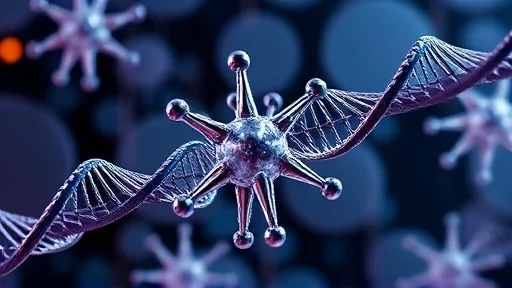
The intersection with another scientific discipline opens new questions. Nanotechnology has always borrowed from chemistry, physics, and biology, but the RNA nanostar work reveals a deeper convergence with structural biology. The same principles that govern how proteins fold into functional shapes now guide the design of synthetic RNA structures. This crossover means that advances in one field can unlock progress in the other — but only if researchers are aware of each other’s work.
That awareness is exactly what sustained basic research makes possible. When scientists can follow a curiosity-driven question without needing to justify its immediate application, they create the shared vocabulary that later disciplines will use. The RNA nanostars and the Nature Index report are both products of that long game. The next breakthrough is already in someone’s laboratory notebook, waiting for the quiet years of support that will turn it into the tool that saves lives a decade from now.
Sources
2. Nature