Personalized mRNA vaccine cuts melanoma recurrence risk in trial
The First Late-Stage Win for Personalized mRNA
For decades, the idea of training a person’s immune system to recognize their own cancer felt like a distant dream. Researchers could describe the goal with precision, but no large-scale study had ever shown it working in a late-stage trial. That changed this week.
A personalized mRNA vaccine for melanoma reduced the risk of the cancer returning in a phase III clinical trial, the companies behind the trial announced. The vaccine relies on the same mRNA technology used to develop COVID-19 shots. It is the first mRNA-based cancer treatment to show success in a late-stage trial.
The study enrolled around 1,100 people with advanced melanoma that had been completely surgically removed. Participants received either the vaccine combined with an immunotherapy drug called pembrolizumab, or they received pembrolizumab alone. The vaccine’s developers, Merck and Moderna, announced that people on the combined treatment survived for longer without recurrence than those who received only pembrolizumab
“It’s incredibly exciting,” says Seth Cheetham, an mRNA scientist at the University of Queensland in Brisbane, Australia. [3] “This is the first really large-scale trial” to release data for a personalized mRNA cancer vaccine. The results put it a step closer to regulatory approval for wider use and could bolster the whole field, he adds.
Marco Gerlinger, a medical oncologist at St Bartholomew’s Hospital in London, says the study provides proof of principle that personalized cancer vaccines work. [4] “This is important as they can be designed against many different cancer types,” adds Gerlinger, who is a principal investigator on a trial for a cancer vaccine being developed by BioNTech in Mainz, Germany. [5]
The vaccine, called intismeran, does not prevent a person from developing cancer in the first place. Rather, it seeks to prevent cancer from recurring after surgical removal. This distinction matters for understanding what the vaccine can and cannot do. .
From One-Size-Fits-All to a Drug Built for Each Patient
The path to this moment began with a fundamental limitation. Until now, personalized cancer treatment often meant identifying specific abnormalities in a person’s cancer, such as the BRAF mutation, a gene alteration that occurs in about 50% of melanomas, and matching them to the right drug. That approach works, but it relies on a menu of existing options.
This study took a different route entirely. An entirely new drug was created for each participant, says Cheetham. That is a shift from choosing among existing treatments to manufacturing something unique for every single patient.
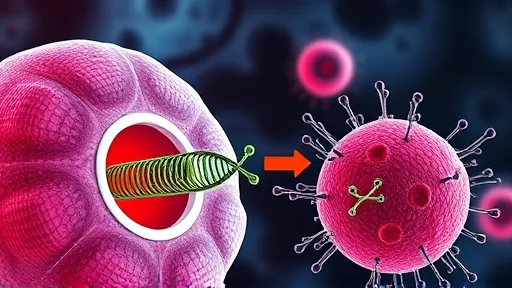
To create intismeran, a sample of a person’s tumour is sequenced to identify mutations that have developed in their cancer cells. These mutations mean that a cancer cell expresses abnormal proteins called neoantigens. Neoantigens act like flags on the cell’s surface that the immune system attacks.
An mRNA vaccine is developed according to each person’s cancer neoantigens. Once injected, it instructs the body to make the neoantigens, priming the body to recognize the threat. The immune system learns to spot cells carrying those flags and to treat them as enemies.
“We had never been able to train an individual patient’s immune system against their own tumour before,” says Adnan Khattak, a medical oncologist and an investigator in the trial at Hollywood Private Hospital in Nedlands, Australia. That sentence captures the novelty of the approach in plain terms.
The technology builds on lessons from the COVID-19 pandemic, when mRNA vaccines were deployed globally at unprecedented speed. The same platform that taught immune systems to recognize a viral spike protein can now teach them to recognize cancer-specific proteins. The difference is that the cancer vaccine is customized for each recipient.
Sam Barrell, the chief executive of medical research charity LifeArc in London, says the study could have implications beyond the field of cancer. It will help to build confidence in more-tailored approaches to treatments for rare conditions that are often driven by unique genetic mutations, she adds. The principle of designing a therapy around an individual’s specific molecular profile extends beyond oncology.
The Long Road Ahead for a Made-to-Order Medicine
The personalized nature of the vaccines is the biggest challenge for widespread use, says Cheetham. After collecting a sample of a person’s cancer, each vaccine can take several months to make. Some people with advanced cancers might not survive long enough, he adds.
This timing problem is not trivial. A patient who has just had surgery for advanced melanoma needs protection against recurrence as soon as possible. Waiting months for a customized vaccine creates a window of vulnerability that researchers must address.
Khattak says that Moderna uses artificial-intelligence tools to identify which neoantigens are most likely to trigger a strong immune response. After the researchers narrow these down experimentally, a limited set are included in the vaccine design for the individual, he adds. The AI helps prioritize which mutations to target when not all of them are equally useful.
Although the latest trial results show that intismeran reduced the risk of recurrence, Khattak says that participants will need to be monitored for many years to determine whether the treatment extends their lifespan. Reduced recurrence does not automatically translate into longer overall survival. That question requires time and continued observation.
The companies said that they plan to present more-detailed data at an upcoming medical conference. The full picture of how well the vaccine works, which subgroups benefit most, and what side effects appear will come with that presentation. For now, the field has what it lacked before: evidence from a large, late-stage trial that personalized mRNA cancer vaccines can work. The next steps will determine whether this approach can move from a landmark result to a standard treatment.
Sources
1. DOI: 10.1038/d41586-026-02612-3
2. Moderna
5. BioNTech