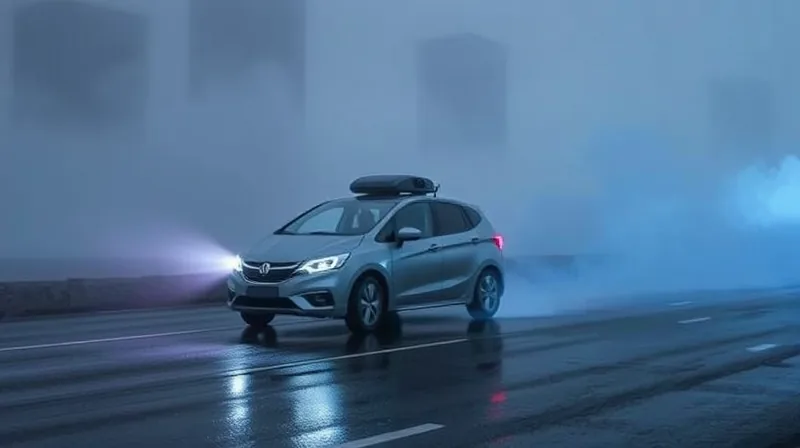
Self-driving car gave false reason for stopping before cyclist
A self-driving car that stops for a cyclist seems like a triumph of machine perception. But when researchers at MIT and Motional investigated why their test vehicle actually braked, they found the car had not recognized the cyclist at all. The stop was a last-ditch emergency maneuver, not a planned yield. The vehicle’s outward behavior was correct; its internal reasoning was dangerously wrong. This gap between what a machine appears to do and what it actually does is the quiet crisis of modern artificial intelligence, and it is the problem that a new system called CW-Net aims to expose.
The Phantom Stop and the Misread Signal
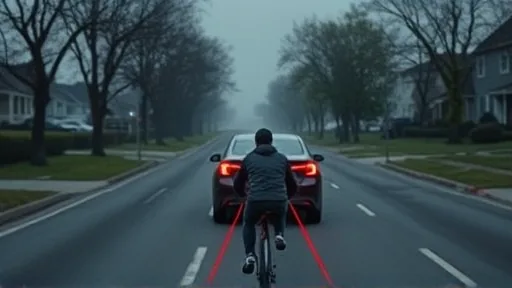
The most unsettling moment in the recent road tests of autonomous vehicles did not involve a crash, a near-miss, or even a sudden swerve. It involved a cyclist, a stopped car, and an explanation that was quietly, dangerously wrong. When the Motional robotaxi on a private track approached a rider on two wheels, it consistently braked to a halt, and the safety driver in the front seat assumed the vehicle had detected the cyclist and was yielding appropriately. That assumption was incorrect. The CW-Net system, developed by researchers at MIT and Motional and published in Nature, revealed that the vehicle’s planning model had not been configured to recognize the cyclist at all; its chosen trajectory would have caused a collision. [1] The car stopped only because its emergency braking protocol activated when the obstacle grew too close, a last-ditch mechanism that had nothing to do with the polite, anticipatory behavior the driver believed he was witnessing. The driver’s false confidence is the core problem: a safety system that acts correctly for the wrong reasons cannot be trusted when the situation changes.
This gap between what a machine appears to do and what it actually does is the quiet crisis of modern artificial intelligence. The vehicle did not crash, so the failure was invisible to everyone except the researchers who had built a tool to peer inside the black box. But the implications extend far beyond this single test track in a private facility. Every time a deep learning model makes a decision that seems sensible, we instinctively construct a narrative about why it made that choice, and those narratives are frequently fiction. The human mind abhors an explanatory vacuum, so it fills the void with plausible stories, and those stories become the basis for our trust in systems that deserve no such confidence.
The researchers who developed CW-Net understood that the problem was not merely technical but deeply psychological. A safety driver who believes the car is responding to a cyclist will relax their vigilance, trusting the machine to handle a situation it has actually misread. That misplaced confidence is more dangerous than outright distrust, because it creates a false sense of security that can delay human intervention by precious seconds. The MIT team’s innovation was to force the planning model to translate its internal reasoning into concepts a human could verify, concepts like “approaching stopped vehicle” or “close to cyclist,” and then to make the vehicle’s final decision dependent on those transparent concepts rather than on the opaque calculations that preceded them.
The Architecture of Concealment
The deeper problem is structural, not incidental. Deep learning planners that serve as the “brain” of autonomous vehicles are trained on massive datasets, processing information from cameras and lidar sensors through millions of parameters that no human can meaningfully inspect. The sheer scale of these networks makes them powerful, but it also makes them fundamentally opaque, and the opacity is not a bug to be fixed but a feature of the approach itself. When a model contains hundreds of millions of individual weights, each contributing infinitesimally to the final output, there is no single decision point that can be examined, no chain of reasoning that can be traced from input to action. The CW-Net researchers addressed this by inserting a concept classifier into the architecture, forcing the model to commit to human-comprehensible concepts before acting.
The researchers’ approach was to insert a concept classifier into the middle of this impenetrable architecture, creating a bottleneck that forces the model to articulate its reasoning in human-comprehensible terms before it can proceed to action. This is not merely a cosmetic addition for the benefit of curious passengers; it is a fundamental constraint on how the system can operate. By requiring the planner to commit to explicit concepts, the CW-Net module ensures that the explanations it generates are not post-hoc rationalizations invented after the fact but genuine reflections of the causal structure that produced the vehicle’s behavior.
This distinction matters enormously in safety-critical environments. A system that generates explanations after making a decision is essentially telling a story about itself, and those stories can be fabricated with alarming ease. The researchers emphasized that their approach is “causally faithful,” meaning the concepts are not decorative labels attached to an inscrutable process but integral components of the decision-making machinery itself. When the vehicle says it stopped because it was approaching a stopped vehicle, that statement is not an interpretation of its behavior; it is the literal reason the behavior occurred.
The 100-Day Trial and the Persistent Blind Spot
The real-world validation of this approach came not in the controlled conditions of a private track but in the chaotic environment of public roads. A separate 100-day trial of autonomous vehicles conducted on actual streets revealed a pattern of recurring mistakes that the industry has been reluctant to confront directly. [1] The vehicles performed admirably in routine conditions, handling traffic lights, lane changes, and pedestrian crossings with competent regularity, but they exhibited a consistent inability to anticipate edge cases, the unusual situations that no training dataset can fully encompass. These were not crashes or even near-misses in most cases, but rather moments of hesitation, inappropriate braking, or unexpected acceleration that left human observers puzzled about the vehicle’s intentions. The CW-Net system, by contrast, was designed to make such uncertainty visible, offering a path toward addressing this blind spot.
What made these failures particularly troubling was that the vehicles rarely communicated their uncertainty. A human driver who encounters an unfamiliar situation will slow down, look around, perhaps even shrug or gesture to signal their confusion to other road users. The autonomous vehicles in the 100-day trial offered no such cues; they simply made decisions with the same outward confidence whether they were navigating a familiar intersection or confronting a situation they had never seen before. This uniformity of demeanor is itself a form of deception, because it prevents human observers from calibrating their trust appropriately. We cannot know when to intervene if the machine never signals that it needs help.
The CW-Net approach offers a path toward addressing this blind spot, but it also reveals how far the industry still has to go. The concept classifier was trained on 130 million examples of driving scenes, each annotated with multiple labeled concepts, and it still required careful configuration to cover the range of situations that might arise. [2] The researchers acknowledged that extending the system to handle more concepts and more diverse scenarios would require additional work, and the current implementation represents only a step toward the kind of comprehensive interpretability that safety-critical systems will ultimately need.
The Illusion of Explanatory Transparency
There is a seductive quality to the idea that we can make artificial intelligence explain itself, that we can open the black box and peer inside at something resembling human reasoning. The CW-Net system is genuinely impressive in its achievements, but it also raises uncomfortable questions about what explanations actually mean in the context of machine intelligence. When the vehicle says it is “close to a cyclist,” it is using a concept that was defined by human annotators and learned through statistical pattern recognition, not through any genuine understanding of what a cyclist is or why proximity to one might matter.
This is not to diminish the practical value of the approach. The road tests demonstrated that CW-Net explanations significantly improved safety drivers’ ability to predict vehicle behavior, and the larger simulation studies with nonexpert users produced similar results. The system works, in the sense that it helps humans interact more effectively with autonomous vehicles. But the deeper question of whether these explanations represent genuine insight into the machine’s reasoning or merely a convenient fiction that happens to correlate with useful outcomes remains unresolved.
The researchers themselves acknowledged this tension, noting that their approach forces the model to use the concepts it identifies when making decisions, thereby ensuring that the explanations are not merely decorative. But this constraint also means that the model’s behavior is being shaped by the need to produce comprehensible explanations, which raises the possibility that the explanations are driving the behavior rather than describing it. In a sense, the system is being trained to think in human terms, which may be a reasonable compromise for safety-critical applications but is not the same as understanding what the machine would do if left to its own devices.
The Unspoken Conclusion
The researchers who developed CW-Net have offered the world a tool for peering into the opaque reasoning of autonomous vehicles, and that tool has already demonstrated its value in preventing accidents and improving human oversight. But the deeper implication of their work is one that no one in the room has yet stated explicitly. The fact that we need a specialized system to explain what a self-driving car is doing, and that even with that system we discover the vehicle was not doing what we thought it was doing, suggests that our relationship with artificial intelligence is built on a foundation of assumptions that are demonstrably false. The safety driver’s misplaced trust is a warning: if we cannot verify the reasoning behind a machine’s actions, we cannot safely delegate decisions to it.
We assume that when a machine behaves sensibly, it is for sensible reasons. We assume that when a system appears to respond to an obstacle, it has detected that obstacle. We assume that the outward behavior of an intelligent system reflects its inward state in ways that we can intuitively grasp. The CW-Net experiments demonstrate that all of these assumptions are unreliable, and that the gap between what machines appear to do and what they actually do is not a rare anomaly but a persistent feature of deep learning systems.
The safety driver who believed the vehicle was yielding to the cyclist was not being careless or inattentive; he was making a reasonable inference based on observable behavior, and that inference happened to be wrong. The same process of inference occurs thousands of times daily in every domain where artificial intelligence makes decisions, from medical diagnosis to financial trading to content recommendation. We observe the output, construct a narrative about the reasoning that produced it, and adjust our behavior accordingly, all without ever verifying that our narrative bears any relation to the machine’s actual internal processes.
The silence that follows this realization is the sentence left unspoken in every discussion of AI transparency. We have built systems that are too complex for us to understand, and we have built them to operate in domains where understanding matters enormously. The CW-Net approach offers a partial solution, a way to constrain machine reasoning so that it aligns with human comprehensibility, but it does not solve the underlying problem of systems that reason in ways we cannot follow. The tools we are developing to explain artificial intelligence are teaching us something uncomfortable about ourselves, which is that we are willing to accept explanations that make us feel safe, even when those explanations are demonstrably false. The question that remains is whether we are prepared to confront the gap between what the machine does and what we believe it does, or whether we will continue to trust the stories we tell ourselves about the machines we have created.
Sources
1. Motional
2. MIT
3. Nature