The Floor That Had to Drop
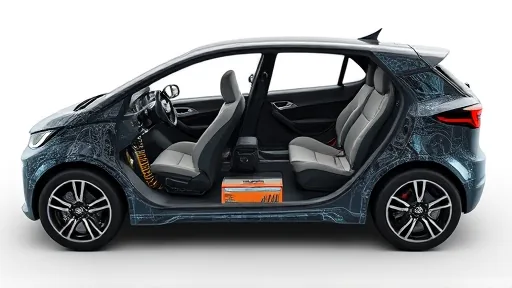
For years, electric cars carried a hidden tax on driving pleasure. Almost every modern EV is built on a skateboard-style battery pack, a flat slab of cells stacked beneath the cabin. That slab raises the seating position by a good 3 inches. [1] In an era of tall SUVs, the lift is often a selling point. In a sports car, it is a problem, because the closer a driver sits to the road, the stronger the sensation of speed.
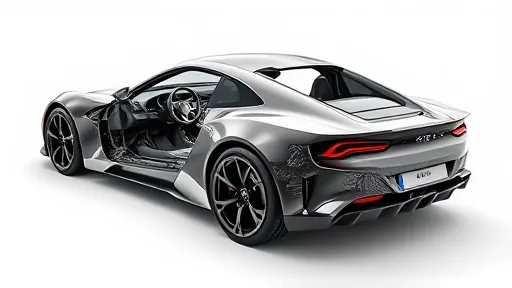
Porsche’s answer for its first all-electric sports car, the 718 Boxster due for full reveal next year, was to move the pack. Engineers placed the battery behind the driver rather than under the seats. A single motor then spins the rear wheels. The result preserves the low, mid-engined feel that made the combustion Boxster beloved while pushing power and performance to a new level.
The layout is not new. Tesla used the same rear-stacked arrangement in its original Roadster back in 2008, partly for cost: the pack let Tesla reuse a Lotus chassis built to hold a mid-mounted internal combustion engine. What was once a workaround has become, for Porsche, a design choice. The low floor is the payoff.
A Wider Car, a Heavier Car, a Sharper One
The rearward pack delivers a 40:60 front-to-rear weight bias, matching the last-generation 718 Boxster — the internal combustion model killed by EU cybersecurity regulations last year. [1] The same platform also underpins Audi’s Concept C. It will say the pack rests on an 800 V architecture like the electric Macan, so charging performance should at least match that SUV’s 270 kW.
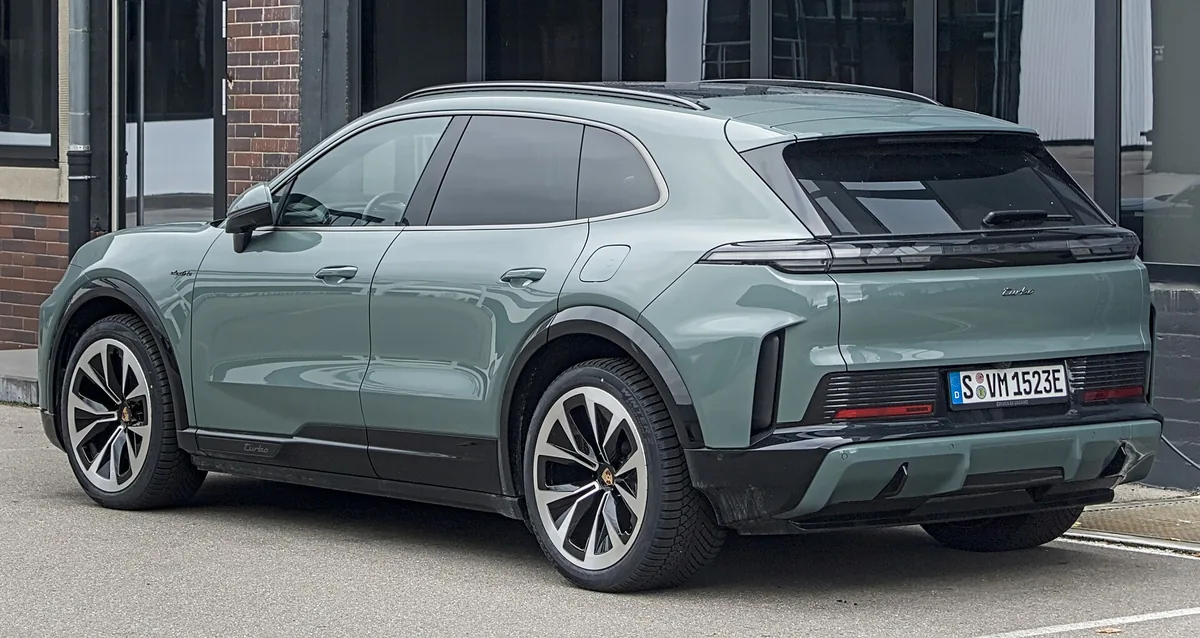
The new Boxster shares a motor with the Macan. That motor puts out about 370 kW in the Macan Turbo. The roadster should sprint to 100 km/h in under 3.0 seconds, making it the quickest Boxster ever. It is also the largest and heaviest: curb weight lands in the region of a current 911, roughly 1,500 to 1,700 kg, a gain of at least a few hundred pounds. Light for an EV, heavy for a roadster. The wheelbase has grown to match.
On the road, the trade-off is legible. The 718 lacks the buzzy eagerness of the latest combustion Boxster or Cayman. It is not less fun. Nearly doubling the old car’s base power will do that. It borrows much of its suspension, steering, and chassis from the current 911, and it turns with a step more aggression than that coupe. The electric powertrain removes the lazy throttle response that turbochargers and modern emission rules impose. It feels sharper even than the latest 911 GTS, which needed an electrically assisted turbocharger plus a battery and electric motor to bring the EV feel to a car driven by internal combustion.
Fake Gears, Real Feedback
To bring combustion charm to an electric car, Porsche added synthesized shifting and engine noise, following Hyundai’s Ioniq 5N. The system samples the 981-generation Boxster GTS, which Porsche’s engineers judged the sweetest-sounding 718. It replicates that car’s 3.4 L flat-six and its seven-speed dual-clutch transmission, shifted by paddles behind the wheel. Porsche calls it E-Shift. [1] Engage launch control and the car puts on a show. It sounds like it is bouncing off a rev limiter, and it actually shakes, pulsing the motor the way the original Harley-Davidson Livewire did. In manual mode the car hits the artificial limiter and stops accelerating until the driver grabs the next gear. The theater has a practical edge: on the tight circuit at the Los Angeles Porsche Experience Center, the pretend engine helped judge corner speed. A blue button on the wheel silences it all.
The roof folds in around 10 seconds and tucks on top of the battery pack, offering true drop-top motoring that is rare among EVs. A frunk and a shallow but wide trunk each hold a carry-on or a couple of backpacks. There is effectively no room behind the seats. In Normal mode the adaptive suspension absorbs highway joints and rough roads. The car reads as a cross-breed between a Boxster and a Carrera — a pairing that will disappoint some purists, though few could name two better parents.
Sources