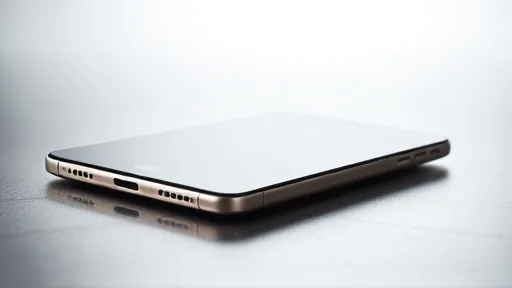
The Slab That Had to Be Rebuilt From Scratch
For years, Motorola’s flagship story was the Edge series — a line the company itself is now leaving behind as middling.” The company’s real excitement lived in the Razr Fold, a tablet-style foldable that costs around $1,900. Now Motorola has decided the plain, non-folding phone deserves a fresh start, and it is calling the result the Signature 27. Think of it as a reset button pressed on an entire product family. The Edge name is gone. The Signature name is new. The price, however, is anything but modest: $1,599.99. [1] That figure is the heart of the story. A traditional slab phone now sits within $300 of the Galaxy Z Fold 8 and Motorola’s own Razr Fold, both listed at $1,900. Apple’s iPhone Duo, a two-screen device, is only $400 more. In other words, the gap between “ordinary phone” and “engineering marvel with a hinge” has narrowed to pocket change at this tier. The Signature 27 is not competing with mid-range handsets. It is competing with folding hardware on price while refusing to fold.
The money buys a body built from metal, ceramic, and glass, with textured polycarbonate on the back, and a chip at the top of Qualcomm’s current range: the Snapdragon 8 Elite Extreme Gen 6. Two Pantone colors are offered: Coal Smoke, a black with a “tactical weave” finish borrowed from automotive design, and Capulet Olive, a green described as textile-inspired.
Memory is 12GB, matching Samsung’s base flagship configuration, and there is no option to upgrade. Storage is a generous 512GB. The phone stays thin across most of its body but swells outward near the camera module — a deliberate bulge, since four image sensors need room to breathe.
Brightness, Battery, and the Numbers That Scale
The display is where the specifications stop sounding normal. The Signature 27 carries a 6.8-inch OLED panel with a 120Hz refresh rate, and it is a tandem OLED — a design that stacks pixel layers to push brightness higher. Motorola claims a peak of 12,000 nits. [1] That is four times the peak of the iPhone 18 Pro Max and, by the company’s account, the highest figure of any smartphone. The trade-off: tandem OLEDs tend to look somewhat uneven at low brightness when displaying solid colors. Nobody has seen this panel in person yet, so whether that flaw shows up remains an open question.
Brightness of that order would normally be a battery nightmare. Motorola’s answer is a 7,000 mAh silicon-carbon cell — the largest of any mainstream smartphone and 1,000 mAh bigger than the Galaxy S26 Ultra’s. The company estimates two days of use per charge. Refilling is quick with the right charger: with a compatible USB-C charger, which is not included, the phone accepts up to 90W. Motorola claims up to 12 hours of usage from 12 minutes of charging. [1] Every figure here is a comparison: nits against Apple, milliamp-hours against Samsung, minutes against hours. The Signature 27 is marketed as a stack of records, not a stack of features.
The same comparative logic extends to software support. The device ships with Android 17 and Motorola’s Hello UI layer, and the company promises seven years of operating system updates — level with Samsung and Google. That commitment matters more as the price climbs, because a $1,600 purchase is a long-term relationship, not a seasonal fling.
The camera count is easy to misread. There are three cameras: a 50MP primary, a 50MP ultrawide, and a 200MP telephoto with 3x optical zoom and up to 100x digital zoom. The fourth sensor is not a camera at all. It is an event-based vision sensor, or EVS, and it powers a feature called Action Shot. The sensor measures changes in light at the level of individual pixels, which makes it suited to tracking things that move. Action Shot switches on automatically when the phone detects heavy motion in the frame, and it can also be triggered by hand. This is a pointed fix aimed at an old weakness: Motorola cameras have long struggled to freeze moving subjects. Whether the EVS closes that gap is a question only hands-on testing can answer.
Two Operating Systems, One Phone, and the Privacy Fork
The most unusual decision in this device is not hardware at all. The Signature 27 is the first Motorola phone covered by the company’s partnership with GrapheneOS, a privacy-focused operating system built on Android that ships without Google apps and without the tracking that accompanies them. Motorola will not preload it. Buyers who want it must install it themselves — unlock the bootloader, flash the software, and carry on, much as with a Pixel. The company says details of that process will arrive at a later date.
For everyone else, the phone arrives as a full Gemini Intelligence device, entitled to Google’s most expansive AI feature list. Motorola names Google’s agentic app control, Create My Widget, Sign-to-Text, and Rambler voice input. Most of those remain limited to Pixel phones today, and they are slated to reach this device “in the coming months.” Motorola runs a parallel set of its own features — Catch me up for notification summaries, Pay Attention for meeting notes — but the Moto AI branding is gone. They now sit under Motorola Qira, an AI platform that also links a Motorola phone to Lenovo computers. The buyer therefore faces an unusual fork: the fullest Google AI stack on one path, a Google-free operating system on the other, and the same piece of glass and metal at the center of both.
The phone goes on sale November 26 through Motorola, Best Buy, and Amazon. Preorders open November 19. No carrier partnerships have been announced, so there will be no subsidized path to soften the sticker.
Sources