
New study challenges unique human birth difficulty
The Hidden Struggle in Primate Birth
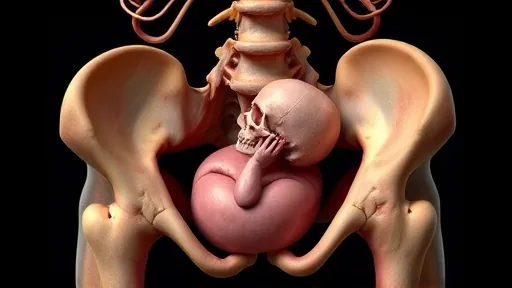
Scientists have long assumed that human childbirth is uniquely difficult among primates. This assumption rested on a simple logic. As humans evolved to walk upright, the pelvis changed shape and became smaller. The birth canal grew oddly twisted. At the same time, the human brain expanded dramatically, meaning a large-headed baby had to squeeze through this narrow, twisted passage. This evolutionary puzzle was named the “obstetrical dilemma.”
New research now challenges this long-held view. A team of scientists has discovered that several other primate species face birth challenges that are equal to, or even greater than, those humans experience. The study compared birth difficulty across multiple primate species. The results show that the obstetrical dilemma is not unique to humans. It is a broader evolutionary problem shared across the primate family tree.
The researchers used a new method to measure birth difficulty. They calculated the ratio between the size of a newborn’s head and the mother’s birth canal opening. This ratio, called the cephalopelvic proportion, reveals how tight the fit is. In humans, this ratio is high. But in some other primates, it is even higher.
A Broader Evolutionary Problem
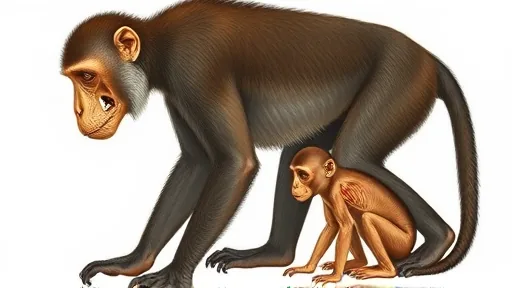
The lead researcher on this study is Dr. Lia Betti, an anthropologist at the University of Kent. Dr. Betti and her team analyzed birth data from 24 primate species. They found that several species of monkeys and apes have cephalopelvic proportions that rival or exceed those of humans. For example, the common marmoset, a small South American monkey, has a proportion that is 30% higher than in humans
This finding has direct implications for evolutionary biology. It suggests that the human birth canal did not evolve solely in response to bipedalism and large brains. Other factors, such as changes in body size and the timing of fetal growth, may play a larger role than previously thought. Dr. Betti’s work provides the first comprehensive comparative framework for understanding primate birth difficulty.
The next step for the research team is to examine how different primate species cope with difficult births. Some species may have evolved specific behaviors or physiological adaptations. Dr. Betti plans to study the birth process in wild populations of these primates. This will help determine whether difficult births are as dangerous in other species as they are in humans.
New Questions About Primate Birth
The study raises new questions about the evolutionary pressures that shaped primate birth. If humans are not uniquely challenged, then why did the human birth canal evolve its particular shape and twist? The answer may lie in the specific demands of human locomotion. Walking on two feet requires a pelvis that is both strong and efficient for movement. This constraint may have shaped the birth canal more than the size of the baby’s head.
Another question concerns the role of social behavior. In humans, difficult births often require assistance from others. This has been linked to the evolution of cooperative breeding and midwifery. The new finding suggests that other primates may also need assistance during birth. Observations of wild primates have already documented cases where females help each other during labor.
The research also challenges the idea that human birth is a uniquely risky event. Maternal and infant mortality during childbirth is high in humans, but this may be due to other factors. Modern human lifestyles, including diet and activity levels, could influence birth outcomes. The study shows that the biological challenge of birth is not unique to our species. Understanding this can help scientists focus on the real drivers of human birth complications.