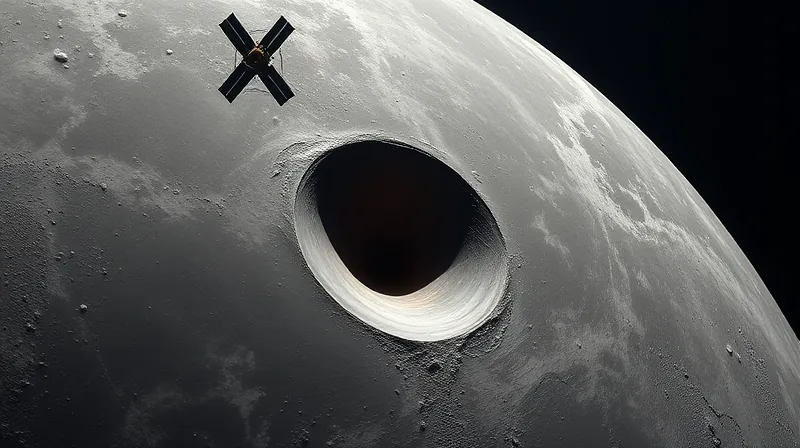
New Moon Crater Detected by Orbiter and Thermal Data
Meta commentary - no external expert source; basis: Nasa.gov (2026-09-23). #MetaScience
Two Watchers, One Impact, Two Ways of Seeing
Two lines of evidence describe the same event on the Moon, and they arrive from opposite directions. One is a camera that keeps returning to the same ground, month after month, and simply notices when the ground has changed. The other reads heat, not shape, and it found a wide cool zone wrapped around a small warm scar. Neither instrument witnessed the crash itself. Together they bracket it in time and in size, which is why this crater now ranks among the best-documented fresh impacts on the lunar surface.
The object that struck the Moon measured roughly 10 to 20 meters across, or 30 to 60 feet — about the length of a humpback whale. It struck between April and May 2024. [1] Nothing on Earth saw the flash, and no telescope recorded the moment of contact. The Moon simply gained a new feature, and humanity learned about it afterward.
The resulting crater carries the name McGetchin, after Thomas McGetchin, a lunar scientist of the Apollo era. It spans the length of two soccer fields placed end to end. A crater of this size is expected only once every 132 years. [1] That number is what makes the find worth attention: a record of such an event cannot be planned for, only caught.
Reading the Moon’s Memory in Pixels and Heat
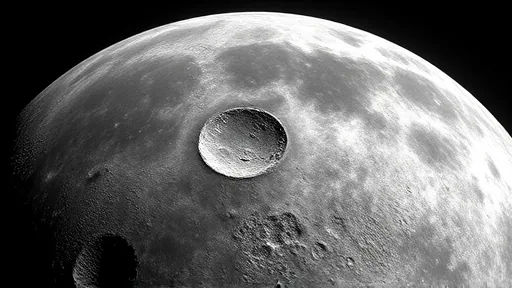
The instrument that caught it is NASA’s Lunar Reconnaissance Orbiter, or LRO. It circles the Moon and photographs the surface on a monthly cycle. That cadence is the whole trick. A camera that passes over the same terrain every month produces a before image and an after image, and the difference between the two is the discovery. A single snapshot can never reveal a new crater; only the repetition can.
The Moon has no weather, no rain, no wind, no flowing water. A fresh scar stays a fresh scar. On Earth, an impact of this scale would be scoured, overgrown, or buried within a human lifetime. On the Moon, the mark persists, and the only thing standing between the event and the record is whether an instrument was pointed at the right place at the right time.
The follow-up observation went beyond visible light. Thermal imaging revealed a large cold spot surrounding the warm crater. When a surface impact occurs, it puffs up the loose lunar sediment, known as regolith, and leaves it less dense than it was before. Looser material holds heat poorly, so the disturbed ground around the crater sheds warmth faster than its surroundings, and a thermal camera registers that as a cold halo.
The halo carries a lesson about scale. The event affected an area much larger than the visible crater itself. A measurement of the bowl alone would underestimate what happened, because the blast, the thrown debris, and the loosened ground all extend the footprint well past the rim.
What the Scar Teaches the Next Generation of Builders
The value of this crater is not only astronomical. It speaks directly to the engineers planning structures, instruments, and crews on the lunar surface. How an impact disturbs the ground over a wide area shapes how surface materials behave, how heat moves through them, and how the Moon’s surface evolves over time. Every future landing site sits on ground shaped by events like this one.
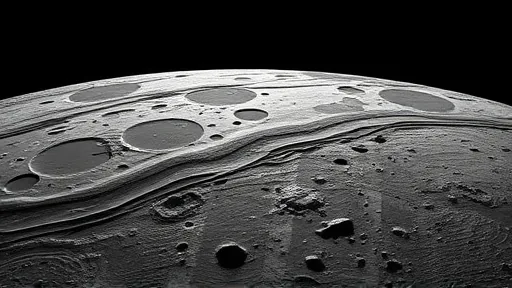
The data also carry a quieter point about Earth. Our atmosphere intercepts and burns up most incoming objects of this size before they reach the ground. The Moon has no such shield. A rock that would have been a bright streak in Earth’s sky instead carved a two-field crater into lunar dust. That contrast is the reason the Moon preserves a record Earth cannot.
The crater has a name, a date range, a measured size, and a documented thermal signature. What it does not yet have is a long observation history, because it is new. That is precisely what makes it useful: the freshest scars are the ones that teach the most about how the Moon’s surface keeps changing.