Reading the Colour of a Dying Reef
For most of the twentieth century, a bleached reef looked like a mystery. Corals turned bone-white after hot spells, then sometimes recovered, and no one could say with confidence whether a given reef was dying or simply stunned. The likely mechanism is thought to be this: corals are animals that house algae inside their tissues, and those algae hand over sugar made from photosynthesis. When warming or polluted water stresses the algae, they can give off damaging reactive compounds such as free radicals, and it is thought that corals temporarily eject their colourful tenants as a form of self-defence. Strip the algae away and the coral is left ghostly white. If the heat persists long enough, the animal starves.
What was once a puzzle piece is now a measuring instrument. The International Union for Conservation of Nature, the body that grades species by extinction risk, has extended that same logic to whole reef systems. Its first global Red List of Coral Reef Ecosystems finds that at least 96 per cent of shallow-water reef ecosystems sit at extremely high risk of collapsing by 2075. [1] The assessment covers 127 tropical and subtropical ecoregions and 188,362 square kilometres of reef.
Mishal Gudka, scientific lead of the assessment, frames the result as a summons rather than a verdict: the risk of coral reef collapse is escalating, but this must be a wake-up call rather than a cause for despair. Marcos Valderrábano, speaking for the IUCN, puts the surprise plainly — every reef ecosystem assessed came out critically endangered, and that uniformity is what startled the assessors. Regions with heavy bleaching and regions that had seemed comparatively calm now land in the same category. A map that once showed scattered trouble spots has become a single colour.
The stakes are not abstract. Shallow reefs occupy about 1 per cent of the ocean yet support roughly 25 per cent of marine species. Up to 1 billion people depend on them for fishing, tourism income, and protection from erosion and storms. When a reef collapses, hard corals give way to algae, rubble and sponges, and the complex community that includes groupers and tiny invertebrates no longer has a home. Grethel Aguilar, director general of the IUCN, calls reefs one of the clearest vital signs of the ocean’s health.
The Old Reassurances No Longer Hold
Earlier work treated coral decline as a set of local problems with local fixes. The new assessment names climate change the single most consistent threat driving reef decline worldwide, and it does so across every region examined. The old picture of pollution here, overfishing there, and warming as one stressor among many no longer fits the data. The warming signal runs through all of it.
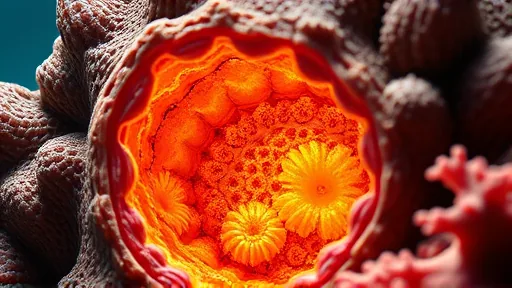
The historical record shows what a collapse actually looks like, and how rarely it has been completed. Only one shallow-water reef ecosystem has collapsed so far: the reefs of the western Galapagos Islands, which lost 95 per cent of their coral — the IUCN’s threshold for ecosystem collapse — after the 1982/83 super El Niño unleashed a marine heatwave. [1] Golden brush corals became white skeletons overgrown by string algae. That event was treated for decades as an outlier, a freak of oceanographic history. It now reads as a preview.
The frequency problem is the heart of it. Four mass bleaching events have struck since that Galapagos collapse, and individual reefs are now bleaching nearly every year because of global warming, according to the US National Oceanic and Atmospheric Administration. [1] Valderrábano notes that a reef system hit by more than three bleaching events within five years has no time to recover, and that each additional event reinforces what he calls a perverse loop.
A parallel line of work sharpens the same conclusion from a different house. Liam Lachs, a researcher at the University of Newcastle in England working at the University of Queensland in Australia, used simulation modelling to test whether coral adaptation can keep pace with ocean warming. It can — but only if the planet stays within the Paris Agreement’s 2.7 degrees Fahrenheit (1.5 degrees Celsius) threshold. Beyond that, Lachs warns of an elevated risk of local extinction for thermally sensitive coral species, and states that adaptation will likely be overwhelmed under moderate or high warming. Peter Mumby, a co-author on that work, adds that fairly healthy corals remain possible, but only with more aggressive emissions reductions and strategic reef management.
James Guest at Newcastle University, UK, supplies the mechanism that turns a shrinking reef into a disappearing one. Corals release eggs and sperm into the water to cross-fertilise. If a population becomes so small that no nearby coral can mate with it, reproductive failure follows, and the species enters what is called an extinction vortex. The remaining animals are alive and alone.
The Next Step the Assessment Names
The assessment does not stop at diagnosis. It shows countries where they need to protect reefs by reducing fishing quotas and pollution. That is the operational instruction: pair emissions cuts with local relief from the pressures that make bleaching lethal. Aguilar’s list is equally concrete — ambitious emissions reductions, stronger protection and restoration efforts, and sustained investment in resilient coastal ecosystems and the communities that depend on them.
Guest’s fieldwork in the Pacific archipelago of Palau offers a measured reason for hope. Corals there have been developing 0.1 degrees Celsius of additional heat tolerance per decade. That is a real gain, and a slow one. Guest is direct about its limits: a really severe heatwave will quite likely outrun the increase in heat tolerance and overwhelm those reefs anyway. Adaptation is a shield, not a wall.
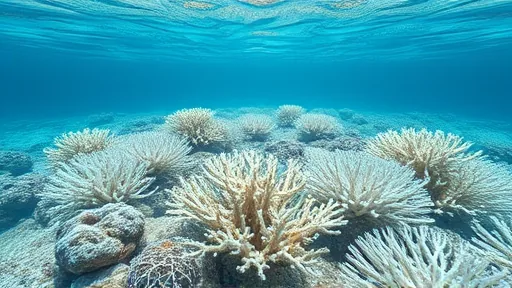
The most striking finding in the assessment concerns geography rather than biology. Small pockets of coral could survive the collapse of larger systems such as the Great Barrier Reef, but they may end up too dispersed for their eggs and sperm to meet. Gudka’s framing is that pockets of surviving, resilient coral can still remain in the future, which is why the assessment insists on setting them up for success.