Why Smell Never Learned to Travel
A photograph crosses an ocean in a heartbeat. A voice note reaches a phone on the far side of the planet almost as fast. Both of those feats depend on a quiet trick: light and sound can be chopped into tiny, repeatable units — pixels of red, green and blue, or pressure waves sampled thousands of times a second — and reassembled faithfully at the other end. Smell has never had that luxury. Odours are chemistry, not a spectrum, and chemistry resists being diced into neat building blocks.
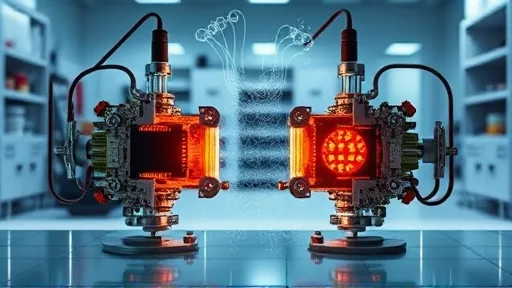
That gap is what Chunyu Yang at the Ohio State University set out to close, and her reasoning is disarmingly plain. [1] Vision reduces to combinations of three colour channels. Smell offers no equivalent primitive. Any attempt to turn an aroma into an electronic signal must first recognise a mixture of very different molecules, then rebuild that mixture on demand. Yang calls smell “still a very undeveloped sense” — a description that lands harder given how much of modern communication assumes we can already transmit everything else. [1] The hardware she and her colleagues assembled comes in two halves that talk to each other through machine learning. The first half is an electronic nose: arrays of sensors built from metal oxide. When gaseous components of a smell — ethanol from an alcoholic drink, limonene from citrus fruit — settle onto a sensor’s surface, its electrical resistance shifts, and the shift produces a distinct signal. The second half is a generator the team calls “Scentronic.” Miniature containers hold liquids laced with each of five target smells. Above every container sits an atomiser that vibrates when an electric signal arrives, pushing the liquid through a cotton filter and releasing a fine mist into the air.
It functions as a translator working both directions at once. The nose listens to a smell in the language of resistance changes; the generator answers in the language of vibrating droplets. Between them sits an algorithm that has learned to match one to the other.
Five Aromas, One Hard-Won Library
The five smells the system handles are orange, cake, coffee, beer and red wine. That is a deliberately modest repertoire, and the reason is data. Yang describes teaching the AI to recognise these smells as “the most challenging part” of the whole study — to generate enough training material, she had to expose the sensors to each aroma hundreds of times. [1] A library of five is not a limitation anyone chose for elegance; it is the size of the shelf that could be filled with repeated, careful measurement.
Then came the test that matters for anyone imagining a scented message arriving from a friend. Yang built the atomisers into several form factors — strung on a necklace, set into a wristband, mounted on a handheld device — and put the handheld version in front of 14 volunteers. On average, those volunteers correctly identified the transmitted smells 73 per cent of the time. Roughly three correct answers in four, from a device held in the hand, for a signal that crossed the internet before it became a smell.
The team also pushed past smell into taste. A prototype cup of water carries electromagnetic pumps around its rim, each holding flavoured liquid; when information arrives from the internet, the matching liquid drops into the cup. It is a small demonstration, but it points at something larger: the chemical senses, long treated as untransportable, can be given a network address.
Marianna Obrist at University College London calls the Scentronic system “a great idea” and a step in the right direction, while drawing a line that is easy to overlook. Recognising a smell and then releasing a match from a limited library is a very different accomplishment from the ease with which we move sound and vision around. “There’s still a long way to go before we can truly record and replay smell experiences,” she says. The distinction is worth holding onto: a working demo is not yet a medium.
A Different
Route to the Same Nose
The problem Yang attacked — how to deliver scent on demand, wirelessly, without a laboratory bench in tow — has another camp working on it from a different direction. A team publishing in Nature Communications has described a soft, miniaturised, wireless olfactory interface built for virtual reality, resting on arrays of flexible odour generators worn against the skin. Their design work spans materials selection, layout and power management, aimed at a soft, skin-worn interface for virtual reality.
The applications they demonstrate read like a list of places smell has been missing: watching a 4D film, delivering a smell message, medical treatment, controlling human emotion, and online teaching in virtual or augmented reality. Where Yang’s group transmits a captured smell from one location to another, this interface generates scent locally as part of a virtual scene — two answers to the same underlying question of how a chemical sense becomes a digital one.
Yang’s own account of the field places her method against alternatives that include heating wax to release particular scents and even stimulating neurons directly to create the experience of smell. Her argument for the Scentronic approach is speed and practicality rather than fidelity. That is a fair claim for a system that has already been worn on a wrist and held in a hand.
What the work opens next is a longer shelf. Yang hopes to expand the repertoire of the system toward more complex aromas — the smell of a pine forest, the aroma of coffee — so that virtual worlds and long-distance conversation gain a dimension they currently lack. She points to entertainment as a likely first adopter, and to health as a serious second: the smell of food shapes how a meal tastes, so rations for soldiers or astronauts could be made more palatable, and doctors could use the system to assess distortions in a patient’s sense of smell after viral illness or in neurodegenerative disease. The framework itself, as her paper frames it, is meant to scale — an internet-of-things platform for remote odour sensing and stimulation. Whether the library grows past five is the test that will decide how far the idea travels.