NASA’s New Gamma-Ray Eye: A Tiny Chip That Sees. The Universe’s Biggest Explosions
Imagine you are standing in a quiet field at night. The sky above you is dark, but it is filled with points of light. You know that stars are burning far away. You know that planets are moving in their slow dance. But what you do not see is the storm. The sky is not just a peaceful blanket. It is a battlefield. Every second, invisible bullets of energy are flying through space. Some of them come from the Sun. Some come from distant galaxies, where black holes are tearing matter apart. And some come from the most violent events in the universe: gamma-ray bursts. These are not just flashes of light. They are the universe’s biggest explosions, releasing more energy in a few seconds than our Sun will produce in its entire lifetime. And right now, our eyes are only half-open. We miss most of the story.
For decades, scientists have been trying to see these gamma rays. [1] But they are tricky. They are the highest-energy form of light, far beyond what our eyes can see. Think of light as a ladder. At the bottom are radio waves, which are long and lazy. Then comes microwaves, which heat your food. Then infrared, which you feel as heat. Then visible light, the colors we see. Then ultraviolet, which gives you a sunburn. Then X-rays, which doctors use to see bones. And at the very top, the highest rung, are gamma rays. They are so energetic that they can pass through solid matter. They are the ghosts of the electromagnetic spectrum. To catch them, you need special equipment.
Current NASA missions like the Fermi Gamma-ray Space Telescope and the Neil Gehrels Swift Observatory are good at catching these high-energy ghosts. They have been working for years, mapping the sky. But they have a blind spot. It is like trying to listen to a whisper in a loud room. For gamma rays with energies between 500,000 and 1 million electron volts, the detectors are less sensitive. For comparison, visible light has an energy of only 2 to 3 electron volts. So we are talking about energies hundreds of thousands of times higher. But in that specific range, the instruments are not sharp enough. And this is exactly where the most interesting things happen. This is where gamma-ray bursts shine the brightest. This is where the most massive and distant active galaxies, powered by giant black holes, glow the strongest. We are missing the main event.
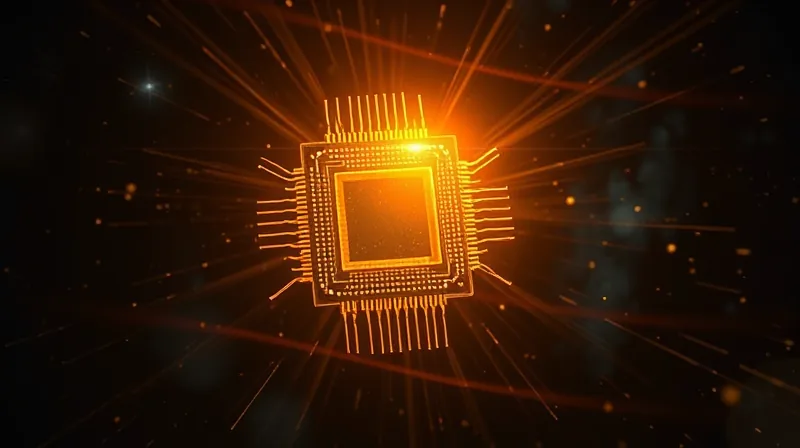
That is where AstroPix comes in. AstroPix is a new type of gamma-ray sensor developed by NASA. [2] It is small. Each chip contains four silicon pixel gamma-ray detectors, and each detector has 1,225 pixels. That is 4,900 pixels per chip. It works like the sensor in a cell phone camera, but for gamma rays. It is designed to measure gamma rays between 20,000 and 700,000 electron volts. That covers the blind spot. It is the missing piece of the puzzle. The plan is to stack these detectors in future missions. By stacking them, scientists could create a more sensitive instrument. They could bridge the gap and improve observations of cosmic objects. They could understand the processes that create and drive these powerful explosions.
But there is a problem. Before you can use a new technology in a science mission, you have to test it. You have to prove that it works in space. You cannot just build it in a lab and assume it will work. Space is harsh. There is vacuum. There is radiation. There are extreme temperatures. You need a flight test. And getting a ride into orbit is not easy. It is expensive. It is rare. There are many technology demonstrations that never get the chance to fly.
Dan Violette, an AstroPix team member and post-doctoral fellow at NASA’s Goddard Space Flight Center, explained the situation. [2] “We need to thoroughly test AstroPix’s performance before we can use the sensors in future science missions,” he said. “We’ve flown comparable technologies on a scientific balloon mission, and the current prototype eventually will be part of a sounding rocket payload. Many of those flight opportunities only reach near space, though. It’s not often that technology demonstrations like ours can find a ride into orbit.”
So how do you get a ride into orbit? You find a partner. And that partner is the Fly Foundational Robots mission. This mission is also a technology demonstration. It is about robots in space. The idea is to build robots that can service satellites, assemble structures, and perform tasks in orbit. This is a big deal. Currently, if a satellite breaks, you cannot fix it. You just launch a new one. That is expensive. But if you have a robot that can change out payloads, you can upgrade or improve satellites at a fraction of the cost. That is the vision.
The Fly Foundational Robots mission includes a robotic arm built by Rocket Lab Robotics. This arm will pick up and move a module called an Orbital Replacement Unit. The unit was designed to support power and data interfaces for a payload. But originally, the plan was to move it without a payload. Then the team realized something. The unit already had the volume, power, and data needed to support the AstroPix design. So they decided to add AstroPix as a bonus. Bo Naasz, senior technical lead for In-space Servicing, Assembly, and Manufacturing in the Space Technology Mission Directorate at NASA Headquarters, said, “The unit already had the volume, power, and data needed to support the AstroPix team’s design. One of our major goals with Fly Foundational Robots is to demonstrate robotic changeout of payloads in orbit, enabling upgrades or improvements to satellites and space instruments at a fraction of the cost of a full mission. Allowing AstroPix to complete its own technology demonstration in orbit is a bonus.”
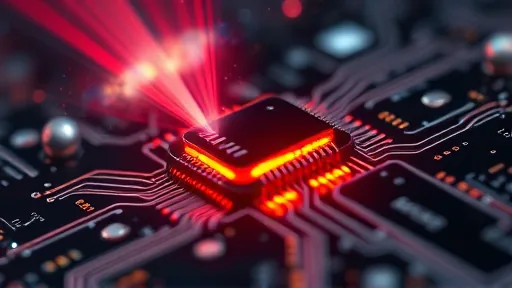
This is a perfect example of how space missions can be more efficient. Instead of launching a separate mission for AstroPix, they are hitching a ride. The AstroPix Satellite Technology dEmonstration Payload, also called A-STEP, will be hosted on the Fly Foundational Robots mission.d within the Orbital Replacement Unit. The robotic arm will reposition the unit, and then AstroPix will collect its data. The mission is set to launch in late 2027. The AstroPix team is working to deliver their hardware by September of this year. Then it will be integrated into the Fly Foundational Robots payload before final integration onto the spacecraft. The Orbital Replacement Unit will hold the chips and all the associated electronics needed to provide power, and collect and transmit data during flight.
Now, let us step back and think about the bigger picture. Why does this matter? Why should we care about gamma rays? The answer is that gamma rays are messengers. They carry information about the most extreme events in the universe. When a massive star collapses, it creates a black hole. This process releases a burst of gamma rays. When two neutron stars merge, they create a kilonova. This also releases gamma rays. When a supermassive black hole at the center of a galaxy feeds on matter, it creates jets of plasma that emit gamma rays. These are the processes that shape the universe. They create the heavy elements, like gold and platinum. They influence the formation of galaxies. They are fundamental to how the universe works.
AstroPix is designed to improve our ability to observe gamma-ray bursts and active galaxies, helping scientists better understand the most energetic processes in the universe.
AstroPix is designed to detect gamma rays in the 20,000 to 700,000 electron volt range, complementing ground-based observatories like the MAGIC telescopes that observe higher-energy gamma rays.
AstroPix uses silicon pixel detectors to directly capture gamma rays, offering improved sensitivity at lower energies compared to ground-based indirect detection methods.
The Fermi telescope has detected thousands of gamma-ray sources, many of which remain unidentified. Improved detectors like AstroPix could help scientists classify these sources and understand their nature.
AstroPix’s primary goal is to observe natural gamma-ray sources, including gamma-ray bursts and active galactic nuclei.
The Fly Foundational Robots mission demonstrates how technology demonstrations can be combined to maximize scientific return from a single launch.
Now, let us talk about the timeline. The mission is set to launch in late 2027. That is about a year and a half from now. The AstroPix team is working to deliver their hardware by September. That is a tight schedule. But they have been working on this technology for years. The current prototype has been tested on balloon flights and sounding rockets. Those flights only reach near space, not orbit. But they provided valuable data. The team has learned how to improve the design. The final version should be ready on time.
After launch, the robotic arm will reposition the Orbital Replacement Unit. Then AstroPix will start collecting data. The data will be transmitted to Earth. Scientists will analyze it to see how well the sensors perform. They will measure the sensitivity, the resolution, and the noise levels. They will compare the results to the predictions from simulations. If everything works, they will have a validated technology that can be used in future science missions.
One of those future missions could be a gamma-ray observatory with a large array of AstroPix detectors. By stacking them, scientists could create a high-resolution gamma-ray camera. This camera could map the sky in unprecedented detail. It could detect gamma-ray bursts from the early universe. It could study the jets from supermassive black holes. It could search for dark matter annihilation signals. It could even look for technosignatures. The possibilities are vast.
The AstroPix team is focused on advancing scientific understanding of gamma-ray bursts and other cosmic phenomena through this technology demonstration.
The AstroPix project represents a collaborative effort within NASA’s science and technology programs to expand our knowledge of the high-energy universe.
The AstroPix project is a small step. But it is a step in the right direction. It is a step toward understanding the universe. It is a step toward finding our place in the cosmos. It is a step toward answering the big questions: Where did we come from? Are we alone? What is the fate of the universe? These are questions that have driven human curiosity for thousands of years. And with each new sensor, each new mission, we get a little closer to the answers.
So the next time you look up at the night sky, remember that you are not just seeing stars. You are seeing a universe that is full of violence and beauty, of explosions and whispers. And thanks to a tiny chip, we are learning to listen. We are learning to see the invisible. We are learning to understand the storm.
Sources
1. NASA