November’s Sky: Meteors, a Planetary Pairing, and a Voyager Milestone
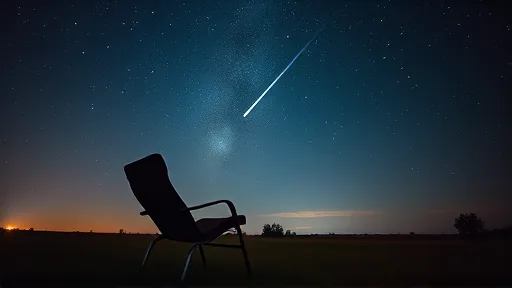
The Taurid meteors arrive in two waves, and the reason for the split is geometric rather than physical. The Southern Taurids reach their peak around November 5th. The Northern Taurids follow roughly a week later, peaking around November 12th. Both names point back to the same constellation: Taurus, the bull. The two streams appear to radiate from two distinct regions within that star pattern. Think of it as a river that forks around a boulder — the water is the same, but it reaches you from two directions.
The numbers here are modest by meteor-shower standards. Each Taurid branch produces only a handful of meteors per hour — about five, under ideal conditions. A viewer expecting a downpour will be disappointed. But the Taurids carry a reputation for the occasional bright fireball, and one such streak can justify an entire night of waiting.
The Leonids follow, and their best window is narrow: the early morning hours of November 17th and 18th, after the Moon sets. Under ideal conditions the shower could yield around 15 meteors per hour. Most observers will see fewer.
Preparation matters more than luck. A dark location, about half an hour for the eyes to adjust, and as much open sky as possible do more than any instrument: the wider the field of view, the more meteors are caught.
Two Points of Light That Only Look Close
On the mornings of November 15th and 16th, Mars and Jupiter sit close together in the southeastern sky before sunrise. They appear about 1.2 degrees apart — a little more than the width of two full Moons placed side by side. Jupiter is the brighter of the two points. Reddish Mars glows nearby.
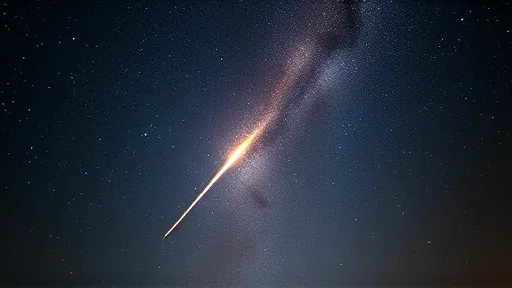
Both planets are visible to the unaided eye. No equipment, no filter, no app required — just a clear horizon and a few minutes before dawn. In space, the two planets remain vastly separated. The closeness is a line-of-sight effect, an alignment that exists only from where we stand.
The pairing is not static. Over several mornings the two points draw closer together — and then go their separate ways.
One Light-Day, and a Moon That Looks Bigger Than It Is
Voyager 1 reaches a milestone this month that no other human-made object has reached. [1] A light-day is the distance light covers in 24 hours. A signal sent from Earth now takes a full day to arrive at the probe — and another day for the reply to come back. [1] The round trip is two days.
On November 17th, NASA invites the public to mark the occasion through an activation called Shine Bright for Voyager’s Light-Day. Details are posted at nasa.gov/voyager.
On November 24th, the evening sky hosts a supermoon. The Moon’s orbit is slightly oval, so its distance from Earth varies. When the full Moon sits closer, it appears larger and brighter than average. The difference is real but subtle — easy to miss without a reference point. This one opens a run of three consecutive supermoons, in November, December, and January.
Near the horizon, the Moon may seem even bigger. That is the Moon illusion, a common effect that accompanies any full Moon, not just a supermoon. The size is in the perception, not the geometry. Raquel Villanueva of NASA’s Jet Propulsion Laboratory presents this month’s skywatching roundup. [1] The Night Sky Network, a nationwide coalition of amateur astronomy clubs, brings the science, technology, and inspiration of NASA’s missions to the general public.