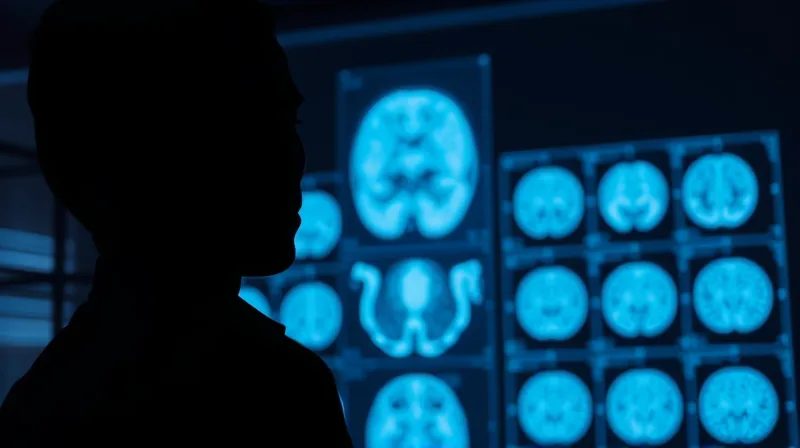
AI and consciousness research hype gap
The field of consciousness research is suddenly the center of an artificial intelligence gold rush. Cognitive scientist Abeba Birhane, who leads the AI Accountability Lab at Trinity College Dublin, has spent years studying how AI systems shape human decision-making — and she brings that critical lens to the current rush to use AI in consciousness research. [1] The excitement is real, the funding is flowing, and the claims are bold. Yet the gap between what AI can do and what it can explain about the human mind remains as wide as ever.
The irony is striking. AI systems are being used to model consciousness while simultaneously being blamed for eroding human agency and accountability. Birhane’s research examines how AI systems inherit human biases and how those biases play out in real-world applications. Her work raises a pointed question: if an AI system is used to interpret brain data, who bears responsibility for its conclusions?. The same technology that promises to unlock the mysteries of the mind also threatens to reduce human experience to algorithmic pattern-matching.
When Machines Study the Mind
The method behind this research is deceptively simple. AI systems process vast amounts of neural data, looking for patterns that correlate with conscious experience. This measurement approach works because machines can handle the sheer volume of information that human researchers cannot. A single brain scan produces terabytes of data, and AI can sift through it in minutes rather than months.
Birhane’s research on AI bias suggests this approach has a fundamental blind spot. AI systems are trained on data labels created by humans, which means they inherit human biases and assumptions. When an algorithm claims to detect consciousness, it is really detecting patterns that humans have already decided are meaningful. This circularity undermines the very objectivity that makes AI seem attractive for consciousness research.
The measurement problem becomes even more acute when considering what consciousness actually is. Unlike temperature or pressure, consciousness has no agreed-upon external reference point. Researchers cannot calibrate their instruments against a known standard because every conscious experience is private and subjective. This makes AI’s pattern-matching abilities both powerful and potentially misleading.
The Accountability Gap
The AI Accountability Lab that Birhane founded takes a different approach to the same problem. Instead of asking what AI can discover about consciousness, it asks who is responsible when AI systems make mistakes. This shift in perspective reveals a critical asymmetry. A human researcher who misinterprets brain data can be questioned, corrected, and held to professional standards. An AI system that produces erroneous conclusions has no such accountability.
This asymmetry matters because AI systems are already being deployed in clinical settings. Hospitals use AI to analyze brain scans, and researchers use machine learning to identify neural markers of consciousness in patients. When these systems fail, the question of responsibility becomes murky. Is it the programmer who wrote the code, the clinician who trusted the output, or the institution that purchased the system?
The hype around AI and consciousness may be distracting from these practical concerns. The field is so focused on the grand question of what consciousness is that it has neglected the more immediate question of how AI systems should be governed. This is not a theoretical debate but a pressing issue that affects patients, clinicians, and the public trust in science.
The Distance Remains

The gap between AI’s capabilities and consciousness research’s needs is most visible in the details. AI systems often fail in ways that are difficult to detect precisely because they are so confident in their outputs. A machine that misidentifies a neural pattern does not express uncertainty; it produces a definitive answer that can shape clinical decisions.
This confidence problem is compounded by the opacity of AI systems. Even the engineers who build these systems cannot always explain why a particular input produces a particular output. When a researcher uses AI to study consciousness, they are relying on a tool that even its creators do not fully understand. This is not a recipe for scientific progress but for compounding uncertainty.
Consciousness research has weathered previous technological waves — brain imaging, genetic analysis — each promising breakthroughs while delivering partial insights and new puzzles. AI offers powerful new methods, but it also demands scrutiny that the current hype cycle is not providing. The machines may be learning, but the science of consciousness still has a long way to go.