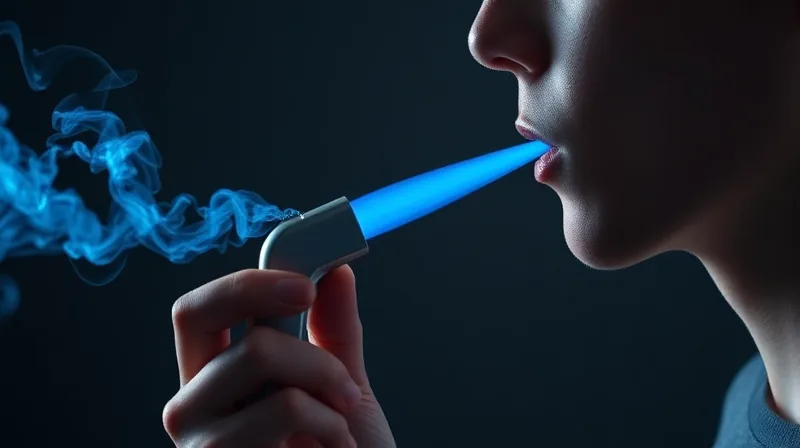
Breath sensor detects fat burning
One molecule changes the metabolic picture
For anyone trying to lose weight, the body’s fuel choice has remained invisible. Bathroom scales take weeks to show change and cannot tell fat from muscle or water loss. Smartwatches and gym equipment infer a “fat-burning zone” from heart rate, but that is an indirect guess, not a measurement.
A new handheld device changes this. It detects acetone in a single exhalation. When the body runs low on carbohydrates and turns to fat for energy, the liver converts some fat into ketones. Acetone is a volatile by-product of that process. It diffuses into the lungs and leaves the body with each breath.
Andreas Gunther at ETH Zurich in Switzerland led the work. ‘We wanted to make metabolic monitoring as simple and accessible as stepping onto a scale,’ he says. The device is commercially available under the name Nutrion
The sensor uses a chemoresistive material. Its electrical resistance changes when chemicals interact with its surface. In clean air, the sensor has a high baseline resistance. When exhaled breath contains acetone, the molecule binds to the sensor surface and injects electrons. This lowers the resistance. The device measures that drop and translates it into an acetone concentration.
But the sensor also reacts to water. Human breath is saturated with water vapor. That would drown out any acetone signal. To solve this, the team added a sorption column in front of the sensor. The tube is packed with a porous polymer called Tenax TA. This polymer attracts acetone 90 times as strongly as water. Water vapor passes through immediately and leaves the device. The tube traps acetone and slowly releases it to the sensor. By the time acetone reaches the sensor, the water is gone. The sensor reads a clean acetone signal.
An accompanying smartphone app guides users on correct breathing technique. It captures acetone at the end of the third breath, when levels most closely resemble those in the bloodstream. This sampling approach is critical to the sensor’s success, says Wolfram Miekisch, a breath analysis researcher at Rostock University Medical Center who was not involved in the study
Earlier methods now appear slow and cumbersome
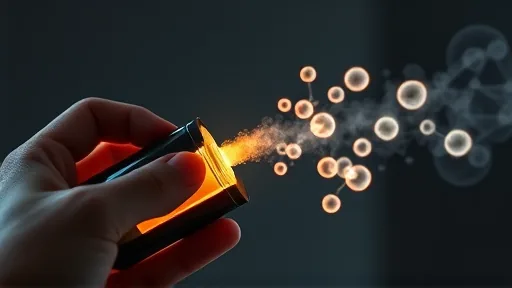
Breath acetone has long been used as a window into metabolism. But measuring it has required bulky laboratory equipment. Blood-ketone tests are widely used but require repeated finger pricks. Several companies have developed breathalyser-style devices that detect acetone, but accurately measuring the tiny amounts in exhaled breath is challenging. Humidity, variations in breathing technique, and chemically similar compounds including alcohol can interfere with the sensors.
The new device overcomes these problems. The researchers compared its readings with laboratory measurements of breath acetone and blood-ketone levels in 12 volunteers with no known health problems. [1] The volunteers were tested under a range of dietary and exercise conditions. The device closely tracked both laboratory breath-acetone measurements and blood-ketone levels.
The handheld device was validated against a large lab instrument called PTR-MS (proton transfer reaction mass spectrometer). When both instruments measured the same breath sample at the same moment, the new device’s reading differed from the PTR-MS results by only 7.5 percent at 2 parts per million. That concentration is consistent with someone burning mostly carbohydrates. This level of precision is sufficient to detect changes in acetone concentration when the body burns fat.
“We were able to resolve even the finest changes in breath as someone started to burn fat,” says Gunther, who is an advisor to Alivion, the ETH Zurich spin-off that makes Nutrion. “After more intensive exercise, we saw breath acetone increase, but if someone then drank a sugary drink or ate a carbohydrate-rich meal, we could see it immediately fall again.”
The device is sensitive enough to detect subtle short-term fluctuations in metabolism. This is important because the body continually switches between fuels during everyday activities. Such information could be useful when dieting or intermittently fasting, when the goal is to extend the periods during which the body burns fat.
Some of the researchers are shareholders or on the board of Alivion. The device has not yet been validated or approved as a diagnostic device for clinical use. Gunther says the next steps are larger clinical validation studies and the development of tailored solutions for different use cases.
Clinical trials now test the device for epilepsy
Ketogenic diets — high-fat, very low-carbohydrate diets that trigger ketone production — are used to treat some forms of drug-resistant epilepsy, particularly in children. Monitoring ketosis usually involves repeated finger-prick blood tests. An ongoing trial is evaluating Nutrion as an alternative.
“It is really good to hear that they have moved into clinical trials in epilepsy, which would take some logistical strain off home testing for blood-ketone monitoring and potentially make management of epilepsy easier going forward, while still providing objective data,” says Dirk Dugdale-Duwell at Elevate Performance Testing in Wymondham, UK, which provides personalised testing to athletes.
The team is collaborating with University Children’s Hospital Zurich to test whether the device can help children with epilepsy monitor ketogenic diets without blood tests. The effects of Nutrion are also being investigated alongside intermittent fasting, GLP-1 weight-loss therapy, and ketogenic diets during cancer treatment, says Gunther. “There are many situations where monitoring ketone production is important, and it would be useful to have this information immediately available.”
Dugdale-Duwell has investigated the potential of a similar device called Lumen. That device measures metabolism via exhaled carbon dioxide. He adds that athletes might benefit if Nutrion enables them to tailor their carbohydrate intake to their metabolic responses. But it remains unclear whether this would improve performance. “I wouldn’t be surprised to see the device used from a marginal-gains perspective,” he says.
“This looks promising,” Miekisch says. “The introduction of easily accessible, highly specific sensors in the field of breath research will be a game changer.”
Sources
1. DOI: 10.1016/j.device.2026.101226
2. ETH Zurich
3. Rostock University Medical Center
4. Alivion
5. University Children’s Hospital Zurich
6. Lumen