
Reading the Genome as a Fossil Record
Researchers can now reach past the oldest rocks and read evolution directly out of living genomes — a record that was previously only inferred. The oldest uncontested fossils stop at roughly 3.5 billion years ago. Beyond that line, there are no bones, no shells, no imprints. What remains is a different archive, written in the DNA of every organism alive today.
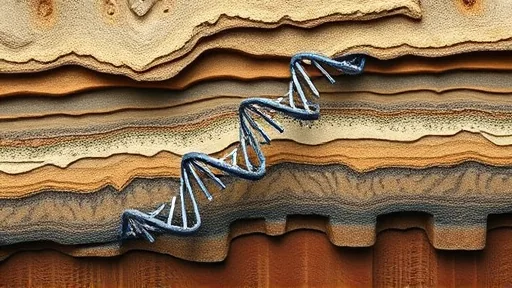
Greg Fournier, an evolutionary biologist at the Massachusetts Institute of Technology, draws the boundary sharply. There are only two records of past life, he says. One is the dead remains of ancient organisms fossilized in rock. The second is the record within genomes — traces passed down from the first cells to all life, or almost all life, alive today. A genome, on this reading, is a palimpsest: a document written over so many times that the earliest hand still shows through the later ink.
The logic of reading that archive is simple to state and hard to execute. Genes present across the whole tree of life are candidates for having existed before the lineages split. Those are the oldest sentences in the text. To tell the story of the last universal common ancestor, the population of cells from which all known life descends, researchers identify the most ancient genes found in all modern living things. The name for that ancestor, LUCA, was coined in the 1990s, and biologists have argued ever since about what it actually was: a near-modern cell or something simpler.
The method has one persistent flaw, and fixing it took decades. Bacteria pass genes to their neighbors, and across species, through horizontal gene transfer. Those sideways transfers can make a gene look as though it has a shared evolutionary history when it does not. The computational tools to correct for this arrived only in the last decade. With them, the picture sharpened considerably.
A Cell Already Complicated
In 2024, a team led by Phil Donoghue at the University of Bristol applied those newer techniques in novel ways and produced the richest portrait of LUCA yet. The numbers are the story. LUCA likely operated with around 2,600 proteins, encoded by a genome comparable in size to those of modern-day bacteria. Its genes and proteins point to a basic metabolism, a functional cell membrane, and even a primitive immune system for fighting viruses.
Betül Kaçar, an astrobiologist and evolutionary biologist at the University of Wisconsin, Madison, puts it plainly: LUCA was a fully fleshed, swimming, eating, reproducing, messy cell. Wherever it lived, it likely did not live alone. Donoghue’s team found that LUCA carried a metabolic pathway nearly identical to one used by modern microbes, the Wood-Ljungdahl pathway. That pathway is related to acetogenesis, a process that cannot run on its own but depends on the activity of other cells. This makes it very likely that LUCA belonged to a community — an ecosystem containing multiple types of early cells, not a lone pioneer.
The dating sharpens the puzzle. Donoghue’s team estimated the age of LUCA’s lineage at 4.2 billion years. The planet is thought to have cooled enough to be habitable around 4.4 billion years ago. That leaves a window of roughly 200 million years between a habitable Earth and a complex, communal cell. Joanna Masel, an evolutionary biologist at the University of Arizona, reads the gap as speed: \"Life gets going pretty fast when the conditions are favorable.\.
Here is the contradiction that has not been resolved. If LUCA was already a complex population containing many types of cells, then a meaningful stretch of life’s early evolution happened before it. By the time LUCA lived, molecular and cellular diversity must already have run far beyond the rudiments of life — far enough for natural selection to build complex molecular machines. But that earlier stretch left no fossils and no direct genomic trace of its own. The further back researchers reach, the fuzzier the picture becomes. The record that lets scientists see 4.2 billion years into the past also marks the point at which seeing stops.
Where Two Directions of Travel Meet
The response has been to change the target. Biologists who by definition study life forms that evolved after LUCA are now aiming at what came before it — the quasi-living and lifelike processes that preceded the ancestor. Klára Hlouchová, a synthetic biologist at Charles University in Prague, calls that window the most exciting one to look at, and in the same breath the hardest to pin down.
The tools run in two directions. From the top down, evolutionary biologists make predictions from modern and historical clues. Aaron Goldman, an evolutionary biologist at Oberlin College, works on genes so ancient that nearly all genomes across the tree of life carry not one copy but two — the signature of a DNA duplication that occurred well before LUCA evolved. The proteins those doubled genes produce sit at the core of modern cellular life: making proteins, moving molecules across a membrane, and turning molecules into energy. Goldman focuses on the last two, tracing the phylogenies of molecules in modern electron transport chains — the series of molecular pumps most life uses to power its cells — to propose what prebiotic versions might have looked like.
From the bottom up, Laurie Barge, an astrobiologist at NASA’s Jet Propulsion Laboratory, tests how those plausibly ancient molecules behave in prebiotic settings. In glass jars on a lab bench, Barge and her colleague Jessica Weber simulate the mineral chemistry of hydrothermal chimneys, including ones that may have existed on primordial Earth and ones that might exist elsewhere in the universe. They synthesize minerals from those chimney experiments, mix them with Goldman’s pre-LUCA molecules, and test whether the two interact in ways reminiscent of an electron transport chain. The two researchers met in 2009 at an astrobiology conference for graduate students in Seattle and have collaborated since. Barge’s summary of the arrangement is exact: \"We come at the problem from two different directions. Combining the two is powerful since then we can study prebiotic plausibility and evolutionary continuity at the same time.\.
A second pair of directions meets over a different question: whether life had to be built from the ingredients it uses now. Hlouchová deconstructs the amino acid alphabet. The hundreds of millions of protein types found in nature are all built from the same 20 amino acids, yet dozens of other amino acids have turned up on meteorites, thousands more can be made in the lab, and scientists have speculated that millions of variants could exist across the universe. Using protein-design and structure-prediction programs, her lab stripped the modern alphabet from three highly conserved protein folds — ancient three-dimensional shapes — and asked the software to refill them with a reduced set. Her team reported that a reduced alphabet of just 10 amino acids could support the kinds of protein structures likely present early in life’s development. She is now repeating the experiments with entirely different amino acids.
Sijbren Otto, a systems chemist at the University of Groningen, attacks the same problem from the function side rather than the material side. In 2010 his lab found by chance that certain synthetic benzene rings of equal size stack neatly, like poker chips; when shaken, the growing stacks broke and their edges grew more rings. That was a form of self-replication, and because every new stack held rings of the same size, the system was propagating information. It took another decade to get those molecules to catalyze reactions other than their own replication. In still unpublished work, his team altered molecules so the rings formed compartments that grew and divided — replicating, metabolizing, and holding themselves together. The only function still missing, by Otto’s own accounting, is the ability to evolve, which is where the lab heads next.
The two camps converge on a shared commitment rather than a shared answer. Whether the guide is a genome read backward or a molecule built forward, the requirement that survives is evolution: the capacity to adapt to a changing environment and invent new ways to survive across deep time. That is the engine, and re-creating it is the common dream. What remains open is whether the engine ever started only once. Masel states her position without hedging: \"I believe that there were multiple origins of life.\. Until a second example is found — in a lab dish, on an exoplanet, or in the atmosphere of a distant world — every account of how chemistry became biology rests on a sample size of one.
Sources
Mentioned organisations (context, not sources)
- Massachusetts Institute of Technology — Organisation (homepage)
- University of Bristol — Organisation (homepage)
- University of Wisconsin, Madison — Organisation (homepage)
- University of Arizona — Organisation (homepage)
- Charles University — Organisation (homepage)
- Oberlin College — Organisation (homepage)
- NASA Jet Propulsion Laboratory — Organisation (homepage)
- University of Groningen — Organisation (homepage)