A Pause That Was Never a Pause
The first thing to understand about the 2026 midterms is that the most consequential vote on artificial intelligence was not about intelligence at all. It was about water, noise, tax abatements, and the temperature of the ground. And the gap that decided it was the gap between what the industry said its buildings would do and what the people living beside them found they were doing.
Take the Texas governor’s race, where Democrat Gina Hinojosa unseated Greg Abbott after campaigning on a temporary ban on data center construction. The investment analyst Gordon Johnson pointed out something that ought to unsettle anyone who trusts a regulatory announcement at face value: Abbott had already suspended data center approvals. The moratorium Hinojosa promised was, in his account, less a new act than the preservation of an existing one — she would not need fresh legislation to keep permits frozen. The state had, in effect, been running a pause while its governor had once promised to make Texas the epicenter of AI development. The words and the paperwork had been pointing in opposite directions for some time, and the election was the moment the discrepancy surfaced.
This is the pattern that runs through the whole night’s results: a technology whose public story and whose operational reality have drifted apart, and a public that has begun to notice. The WIRED account of the results records a revolt that reached every level of government, and the revolt was not driven by abstract fear of machines. It was driven by the discovery that the promises attached to the machines did not hold.
The Number That Did Not Add Up
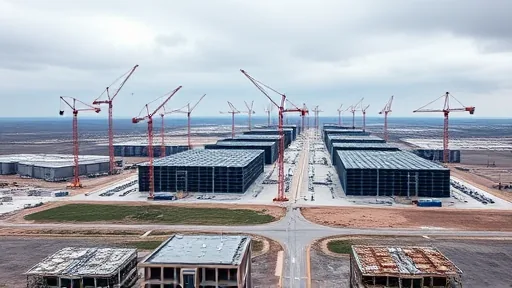
Consider the scale of the claim. Stephen Dover, chief market strategist at Franklin Templeton, predicted the results would produce a slowdown in construction, bringing new regulations and costs for developers. [1] Dan Ives of Yorkville Ives & Co. put the question plainly for tech investors — whether the midterms would slow the 800 to 1,000 planned data centers across the country — and answered it himself in the affirmative. [1] A thousand buildings, each one sold to a county board or a state legislature as an economic gift.
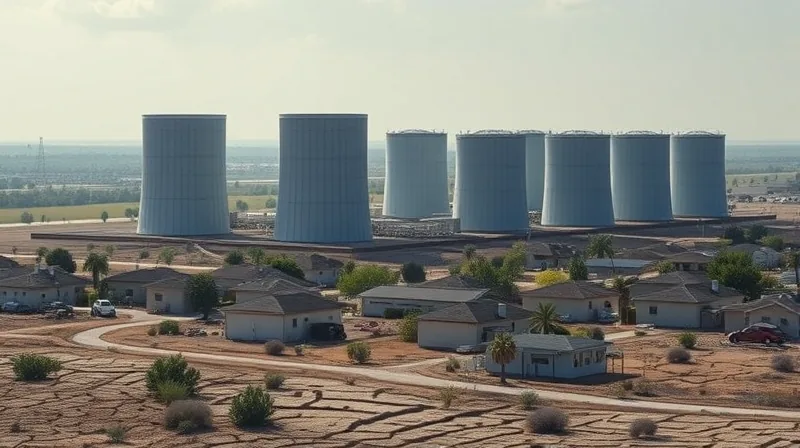
What the voters received instead reads like a list of externalities the sales pitch left out. Communities sharing a neighborhood with these projects reported deafening noise pollution, rising utility bills, water shortages, concerns about harmful air pollution and associated health risks, and fears of tanking property values. A preliminary study linked data centers to higher land-surface temperatures in surrounding areas, with heat islands stretching up to six miles. Most planned facilities sit in rural areas, which raised concerns about the loss of agricultural land.
Each of these is a small deception of framing rather than of fact. No one lied about the noise; the noise simply was not in the brochure. The pitch described a building that would create jobs and tax revenue. The reality included a building that would also hum through the night, draw down the aquifer, and warm the ground beneath its neighbors’ fields. The industry’s account of itself was accurate about the benefits and silent about the costs, and silence, repeated across a thousand projects, starts to look like a method.
The Ballot as an Audit
The most precise measurement of that gap came from the ballot box itself, where voters were asked direct questions rather than presented with campaigns. Across ten states, 41 local measures appeared, according to Ballotpedia, and voters sided against data centers in every one except a single case in Harwood, North Dakota, where the city rejected a charter amendment that would have required additional review before approval of industrial developments. Political research firm Redbud Consulting counted 37 measures restricting data centers and only one allowing them.
Ohio alone carried 21 of those local questions, ranging from outright moratoriums to rezoning to restrictions on development. The state is not a peripheral case: OpenAI announced in August that it had secured 8 gigawatts of computing capacity at the PORTS-Pike Technology Campus there, the largest planned AI data center campus in the world, with first-phase construction slated to begin this year and capacity coming online in phases from 2028. SoftBank and SB Energy are developing the campus with the U.S. Department of Energy, Nvidia is backstopping the project, and the total cost could exceed $500 billion. Ohio voters knew all of this, and voted the other way anyway.
Brad Carson, president of Americans for Responsible Innovation, tracked the results through the night and found that just one county appears to have allowed for more data center development on its ballot. [1] When a single local question out of more than 40 breaks in the industry’s favor, the industry has not lost a messaging battle. It has failed an audit.
What the Voters Were Actually Saying
The temptation is to read this as technophobia. The exit polling says otherwise. Nearly a quarter of voters told NBC News that data centers were crucial to their vote, and nearly two-thirds called them a major or minor factor. In a CNBC voter poll, 56 percent said data centers were a crucial or major factor in their decision. A CBS News poll this summer found Americans opposed to a new data center in their area by a margin of more than two to one.
Alexander McCoy, a Democratic strategist working on AI, offered the clearest account of what those numbers mean. Data centers and AI are, in his words, fundamentally linked in many voters’ minds — and he went further, noting that even if every concern about energy, noise, and pollution were addressed, significant concerns would remain about what these projects are enabling and the effect on opportunities, prices, jobs, and society. The building is not the grievance. The building is the visible evidence of a promise about the future that voters no longer believe.
Sacha Haworth, executive director of the Tech Oversight Project, framed the same insight in the language of narrative. Voters, she said, understood the data center story as a corruption story, an affordability story, a Big Tech CEO influence story. The word that matters there is story — not fact, not statistic. The industry lost because it could not tell a story that matched what people could see from their own back porches.
The Candidates Who Ran Against the Gap
The results were not uniform, and the exceptions are instructive. In Wisconsin, Republican Tom Tiffany attacked Democrat David Crowley early with ads calling him “Data Center David Crowley” — and lost. Crowley himself grew more aggressive on the industry as the campaign wore on, indicating two weeks before election day that he would support a pause. In New York’s 17th district, incumbent Mike Lawler aired ads slamming his opponent’s past statements that New York needs data centers, and conceded even as the Associated Press held back its call.
Being anti-data-center was not a magic formula. Being caught on the wrong side of the gap was. Sherrod Brown in Ohio spent months calling his opponent the face of data centers and flipped a Senate seat. Chris Pappas, who when seated will be the nation’s first openly gay male senator, mentioned his opposition to data centers in his victory speech and drew massive boos from his crowd in New Hampshire — even though the state has no large-scale data centers under construction. The boos are the interesting part. Pappas was not describing a local grievance. He was describing a national one, and the crowd recognized it.
Two Republicans, one named Derek and one named Derrick, were labeled “Data Center Derek” and “DC Derrick” by their opponents and lost House races in Ohio and Wisconsin. The nicknames worked because they condensed the accusation into a syllable: this person is carrying water for a project that is not what it says it is.
The Money That Could Not Buy Belief
If the gap were merely rhetorical, money should have closed it. It did not. In South Carolina, a new industry super PAC called Building the Future spent $1.5 million supporting Darline Graham, who lost to Democrat Annie Andrews, a moratorium supporter. Andrews had registered the domain DataCenterDarline.com in late September to press the connection. The same PAC put more than $1.5 million into the Kansas gubernatorial race behind Republican Ty Masterson, a contest in which the source material places Democrat Cindy Holscher, a moratorium candidate, on the cusp of a potential win; a final outcome is not confirmed there.
In Michigan, Democrat Will Lawrence made regulation of AI and data centers a cornerstone of his campaign and declared victory over Republican Tom Barrett in one of the most expensive races in the country, a contest in which Barrett had received $340,000 from Elon Musk’s America PAC. The pattern repeats: the industry’s spending was real, and the voters’ skepticism was realer.
Amy Kremer, chair of Humans First, an advocacy group pushing for democratic oversight of AI, described the outcome as a rebuke from the conservative rural working-class base — voters, in her account, whose concerns about data centers and the impact of AI had been traded away by politicians who chose big AI’s money over their own base. That is the gap in its political form: a party that believed its voters could be bought with a story about growth, and voters who had already priced the story at zero.
The Governors and the Ground Truth
The deepest tremors came in the governor’s mansions, because governors control the permits. Keisha Lance Bottoms won in Georgia, the third-largest data center market, and told CBS Mornings that she would immediately sign an executive order for a pause and then determine what else to do administratively to take it into effect. She also said she would review the tax incentives that have spurred development in the state, asking what the agreements entail and what remedies exist to enact the pause. Her confidence that pushback would be limited rested on a simple observation: many local governments had already taken that first step.
In Texas, the stakes are larger still. The state accounts for 25 to 30 percent of the data center capacity expected to come online by 2030, and Ives called it the foundation of the AI buildout in the U.S. Johnson estimated that Hinojosa’s win could stall the addition of 13 gigawatts of data-center power in Texas. There are currently just under 600 data center projects in the state, many still planned or under construction. A single election, in a single state, put a question mark over the physical foundation of the entire national buildout.
And in Ohio, Democrat Amy Acton, a physician, defeated Vivek Ramaswamy for the governor’s mansion on a platform supporting a “conditional moratorium” — one that would require data centers to cover 100 percent of utility costs and to build exclusively with union labor. The condition is the tell. Acton was not rejecting the buildings. She was rejecting the accounting that had let them externalize their costs onto everyone else.
The Earthquake Metaphor
Greg Casar, the Texas Democratic congressman, offered the night’s most quoted formulation: the revolt against data centers was one of the top issues of the 2026 election, and in a few years we will look back on it as just the early tremor of a much bigger AI earthquake upending American politics. The metaphor is doing real work. A tremor is not the disaster; it is the announcement of one, arriving before anyone has learned to read the instruments.
What the instruments are registering is not hostility to computation. It is a widening suspicion that the entities doing the computing have been describing themselves inaccurately — that the benefits are stated in the present tense and the costs are deferred to a future that never quite arrives in the prospectus. When a voter in Ohio reads that the largest AI campus in the world is coming to their county, and then reads their own utility bill, the second document wins.
The industry’s response has begun to acknowledge this. On the day of the midterms, The Hill reported that environmental groups and major tech companies were working together under the banner of a Responsible Data Center Development Collaborative to create a framework for data center development. McCoy called that kind of collaboration the right next step. Whether it is depends entirely on whether the framework describes the building as it will actually be built or as it was described to the county board. A collaborative that produces another brochure will produce another election night.
The Escape Hatch in Orbit
There is one response to the results that captures the gap more perfectly than any analysis. As the returns came in, Elon Musk posted that data centers in space were looking pretty appealing right now. It is a joke, and it is also a confession. The appeal of orbit is precisely that it is beyond the reach of the people who just voted — no county board, no utility commission, no neighbors to hear the hum. The fantasy of leaving the planet is the fantasy of leaving the audit behind.
That instinct is the thing the 2026 results actually rejected. The voters were not asking for data centers to be moved somewhere else. They were asking for the ones on the ground to be described accurately, priced honestly, and consented to by the people who live beside them. The 37 ballot measures that went against the industry, the moratorium candidates who won in states holding a large share of future capacity, the rural voters who broke with their own party over land and water — none of that is a demand for less computation. It is a demand for a truthful account of what computation costs.
What the Next Election Will Test
The analysts have already begun to price the outcome. Dover suggested that in the long term a slower buildout is unlikely to hamstring the economy. Ives told investors the answer to whether the midterms would slow the planned buildout was a clear yes. Wall Street, in other words, has accepted the premise the industry spent the campaign denying: that the political environment is now a material constraint on the physical buildout.
That acceptance is the first honest sentence in a long conversation. The next test is whether the framework being negotiated between environmental groups and tech companies can survive contact with a county zoning hearing. The test after that is whether the tax incentives Bottoms wants to review, and the utility cost structures Acton wants shifted onto developers, become the new standard or the new exception.
The 2026 election did not answer the question of what AI will do to American life. It answered a narrower and more urgent one: whether the people building the infrastructure of AI could continue to describe it in terms the people living beside it did not recognize. By 37 restricting measures to a single permissive one at the ballot box, and by more than two to one in the polling on neighborhood opposition, the answer was no. The machines may be impressive. The story told about them was not believed, and the disbelief has now been written into governorships, senate seats, and local ordinances across the country.
Sources
Mentioned organisations (context, not sources)
- Ballotpedia — Organisation (homepage)
- OpenAI — Organisation (homepage)
- SoftBank — Organisation (homepage)
- SB Energy — Organisation (homepage)
- U.S. Department of Energy — Organisation (homepage)
- Nvidia — Organisation (homepage)
- Americans for Responsible Innovation — Organisation (homepage)
- NBC News — Organisation (homepage)
- CNBC — Organisation (homepage)
- CBS News — Organisation (homepage)