Global inequality persists across generations
The inequality that reaches into orbit
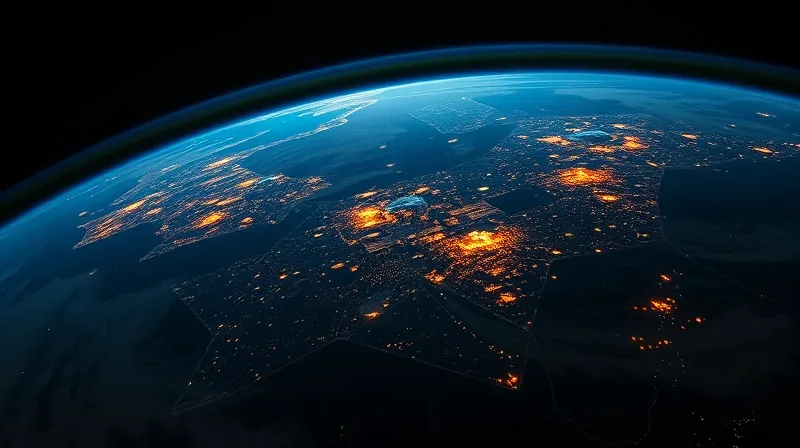
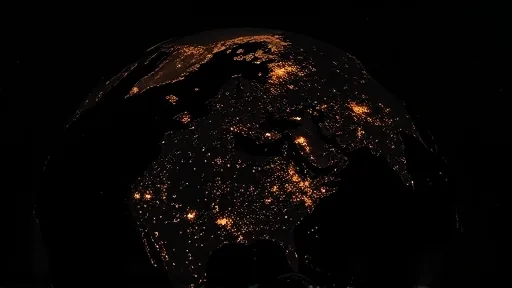
From the vantage point of a satellite, the Earth at night is a patchwork of light and dark. The bright clusters are cities where wealth concentrates. The dark stretches are where billions live without reliable electricity, without the same access to resources. This visual gap is not just a snapshot of energy use. It is a map of global inequality, a pattern that economists have measured for decades but are now rethinking in a startling new way.
The Global Justice Report, published last month by economist Lucas Chancel at the Paris-based World Inequality Lab and his 44 co-authors, proposes a radical shift. [2] The report calls for a UN-run central bank to replace the International Monetary Fund.
This is not a small tweak. It is a proposal to redesign the financial architecture that has governed global economics since the end of World War II. The reactions have been strong. Some call it ambitious. Others call it utopian. A few call it wacky.
How family wealth echoes across centuries
Earlier studies tracked inequality between parents and children. They showed that a child born into a poor family had a harder time becoming rich than a child born into a wealthy one. This was the standard view of how inequality reproduced itself. It assumed that the effects faded over time. A grandparent’s poverty might still be felt by a grandchild, but only weakly.
A study published in September 2025 shows that socio-economic advantages persist across three or more generations. The effects do not fade as quickly as once thought. A family’s position in the economic hierarchy can last for generations, not just two.
Three possible explanations exist for this persistence. First, there may be latent factors that are not captured by standard measures. Second, the transmission of advantage or disadvantage may not follow a simple chain from parent to child to grandchild. It might be non-Markovian, meaning that past states beyond the immediate previous generation still matter. Third, the transmission could be non-linear, where small differences early on become large gaps later. Each of these possibilities requires different solutions.
When inequality feels unfair
A common assumption in economics is that people’s beliefs about fairness are shaped by the actual level of income inequality they see around them. The logic seems straightforward: more inequality should lead to more people thinking the system is unfair. But the reality is more complicated. Individuals do not directly observe income inequality. They often misperceive it. They also do not consider all inequalities to be unfair. Some differences in income are seen as deserved.
This relationship was examined in 18 Latin American countries from 1997 to 2015. The researchers combined opinion poll data with household surveys. They found a strong and statistically significant link between income inequality and unfairness views. When inequality rose, more people said the distribution was unfair. This held true across countries and over time. In 17 out of the 18 countries, the two measures moved in the same direction.
Older individuals, unemployed people, and those on the left wing of the political spectrum were also more likely to see the income distribution as very unfair. More importantly, both fairness views and income inequality had predictive power for people’s willingness to protest. They each captured different channels through which changes in income distribution can lead to social unrest. This raises a difficult question for the Global Justice Report’s proposals. If people’s perceptions of fairness are shaped by inequality, and if those perceptions drive protest, then any attempt to restructure the global economy will have to manage not just the numbers but the feelings those numbers create. The report’s authors know this. They are calling for a global debate. But the research from Latin America suggests that debate will be shaped by forces that are hard to measure and harder to control.