
Cats and Humans Co-Evolve in Modern Households
Satellites orbiting Earth capture the glow of city lights at night, mapping where human activity concentrates. Those same maps reveal something unexpected: the brightest regions of human settlement also show the highest densities of domestic cats. The pattern is visible from orbit, a feline shadow following human infrastructure across every continent.
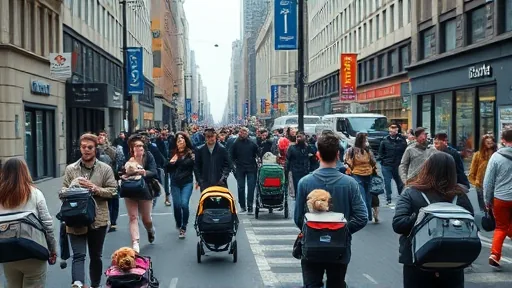
A decade and a half ago, the idea of a cat with its own social media page seemed strange enough to draw puzzled looks from friends. Today, that same behavior looks ordinary. Cats with dedicated accounts command audiences in the millions, and their owners carry them through city streets in backpacks and strollers designed specifically for pet transport.
The shift is measurable in more than just optics. A 2023 Pew Research Center survey found that 62 percent of American pet owners consider their pets to be family members, a classification that influences household spending, veterinary care decisions, and even housing choices That classification carries real weight, influencing everything from household spending to veterinary care decisions and even housing choices.

Parallel Minds, Same Question
The question of whether cats are becoming tamer or whether humans are the ones changing has drawn attention from multiple research directions. Researchers at the University of Lincoln’s School of Life Sciences have tracked how domestic cats respond to human presence compared to their wild counterparts, finding that house cats display attachment behaviors toward their owners that mirror infant-caregiver bonds.
Another line of inquiry approaches the same puzzle from the human angle. Sociologists at the University of Helsinki’s Helsinki Institute of Urban and Regional Studies have documented how the family framing of pets has reshaped urban housing decisions, with a growing share of renters prioritizing pet-friendly apartments over other amenities. The two groups started from different questions, yet both arrived at the same observation: the bond between humans and cats has tightened considerably within a single generation.
The convergence of behavioral and sociological data points toward a genuine mutual adjustment. Cats have altered their social repertoires to read human cues more accurately, while humans have restructured domestic routines, furniture, and even travel plans around feline needs. This bidirectional adaptation, occurring across millions of households simultaneously, is what researchers mean by co-evolution.
The Boundary of the Bond
The limits of this shift become visible in the legal sphere. While owners may call their cats family members, the law still classifies them as property. This gap carries practical consequences: in custody disputes, courts do not consider feline welfare; in rental agreements, landlords can ban pets without justification; and in medical emergencies, veterinary decisions rest with the owner, not the animal. The gap between sentiment and structure marks the boundary of how much this change can reshape daily life.
That boundary does not diminish what has already happened. The journey from a cat page that puzzled friends to a world where feline influencers draw millions of followers represents a genuine transformation in how people relate to animals. The surveys confirming that most owners view pets as family did not create that reality, they simply documented it.
What remains uncertain is whether the next generation will continue this trajectory or whether the current intensity of human-feline bonding represents a peak. The evidence so far shows a clear direction of travel, but the road ahead depends on factors no single study can predict. For now, the cats keep adapting, the humans keep changing, and the bond keeps tightening, one household at a time.