Glass transparency explained by molecular structure
Why Light Passes Through Glass
Picture a quiet Sunday morning. Sunlight streams through a window, casting soft shadows across the room. A person can see the garden, the birds, the neighbors walking their dogs. None of this feels remarkable. Yet the physics that makes it possible is genuinely strange.
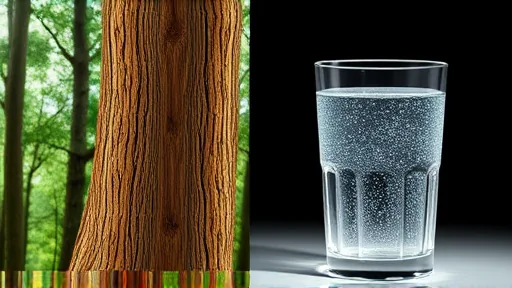
Consider two everyday materials: the glass in your window and the wooden frame around it. Both come from nature. Both are solid at room temperature. Both have been used by humans for centuries. But light behaves completely differently when it meets each one.
Wood stops light in its tracks. Its structure scatters photons in every direction, which is why you cannot see through a wooden door no matter how thin it is. Glass, on the other hand, lets light pass through almost effortlessly, even when the pane is several centimeters thick.
The difference comes down to molecular arrangement. Glass is what scientists call an amorphous solid. . This means its atoms and molecules are arranged randomly, much like the molecules in water. Wood, by contrast, has a highly ordered structure built from fibers that scatter light.
Philip Moriarty, a professor at the University of Nottingham, explained to the Guardian that glass lacks defects at the scale of light’s wavelength. Because the material is uniform throughout, photons find nothing to bounce off and simply travel straight through.
Paper offers a perfect comparison. A sheet of paper consists of many tiny fibers. The sizes, diameters, widths, and spacings of those fibers are not that different from the wavelength of light. . Consequently, they scatter the light in all directions. The result is the snowy, opaque sheet you find on your sketchpad.
This is why a person can look through centimeter-thick glass but cannot see through a single sheet of paper. The glass is amorphous but uniform. The paper is fibrous and irregular. Light treats these two materials completely differently because of what happens at the molecular scale.
How Sand Becomes Glass
The journey from sand to window is a story of extreme heat and careful engineering. It begins with quartz crystals buried in ordinary-looking sand. Not just any sand will do. The sand must contain quartz with the right properties to become transparent glass. .
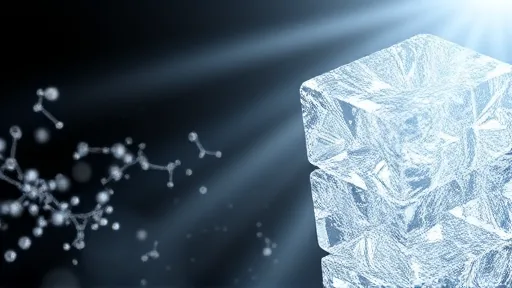
Manufacturers heat this sand to over 3,000 degrees Fahrenheit. . At that temperature, the quartz loses its crystalline structure entirely. The ordered lattice of atoms breaks down and becomes a chaotic, liquid-like mess. This is the crucial step that determines whether light will later pass through.
When the molten material cools, it does not return to its former crystalline state. Instead, it solidifies into an amorphous structure. From a molecular standpoint, glass sits somewhere between a solid and a liquid. Its atoms are locked in place like a solid, but arranged randomly like a liquid.
The cooling process must happen quickly to achieve the right properties. The result is a material that is strong enough for everyday use yet transparent to visible light. .
The physics behind this transparency is elegant. In materials like glass, electrons require substantial energy to jump between energy levels. The photons in visible light simply do not carry enough energy to trigger that jump. Instead of being absorbed or reflected, the light passes straight through. .
This explains why glass is transparent to visible light but not to all forms of radiation. The energy thresholds for electrons vary depending on the material and the wavelength of incoming light. Glass happens to have electron gaps that visible light cannot bridge, so visible light passes through.
The manufacturing process has been refined over centuries. Seventeenth-century Britain saw the development of home windows as they are known today. Glass manufacturing advanced extensively during that period, and it has come much further since then to bring windows that are strong, regularly used, and perfectly see-through.
Modern production relies on clever chemical shortcuts. Adding sodium carbonate to sand lowers its melting point, which reduces the energy needed to make glass. However, this addition also decreases the glass’s chemical durability. To counter that weakness, manufacturers add calcium carbonate as a stabilizer, improving the glass’s resistance to damage. .
This history of innovation explains why people can enjoy sunlight through their windows without letting in the elements or the critters that might scamper inside. Every pane of glass in a home is the product of centuries of trial, error, and refinement.
What Researchers Are Building Next
Glass research continues to push boundaries. Scientists are not satisfied with transparency alone. They want windows that can clean themselves, repair their own damage, and perhaps even change their properties on demand.
One exciting development involves self-healing glass. Researchers have created materials that can repair themselves with nothing more than water. A scratched window that restores its own smooth surface overnight is not science fiction. It is the direction of current research.
The implications extend beyond convenience. Self-healing glass could dramatically extend the lifespan of windows, reducing waste and manufacturing demands. Buildings could maintain their clarity without frequent replacement. The environmental impact of such technology would be significant. .
Self-cleaning glass represents another frontier. Researchers are developing surfaces that break down dirt and grime when exposed to sunlight. Rain then washes the residue away, leaving the glass spotless. Such windows would eliminate the need for dangerous cleaning work on tall buildings. .
The evolution of glass mirrors the evolution of human ingenuity. From the first crude panes of seventeenth-century Britain to the sophisticated materials being developed today, each generation has found ways to improve upon what came before.
The next decades promise even more dramatic changes. As researchers continue to explore the fundamental properties of amorphous solids, they are discovering new ways to manipulate light, strength, and durability. The windows of tomorrow may look nothing like the windows of today. .
What was once a material people never stop to think about is becoming one of the most exciting areas of materials science. The humble window, so common that it barely registers, is quietly undergoing a revolution. And the science that explains why light passes through glass is now being used to create materials that can heal themselves and clean themselves.
The research continues. The next breakthrough could be just around the corner, waiting to transform the way people see the world through their windows.
Sources
2. Guardian