A Streak of Light, a Comet Far Behind
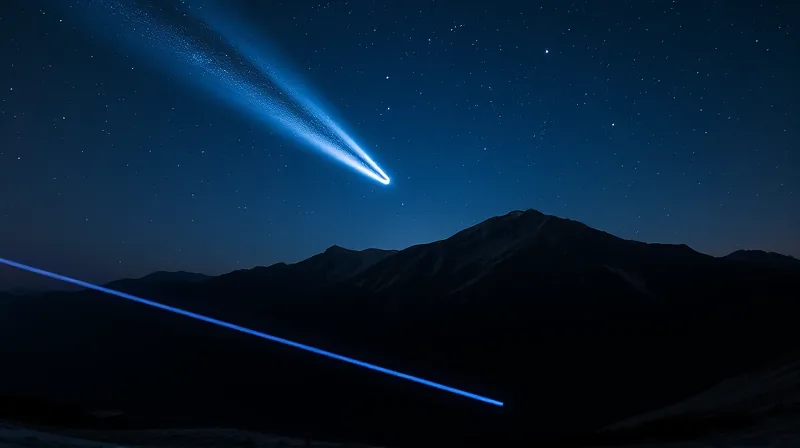
A meteor can blaze across the same frame as a comet and still have nothing to do with it. The apparent contradiction dissolves once the depth of the scene is considered: the comet lies far behind the meteor, so the two only share a line of sight. The bright streak and the icy body share a photograph, not a history.
Comet C/2025 R3 (PanSTARRS) was captured from Hautacam, France, in April 2026, when the comet displayed both an ion tail, rendered blue, and a dust tail. [1] The comet sat far behind the streaking meteor. The two objects were never neighbors in any physical sense — only in the flat geometry of a single exposure.
The meteor itself is sand-sized rocky debris entering Earth’s atmosphere, which is what typically produces a meteor’s visible flash. Its colorful foreground appearance may point to a complicated composition. A camera flattens that entire chain of events into one bright line.
What the Calendar Already Knows
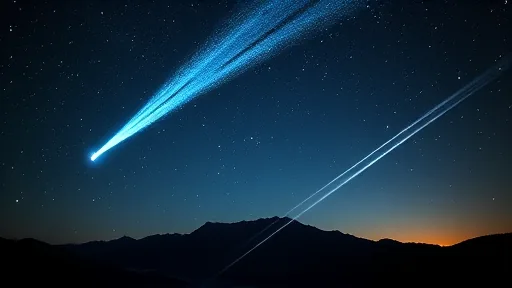
November 2026 brings three notable meteor showers to their peaks, and each has a known parent. [1] The Southern Taurids reach their apex over the next few days. The Northern Taurids top out about a week later. Both streams trace back to Comet 2P/Encke. [1] November’s most famous shower is the Leonids, which originates from Comet 55P/Tempel-Tuttle and reaches its crescendo in about two weeks. The calendar of showers is, in effect, a map of cometary debris trails that Earth crosses on schedule each year.
That schedule is the part of the sky that can be predicted. Matching a single meteor to a single comet is hard: thousands of comets have visited the inner Solar System recently, and the pairing is tricky. But a shower’s parent body is known in advance, because the debris stream is a shared inheritance. The lone streak in the photograph resists that certainty, while the shower it belongs to does not.