Four Winged Dinosaur Rewrites Flight Evolution
The Little Hunter With Four Wings
A dinosaur smaller than a house cat carried feathers on its arms, its legs, and the tip of its tail. It lived in what is now Liaoning province in China, sometime between 145 million and 100 million years ago. A local farmer found its remains. An international team from China, Italy, and Slovakia described the specimen in Nature Communications on 29 September. [1] They named it Norellraptor barsboldi. The specimen measured 57 centimetres long. Microraptorines weighed around one kilogram. The team estimates that this individual was about three years old when it died.
This is not the first feathered dinosaur unearthed from that region. Hundreds of microraptorine specimens have emerged from the same sedimentary layers over the decades. Microraptorines form a complete branch — a clade called Microraptorinae — of the tree of life. They are small meat-eaters. They are close relatives of birds, which belong to a separate clade called Avialae. That proximity makes them valuable witnesses. They sit near the fork in the evolutionary road where flight either emerged once or emerged many times.
The new fossil is striking not because it is unique in kind but because it is exceptionally well preserved. Soft tissue traces remain. Feather impressions mark the forelimbs, the hind limbs, and the distal tail. Paleontologists rarely get such a complete picture. Most fossils preserve bone alone. This one preserves the outline of an animal that looked, in life, like a creature caught between two worlds — ground and air, reptile and bird. The specimen offers a snapshot of a body plan that experimented with flight alongside the lineage that produced modern birds.
The question the fossil helps answer is not whether flight evolved. It clearly did. The question is how many times it evolved independently. The new specimen adds weight to a growing body of evidence that birds and their closest relatives evolved the ability to fly several times rather than through a single lineage. Flight-related traits appeared independently in multiple lineages. Evolution ran the experiment more than once.
Counting the Adaptations That Made Flight Possible
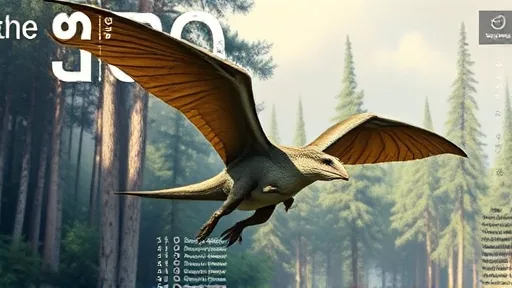
The research team did not rely on the new fossil alone. They compiled a catalogue of flight-related adaptations across all known microraptorines. These include wing feathers, hook-shaped toe bones, and a forearm bone longer than the upper arm bone. Each feature represents a structural change that, in some way, supports or enables flight. The team then compared this catalogue with the adaptations observed in the bird lineage, the Avialae.
Thirty per cent of the 194 flight-related adaptations identified in microraptorines also evolved in the Avialae. [1] Two separate branches of the dinosaur family tree arrived at similar solutions to the same physical problems. These are not inherited traits passed down from a single flying ancestor.
The microraptorines represent a trail that ran alongside the avian one for millions of years. They had feathers on four limbs, not two. They could likely glide or parachute. Whether they achieved powered flight remains debated. But the structural groundwork was there. The same groundwork appeared, independently, in the lineage that produced modern birds.
The pattern suggests that the starting conditions — small body, feathered limbs, arboreal or gliding lifestyle — may constrain the possible solutions so tightly that convergence is expected. The microraptorines and the Avialae drew from the same limited set of options.
The finding is measurable and countable: a trait inventory compared across two clades, not a single lucky fossil.
What the Fossil Record Does Not Show
The fossil record is not a complete film. It is a series of snapshots, often blurry, often missing the frames that matter most. This is not a flaw in the method. It is a property of how fossils form and how we sample them. Under certain conditions, intermediates are simply not expected to appear. The gaps are not evidence of sudden jumps. They are evidence of sampling limits.
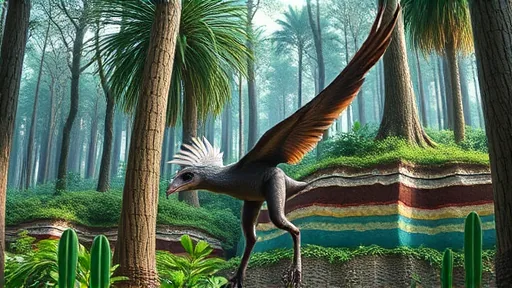
This matters for the flight debate. If the transition from non-flying to flying dinosaur occurred gradually, over millions of years, the fossil record may never capture the exact sequence. The microraptorines are not necessarily the ancestors of birds. They are cousins. They are a parallel branch that preserves a similar set of adaptations. The Norellraptor barsboldi specimen is valuable precisely because it is so complete. It fills in details about feather distribution and skeletal proportions that fragmentary fossils cannot provide. But it does not fill the gap between ground-dwelling dinosaurs and powered flight. It narrows the gap. It does not close it.
The team’s trait comparison is a way of working around the gaps. Instead of relying on a single transitional fossil, they compare trait inventories across entire clades. This approach is robust to missing data. If 30% of the 194 flight-related adaptations are shared, the pattern holds regardless of which specific fossils have been found. The method shifts the focus from individual specimens to statistical patterns. It allows researchers to test hypotheses about convergence without needing a perfect fossil record.
The final data point anchors the finding: 30% of the 194 flight-related adaptations identified in microraptorines also evolved in the Avialae. [1] It is a count, not a projection. The fossil itself — 57 centimetres, three years old, feathers on four limbs and tail — provides the physical evidence. The trait comparison provides the quantitative evidence. Together, they support a view of flight evolution that is messier, more plural, and more interesting than the single-lineage story. Birds did not invent flight alone. They had company.