A Tiny Snail That Gambled Everything on Doubled DNA
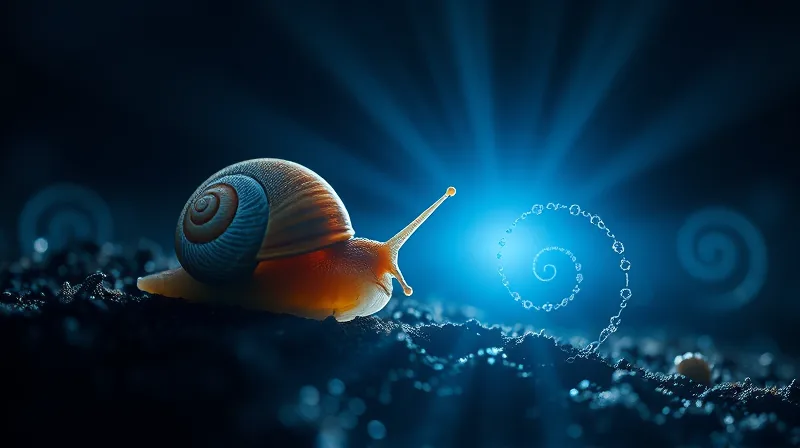
In the shallow waters of New Zealand’s Lake Alexandrina lives a snail no bigger than a match head. Most visitors never notice it. Yet this creature, Potamopyrgus antipodarum , carries a secret that challenges a foundational assumption in biology: that an organism’s genetic blueprint must remain stable across generations. Sometime in the recent past, its genome doubled. Where most animals carry two sets of chromosomes, this snail carries three or four. It has far more genetic material than it ought to have.
This condition, called polyploidy , has long been considered a fatal error. When a cell divides and accidentally duplicates its entire genome, the offspring usually dies. If it survives, it is typically sterile. The odds of a whole-genome duplication leading to a thriving lineage are astronomically small. Yet the snail in Lake Alexandrina is not just surviving — it is thriving. The question that has haunted evolutionary biologists for decades is why this happens at all, and why it keeps happening across the tree of life.
“We actually don’t know, for our snails or any other species, why this happens so reliably, again and again and again,” said Maurine Neiman, an evolutionary biologist at the University of Iowa who studies the species. [1] Her words capture a profound puzzle. If genome duplication is so often lethal, why has it occurred repeatedly throughout evolutionary history? Why do all seed plants living today carry evidence of at least one ancient whole-genome duplication? Why do barnacles, insects, trout, and arachnids show traces of the same event in their DNA?
The answer may reshape how scientists understand evolution itself. Genome duplication is not merely a rare accident. It is a radical mutation that can fuel dramatic evolutionary change. Researchers are now using advanced sequencing technologies to uncover how organisms manage not only to survive such a potentially lethal event but to adapt and flourish in its aftermath.
When One Copy Becomes Two, Chaos Follows
The cellular shock of sudden genome doubling is often devastating. When a cell’s entire genome doubles, the machinery that reads genes and produces proteins must suddenly contend with twice the instructions. Many cells cannot cope.
Douglas Soltis, a plant evolutionary geneticist at the Florida Museum of Natural History, offers a vivid comparison. “We like to think of it as a baseball hitter that strikes out a lot, but when they do hit, it’s a home run,” he said. “Polyploidy is the most important process on the planet that hardly anybody knows anything about.” [2] The metaphor captures the reality that most genome duplication events end in failure, while the rare successes can transform a lineage.
The Soltises have witnessed this process unfold in real time. Several decades ago, they began tracking a polyploidy event in goatsbeard, a plant native to Europe that was introduced to the dry prairies of eastern Washington in the mid-1920s. The plants hybridized, and before long, two new species emerged. Each carried 24 chromosomes — twice as many as the original species. By growing these plants from seed and studying their genomes, the Soltises could observe what happens to cells in the immediate aftermath of genome duplication.
What they found was chaos. Almost as soon as the goatsbeard acquired the extra DNA, the plants began tinkering with their surplus genetic material. Some genes were silenced. Others were modified. The genome was in a state of turmoil, trying to find a way to function with its new, heavier load.
Kenneth Wolfe, an evolutionary biologist at University College Dublin, stumbled onto polyploidy almost by accident. In the early 1990s, his lab needed funding. A European Union initiative offered to pay scientists 2 euros per nucleotide to sequence the genome of baker’s yeast, Saccharomyces cerevisiae . Wolfe was not particularly interested in yeast, but the money was too good to refuse.
When the results came in, Wolfe and his colleagues noticed something strange. “There just seemed to be an awful lot of duplicated genes in these genomes,” he recalled. The yeast DNA was full of doubled regions. These duplicated segments were around 60% identical to each other, and they were separated by far longer stretches of unique genes. The pattern told a story. At some point in the yeast’s evolutionary past, its entire genome had doubled. Then, over millions of years, the cells had been pruning back the excess.
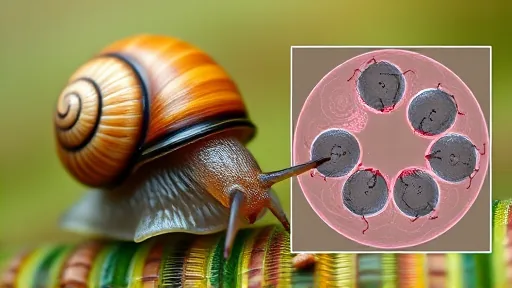
“You could really see the history of what had happened,” Wolfe said. “You could track every gene and see what happened to it.” His 1997 paper in Nature helped turn scientific attention toward both polyploidy and its inverse process, rediploidization. In rediploidization, an organism retains some of its doubled genes while discarding others, eventually bringing the genome back to a streamlined diploid state. The yeast genome was a record of this process in action.
The Hidden History Written in Every Genome
As complete genome sequences of other organisms became available, Wolfe searched for evidence of past duplications elsewhere. The roundworm Caenorhabditis elegans showed no signs of polyploidy. Neither did the fruit fly. Perhaps, Wolfe mused, what he had found in yeast was a fluke. Then, in 2000, the genome of the model plant Arabidopsis was published.
“There was a genome duplication in there screaming at us,” Wolfe said. “And it wasn’t just my lab — several labs discovered this genome duplication.” The discovery confirmed that polyploidy was not a rare anomaly confined to yeast. It was a widespread phenomenon that had shaped the evolution of plants and animals alike.
The idea that gene duplication could drive evolution was not new. In 1970, the Japanese American geneticist Susumu Ohno published Evolution by Gene Duplication, a treatise that posited an underappreciated source of evolutionary novelty. Ohno argued that when a gene is duplicated, evolution gains raw material to work with. One copy can continue performing its original function while the other is free to mutate and develop new roles. The same logic could apply to an entire genome. Ohno hypothesized that all vertebrate genomes contained evidence of an ancient whole-genome duplication event. Subsequent genome sequencing has confirmed his prediction.
“You might think that the genome, the blueprint of life, would be a stable thing,” said Sarah Otto, an evolutionary biologist at the University of British Columbia. “It’s not. It’s all over the map.” [3] Otto’s observation underscores a fundamental truth that modern genomics has revealed. The genome is not a fixed document passed down unchanged through generations. It is a dynamic, restless entity that undergoes constant modification. Sometimes those modifications are small — a single nucleotide changed here, a gene inverted there. Sometimes they are catastrophic, like the doubling of an entire genome.
The challenge for biologists studying polyploidy has always been the same. How does an organism survive the cellular shock of sudden genome doubling? How does it manage the extra genetic material? And why, given how often such events are lethal, do they persist across evolutionary time?
The answer may lie in the aftermath. When an organism survives a genome duplication event, it gains something extraordinary: a backup copy of every gene. With two versions of each gene, evolution can experiment with one while preserving the other. New functions can emerge without sacrificing existing ones. The organism has, in effect, purchased evolutionary insurance. It can afford to take risks that would be fatal for a diploid organism .
The snails of Lake Alexandrina are living proof that this gamble can pay off. Neiman’s team has dated the snail’s genome duplication to less than a million years ago. In evolutionary terms, this is incredibly recent. The event happened long enough ago for the species to have begun adjusting to its heavier genomic load, but recently enough that Neiman can observe the process in action. The snail is a living laboratory for studying how polyploidy unfolds.
The snails of Lake Alexandrina have survived a genetic event that kills most organisms. Their doubled genome, less than a million years old, offers researchers a rare view of evolution mid-transformation. Whether this lineage continues to thrive or eventually collapses under its genetic load remains an open question that Neiman’s team intends to answer.
A Gamble Written Into Every Genome
The story of Potamopyrgus antipodarum is part of a larger narrative that is only now coming into focus. Advances in whole-genome sequencing have transformed the study of polyploidy. Researchers can now analyze genomes base pair by base pair, tracing the history of duplication events that occurred hundreds of millions of years ago. What they are finding is that genome duplication is not nearly as rare as once believed.
Among plants, it is almost impossible to avoid. “All seed plants living today have experienced at least one ancient whole-genome duplication, and many have undergone more,” said Jonathan Wendel, an evolutionary biologist at Iowa State University. [4] The plant kingdom is built on a foundation of repeated genome doublings. Each event provided raw material for evolutionary innovation, allowing plants to develop new metabolic pathways, new defenses against herbivores, and new adaptations to changing environments.
Biologists now hotly debate whether the significant evolutionary changes that led to jawed vertebrates — the lineage that includes everything from hagfish to humans — are connected to ancient gene duplications that occurred hundreds of millions of years ago. The evidence is suggestive. The vertebrate genome carries traces of at least two whole-genome duplication events that occurred early in the lineage’s history. Some researchers argue that these duplications provided the genetic raw material for the development of complex features like the jaw, the adaptive immune system, and the vertebrate brain.
“All these different interrogative tools have opened up this world to us that we could not see and hence did not know existed,” Wendel said. The tools he refers to include advanced sequencing technologies, bioinformatics algorithms, and comparative genomics methods that allow researchers to detect ancient duplication events in modern genomes. These tools have revealed a hidden layer of evolutionary history that was previously invisible.
The implications are profound. If genome duplication has played a major role in the evolution of life on Earth, then the traditional view of evolution as a gradual process of small mutations must be revised. Evolution is not always gradual. Sometimes it proceeds in dramatic leaps, driven by catastrophic genetic events that reshape entire genomes in a single generation.
The New Zealand snail offers a rare opportunity to study this process in real time. Because its genome duplication occurred less than a million years ago, Neiman and her team can observe how the species has adjusted to its heavier genomic load. They can track which genes have been silenced, which have been retained, and which have developed new functions. They can watch rediploidization in action as the snail’s genome gradually returns to a more streamlined state.
Neiman’s group at the University of Iowa continues this investigation, comparing the snail’s genome to those of its diploid relatives to identify the genetic changes that allowed this species to survive its dramatic gamble. By comparing the snail’s genome to those of its diploid relatives, they hope to identify the genetic changes that allowed this species to survive its dramatic gamble.
The questions driving this research are fundamental. How does an organism cope with suddenly having twice as much DNA? What determines whether a genome duplication event leads to evolutionary innovation or extinction? And why has this process occurred so reliably across the tree of life, from yeast to goatsbeard to snails to vertebrates?
The answers may eventually explain how the diversity of life on Earth came to be. Every seed plant, every vertebrate, every barnacle and insect carries within its genome the traces of ancient genome doublings that somehow survived. The tiny snail in the New Zealand lake is not an anomaly. It is a window into one of the most important and least understood processes in all of biology.
Sources
2. Florida Museum of Natural History