Dinosaur Poop Reveals Ancient Feather Survival Secret
The Accidental Find That Rewrote the Feather Record
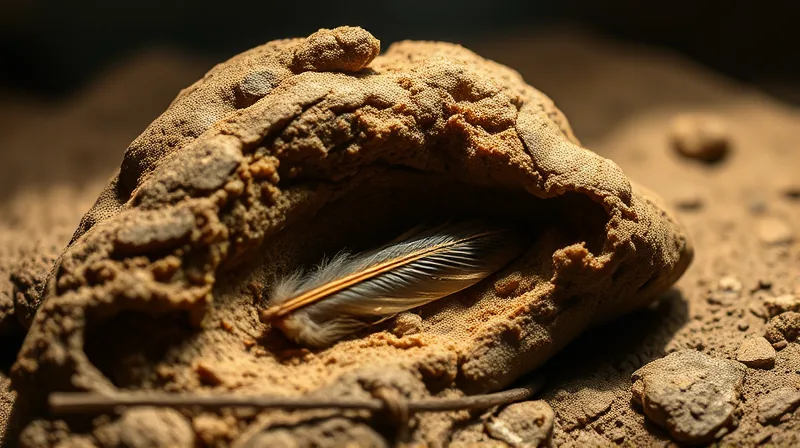
Sometimes the most important discoveries come from looking at something nobody else thought to examine. Fossilized dung from a meat-eating dinosaur — the kind of material most researchers would walk past without a second glance — turned out to hold something never seen before in the entire fossil record. Inside that ancient waste, paleontologists found exquisitely preserved feathers. [1] These are the first feathers ever discovered in fossilized dinosaur poop, and they are opening a window into how some ancient birds lived and possibly why only some of them survived the catastrophe that ended the Cretaceous Period. [1]
The feathers were preserved at a microscopic level of detail that stunned the research team. When scientists placed them under 200 times magnification, they could see structures that normally vanish completely during fossilization. The dinosaur that produced this dung was a meat-eater — possibly a juvenile T. rex or a creature called Nanotyrannus. Whatever the exact predator was, its digestive tract became an unlikely vault that protected delicate plumage. The fact that feathers could survive passage through a carnivore’s gut and then through the fossilization process itself is remarkable. Soft tissues like feathers almost always decay or get destroyed before they can mineralize. This specimen defied that expectation.
What makes the find even more significant is what the feathers reveal about function. They are not just random bits of fluff. They carry structural features that tell a story about how the animal that wore them — or the animal that ate the creature wearing them — lived its daily life. That is the nature of paleontology: a researcher sets out to study one thing, and the rock delivers something entirely different. The poop specimen sat in a collection until someone decided to look closely enough to notice what was inside.
The research team published their findings on September 10 in the journal Current Biology. [1] A researcher quoted in the announcement is Jingmai O’Connor, a vertebrate paleontologist at the Field Museum of Natural History in Chicago. O’Connor’s reaction to the discovery was direct: this is something researchers are seeing for the first time in the Age of the Dinosaurs. That phrase — the Age of the Dinosaurs — covers a vast span of time. In all that time, no one had ever found feathers preserved inside fossilized dung. The discovery does not just add a new item to a list. It opens a category that did not exist before.
How Tiny Air Pockets Built a Survival Advantage
The feathers tell a mechanical story that connects directly to one of the most important abilities a bird can have: flight. Running down the center of each feather is a shaft called the rachis. In these fossil feathers, that central shaft is filled with tiny air pockets. In modern birds, this same feature keeps plumage lightweight yet stiff enough for flight.
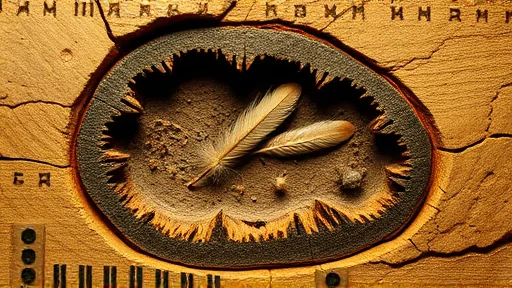
Finding this trait in a dinosaur-age feather is not a minor detail. It means that the flight-ready feather architecture was already present tens of millions of years ago. O’Connor emphasizes that this is a first for the entire Mesozoic Era. Before this discovery, the air-pocket structure in feather shafts was known only from birds living after the extinction event that wiped out the non-avian dinosaurs. Now the clock has been pushed back. The feature did not evolve after the catastrophe. It was already there, in use, before the asteroid or whatever else caused the mass extinction struck.
The second major finding concerns water. Dense bristles on some of the feathers suggest they could repel water. The research team compares this water-repellent quality to that of modern pelicans. If the dinosaur-age feathers had a similar capability, the animal that wore them was likely adapted to an aquatic or semi-aquatic environment. That is a specific ecological claim. It does not just say “this bird lived near water.” It says the feather itself was built to handle water, which implies the bird spent meaningful time in wet conditions.
Taken together, the two features — air-filled shafts and water-repellent bristles — describe a creature that was not a primitive experiment in feather evolution. It was a bird with a sophisticated toolkit. It could fly with efficient, lightweight plumage. It could handle wet environments without losing insulation or buoyancy. They are the traits of a creature that had already solved several major survival problems. The question that follows is obvious: if these birds were so well adapted, why did only some of them make it through the extinction?
The answer the research suggests is not about superiority in general. It is about specific advantages in a specific crisis. The end of the Cretaceous Period was a global catastrophe. Ecosystems collapsed. Food chains broke. Any trait that helped an animal find food, escape predators, or cope with sudden environmental shifts could mean the difference between survival and extinction.
From One Specimen to a Full Picture
One specimen does not answer every question. The feathers found in this single piece of fossilized dung provide a snapshot, not a movie. Researchers now know that at least one dinosaur-age bird had flight-ready feathers with air pockets and water-repellent bristles. They do not know how common these traits were across different species. They do not know whether these features appeared in one lineage or many. They do not know the exact species of bird that wore the feathers, because the feathers were found in the dung of a predator, not attached to a skeleton. The predator ate the bird. The bird’s identity remains unknown.
That gap matters. Without knowing the species, researchers cannot place the feathers on an evolutionary tree with precision. They cannot say whether this particular combination of traits was widespread or rare. They cannot determine whether the water-repellent feature evolved once or multiple times independently. Each of those questions requires more specimens — ideally feathers preserved in situations where the bird’s identity can be established. The fossil record of feathers is sparse to begin with. Feathers decay quickly. They are eaten by scavengers. They are destroyed by weather and bacteria. Finding them at all is lucky. Finding them inside a predator’s dung, where they were protected from many of those destructive forces, is a different kind of luck entirely.
They need to examine more fossilized dung from the same time period and region. They need to compare the microstructure of these feathers with feathers from other Mesozoic specimens. They need to look for the same air-pocket feature in other fossil feathers to see if it is unique or common. Each of those steps requires finding more material, and that material may not exist in any museum collection. It may require new excavations in the right rock layers. That takes time, funding, and a certain amount of luck.

They know that all non-avian dinosaurs died out. They know that some bird lineages survived. They know that the survivors gave rise to every bird alive today. What they do not know is the full list of traits that separated survivors from victims. This feather discovery adds two items to that list: air-filled feather shafts and water-repellent bristles. Other researchers working on the same boundary are examining different lines of evidence — bone microstructure, eggshell chemistry, geographic distribution of fossils. Each line of evidence adds a piece. No single piece completes the puzzle. The feathers in the dung are one piece, and a surprisingly detailed one, but they are not the whole picture.
Parallel work is happening in other laboratories on the same fundamental question: what allowed some birds to survive when everything around them was dying? Researchers studying fossil pollen have shown that plant communities collapsed and then recovered in specific patterns. Those patterns would have determined which food sources were available to birds. Researchers studying fossil insects have found similar disruptions. The birds that survived were the ones that could eat what remained. Water-repellent feathers might have helped a bird dive for fish or insects in lakes and rivers when land-based food was scarce. Air-filled feather shafts might have helped a bird fly farther to find those remaining water sources. The feather evidence connects to the pollen evidence and the insect evidence through the simple logic of survival: you need to eat, and you need to get to where the food is.
That does not make the claim wrong. It makes the claim preliminary. In science, a single specimen is a hypothesis generator, not a hypothesis confirmer. The researchers have generated a clear hypothesis: some dinosaur-age birds had feathers with air pockets and water-repellent bristles, and those traits may have helped them survive the extinction. Testing that hypothesis requires more specimens. It requires finding feathers in more dung, feathers attached to identifiable bird skeletons, and microstructure comparisons across many samples. Until those comparisons exist, the story of how feathers helped birds survive doomsday remains a story with one chapter and many blank pages. The discovery is real. The implications are promising. The confirmation is still somewhere out there, in rocks that have not yet been opened.
Sources
1. Sciencenews — Quote source (original article)