Fossil Rewrites Cretaceous Mammal Evolution Story
A Single Skull Ends Decades of Scientific Guesswork
For nearly four decades, paleontologists have been looking at a puzzle with only a few teeth as clues. These teeth, belonging to a group called zhelestids, were found in Late Cretaceous rocks. Their low, rounded cusps looked surprisingly like the teeth of herbivorous hoofed mammals that would not appear for millions of years. This led many to believe that zhelestids were an early experiment in plant-eating, a sort of missing link before the great radiation of placental mammals.
The problem was that researchers had no skeleton to back up this idea. They were working from isolated molars, trying to reconstruct an entire animal from dental fragments. It was like guessing the design of an entire car from a single hubcap. The hypothesis of what zhelestids were, both physically and in their family tree, could not be rigorously tested without more complete evidence.
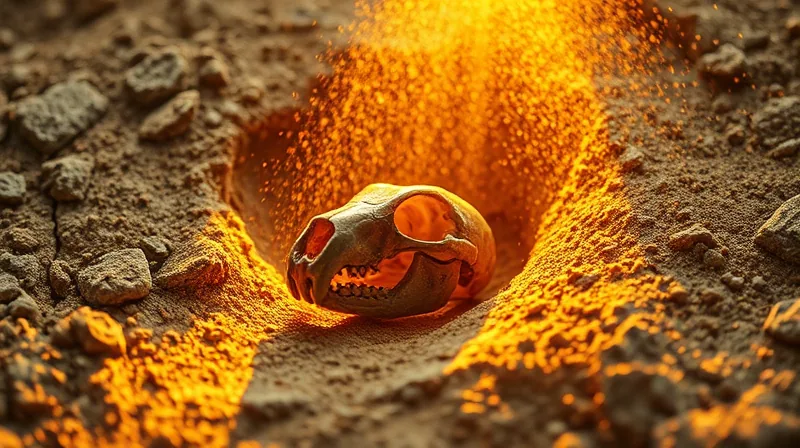
That evidence has now arrived in the form of a single, remarkable fossil from the Upper Cretaceous of Mongolia. The specimen, named Tamirhan balcarceli, is a complete individual — a rare prize in a field accustomed to fragments. [1] It includes a skull with quadrangular, zhelestid-like molars still in place, alongside a partially preserved hind limb. For the first time, researchers can see what the rest of the animal actually looked like.
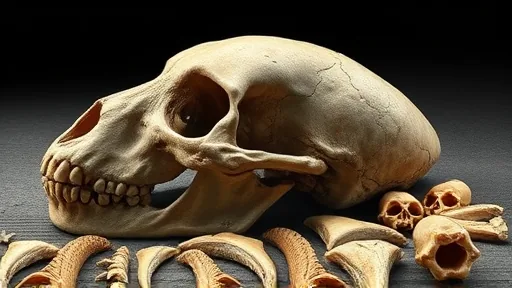
The revelation is startling. The skull and limb bones do not match the herbivorous ungulate idea at all. Instead, they show features that are historically diagnostic of a completely different Cretaceous group called Zalambdalestidae. This includes elongate first lower incisors with restricted enamel and an open root extending under the cheek teeth, as well as fused distal hindlimbs with elongate metatarsals.
An Unexpected Twist in the Mammalian Family Tree
The discovery forces a major reinterpretation of what zhelestids are. The molar shape that seemed to point toward herbivory is now understood as a dental variant that evolved within a different lineage. Zhelestids are not placental-like herbivore relatives at all. They are a specialized branch within Zalambdalestoidea, a clade known for its insectivorous and cursorially adapted members.
This finding reshapes the evolutionary ladder of early mammals. Previously, the story went that placental mammals diversified in the Paleogene, developing highly varied molars for derived diets like carnivory and herbivory. The Cretaceous eutherian stem taxa, the ancestors of Placentalia, were thought to have more conservative dentitions, typically with high, sharp cusps suited for insectivory. Zhelestids were seen as an exception to this rule, a hint of a more placental-like radiation happening earlier than expected.
Now, that exception has been reclassified. The physical and phylogenetic identity of zhelestids, which had eluded rigorous testing for 38 years, is now clear. The animal was not a distant cousin of horses and cows. It was a member of a different group entirely, one that had its own unique skeletal adaptations for a fast, running lifestyle. The low-cusped molars were simply a variation on a theme within that group, not a sign of a new dietary direction.
The implication is that the Cretaceous mammal world was more complex than previously assumed. The similarities in tooth shape between zhelestids and later ungulates are now seen as convergent evolution, not a direct ancestral link. The fossil evidence from Tamirhan balcarceli demonstrates that these features co-occurred in a single individual, proving that the dental and skeletal traits belonged together in a way that overturns the older classification
The Limits of a Fragmented Fossil Record
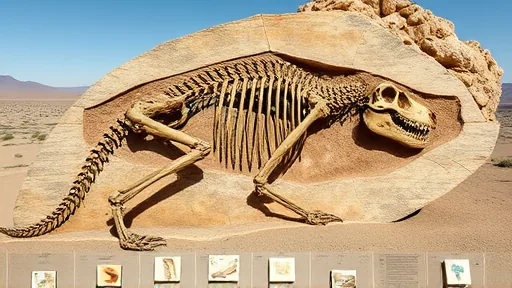
The scientific process that led to this discovery highlights a recurring challenge in paleontology. For years, the field relied on isolated teeth to build entire phylogenetic trees. The absence of associated dental, cranial, and skeletal material from a single individual zhelestid was a major obstacle. Without that connection, any hypothesis about their place in the mammal family tree remained speculative.
This new fossil from Mongolia provides that crucial link, but it also underscores how much of the fossil record is still missing. The fact that it took nearly four decades to find a single complete specimen of a zhelestid shows the rarity of such preservation. The Cretaceous deposits that yield these fossils often produce only fragments, making it difficult to piece together the full anatomy of ancient species.
The research on Tamirhan balcarceli demonstrates the power of a complete specimen to resolve long-standing debates. But it also serves as a reminder that for many other groups of ancient mammals, we still lack the associated skeletons needed to test their evolutionary relationships. Fragmentary material can only yield fragmentary answers, and many ancient groups remain classified on the basis of a few teeth alone.
Until more complete specimens are unearthed, the classification of many Cretaceous mammals will remain provisional. The story of the zhelestids, now clarified by this single remarkable find, suggests that other surprises may be waiting in the Gobi Desert. Each new fossil that includes both teeth and bones has the potential to overturn established ideas, just as Tamirhan balcarceli has done for our understanding of the mammalian family tree.