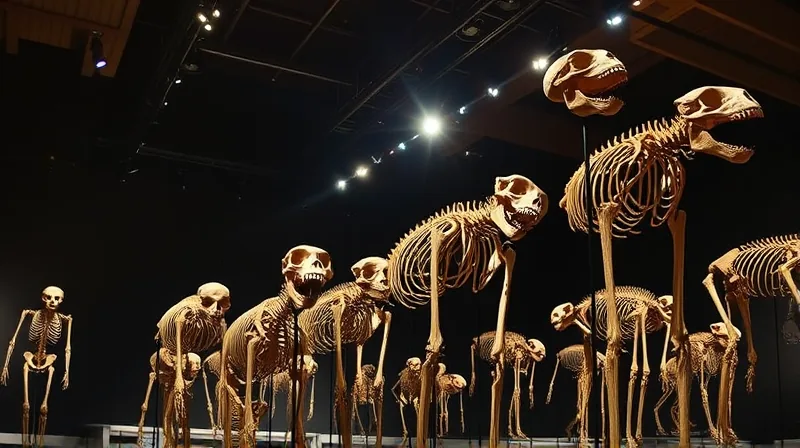
Hominin body size jump linked to Homo erectus emergence
An Accidental
Discovery in the Fossil Record
Jacob Gardner, an evolutionary biologist at the University of Reading in the UK, was not originally searching for a pattern in body size. [1] He and his colleagues compiled estimates of body mass for 386 specimens belonging to 21 hominin groups, dating from 4.5 million years ago to 30,000 years ago. They ran 1000 models to see what would best explain the data. The researchers were asking whether body size increased within each group, meaning earlier Homo erectus were smaller than more recent ones. They also wondered whether each group stayed the same size, with changes coming when new groups evolved. The question of whether body size increased gradually over the whole 4.5-million-year timespan or had long periods of stasis and occasional bursts of growth was central to their work.
The team excluded more recent specimens because there is evidence of our species having shrunk in the past 30,000 years, which would have made a mess of the analysis. They also left out the earliest hominins, Sahelanthropus and Orrorin, because of ongoing uncertainties over how they are related to later groups. The data revealed two distinct trends that explained most of the changes. The first was a gradual progression from Ardipithecus to later hominin species, showing a modest increase in body mass of about 1 to 3 kg per million years. Average body mass went from 40 kg to 75 kg in 4.5 million years, and this gradual increase could only explain about a third of that change.
The second trend was a big jump around the appearance of Homo erectus and other later species in our genus Homo. The first Homo erectus appeared in Africa around 2 million years ago. This finding came as a surprise to the research team, who had expected a more uniform pattern of growth. The study was published in PNAS on 22 June 2025, and it fundamentally changed how scientists view human body size evolution [2] Gardner noted that different hominin groups evolved in different ways depending on their circumstances, so while there was an overall tendency to get bigger, not everyone did.
How Body Size Scales Across Time and Space
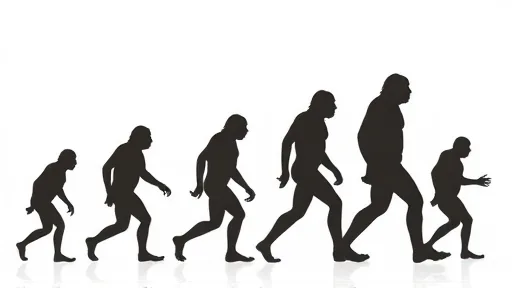
Earlier hominins like Ardipithecus and Australopithecus, which lived earlier than 2 million years ago, had an average body mass of 40 kilograms, with a range of 30 to 50 kg. Homo habilis, an early member of our genus, was a bit bigger at 45 kg on average, ranging from 35 to 55 kg. Homo erectus, the first hominin known to have migrated out of Africa into Eurasia, was bigger still, averaging 60 kg with a range of 50 to 75 kg. Prehistoric Homo sapiens were up to an average of 75 kg and a range of 55 to 80 kg. These numbers show a clear scaling pattern over millions of years.
Manuel Will at the University of Tübingen in Germany led a team that analyzed height in a study published in Royal Society Open Science in 2017 They compiled 204 stature estimates from 4.4 million years ago until nearly the present day. The variation is dramatic. One especially dainty Australopithecus specimen clocked in at just 105 centimetres. A 24,500-year-old Homo sapiens from Barma Grande cave in Italy was almost 189 cm tall. Will’s team found phases of relative stasis intermitted by periods of rapid increases.
Before 2.2 million years ago, most hominins were less than 140 cm tall. There was then a noticeable increase between 2 million and 1.6 million years ago. By 1.6 million years ago, some individuals grew taller than 170 cm for the first time. Such heights only became commonplace much more recently, around 500,000 years ago. This loosely maps onto what Gardner’s team found. Hominins got significantly bigger, both in mass and in height, from around 2 million years ago when Homo erectus came on the scene.
One factor may be sexual dimorphism. In early hominins like Australopithecus, males were significantly bigger than females, reaching 170 cm compared with as little as 105 cm, and had larger canine teeth. The same pattern appears in chimpanzees and other animals where males compete violently for females, with successful males mating with multiple females while unsuccessful males don’t mate at all. In early Homo species, males and females were much more alike, and in Homo sapiens today, the height and mass differences are smaller still. Gardner noted there are hypotheses that perhaps males got smaller through time, and then there are hypotheses that females got bigger through time while males stayed about the same. If the latter is true, that would account for some of the average increase.
Diet may also have played a big role. Early Homo ate more meat than Australopithecus, and meat is calorific. Gardner said they are finding some of the earliest evidence of cooking meat in Homo erectus. Cooked food contains more calories than raw food, so this was another way of getting more nutrition from a given food source. Cooked food may also have been a factor in another important change in our bodies: the growth of our brains. The extra calories from cooked food may have enabled our brains to evolve to be larger.
Where Archaeology Meets Physiology
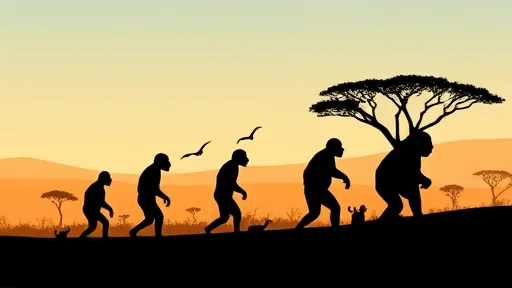
The larger you are, the longer the strides you can take across terrain, Gardner explained. This changed how early Homo groups like Homo erectus lived their lives. Larger bodies meant they could cover more ground while foraging, potentially accessing new food sources and territories. The ability to travel farther may have contributed to Homo erectus being the first hominin known to have migrated out of Africa into Eurasia. This intersection of body size with movement patterns opens new questions about how our ancestors spread across the globe.
Not all hominin groups followed the same path to larger bodies. Homo floresiensis, who lived on Flores in Indonesia until just 50,000 years ago, were barely more than 100 cm tall. Homo naledi from South Africa, who lived 335,000 to 236,000 years ago, were taller but still not much more than 140 cm. One of the shortest known adult hominins was a female Paranthropus robustus, who was probably just 103 cm. Gardner said all these different species are finding their own evolutionary path, with each hominin group having its own unique set of environmental contexts reflected in their varying body sizes. The question of why these hominins became so small remains open. Each one may have done so for different reasons, and the answer likely involves a combination of environmental pressures, resource availability, and social structures. This is where physiology intersects with archaeology. Understanding body size requires not just measuring bones but also reconstructing ancient environments, diets, and behaviors. Gardner emphasized that larger body size enables longer strides across terrain, which fundamentally changes how hominins interact with their environment This simple biomechanical fact has profound implications for how we understand human evolution, from migration patterns to social organization.
Sources
2. PNAS