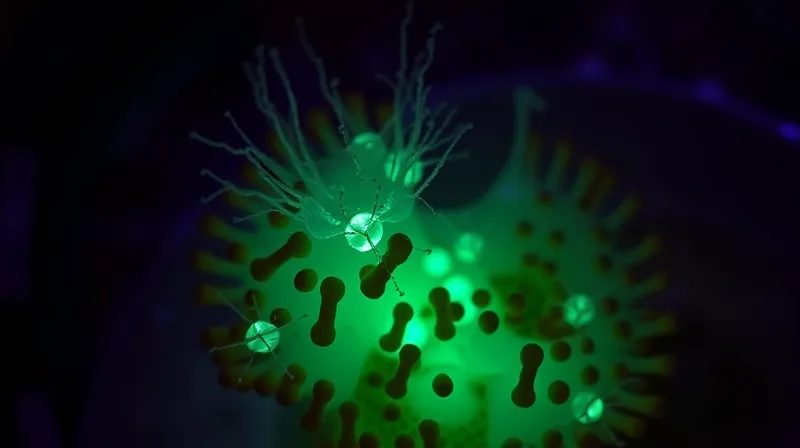
Dying bacteria release enzyme saving colony from antibiotics
When Dying Helps the Group Survive
A bacterial population under antibiotic attack faces a cruel arithmetic. The drug kills individual cells, one by one. Yet the colony as a whole sometimes survives. The paradox dissolves when one recognizes that the dying cells are not passive victims — they are active donors
Researchers at the Institute for Biological Physics at the University of Cologne and Wageningen University & Research discovered that bacteria release a specific enzyme when they die. [1] This enzyme, produced by the dying cells themselves, helps the remaining living bacteria defend against the antibiotic. The finding was published in the Proceedings of the National Academy of Sciences.
The scale matters here. A single dead cell cannot benefit from its own sacrifice. But the colony, numbering in the millions, gains a collective shield from the enzyme released by each fallen member. What looks like individual failure becomes group-level resilience.
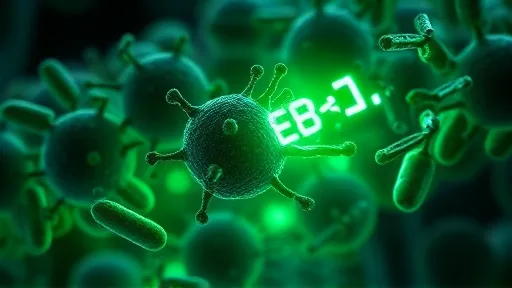
How a Dying Cell’s Enzyme Disarms the Attack
The enzyme does not act randomly. It targets the antibiotic molecule itself.
This mechanism adds a new layer to the understanding of bacterial resistance Previously, resistance was understood mainly through genetic mutations passed to offspring, or through horizontal gene transfer where bacteria swap resistance genes. The Cologne-Wageningen study reveals a third path: chemical warfare waged by the already doomed.
The finding helps scientists understand bacterial survival mechanisms more completely. With this knowledge, researchers can work to improve the effectiveness of antibiotics. If the sacrificial enzyme can be blocked or neutralized, the antibiotic might regain its full killing power.
Unknowns in the Colony’s Backup Plan
The work focused on a specific enzyme and a specific antibiotic context. Whether this is a universal survival tactic or a rare adaptation remains unclear.
The researchers from Cologne and Wageningen have identified the actors — the dying cells, the enzyme, the surviving neighbors. They have described the sequence — death, enzyme release, antibiotic neutralization, colony survival.
Sources
1. Institute for Biological Physics at the University of Cologne