AI designed new phages to fight resistant bacteria
In 1917, a French-Canadian microbiologist named Félix d’Hérelle discovered something that would briefly make him one of the most famous scientists on Earth. He had been studying dysentery outbreaks among soldiers, and he noticed that something in their stool samples was killing the bacteria responsible for the infection. He called it a bacteriophage — literally, a bacteria eater. Within a decade, phage therapy was being used to treat everything from cholera to skin infections, and pharmaceutical companies were racing to bottle these invisible predators.
Then antibiotics arrived, and phages were almost forgotten.
A century later, the bacteria have evolved resistance to nearly every antibiotic we have. And the forgotten predator is back — this time, redesigned by artificial intelligence. In a study published in the journal Science, researchers at Stanford University and the Arc Institute have done something that would have sounded like science fiction even five years ago: they let an AI design completely new viruses from scratch, synthesized them in the lab, and watched 16 of them come to life. [1][4]
The Quiet Breakthrough Nobody Is Talking About
The word “virus” tends to trigger alarm, and the headlines have predictably focused on bioweapons and pandemic risks. But look at what actually happened in the laboratory, and a different story emerges — one that is arguably more important than the fear narrative. The researchers did not create pathogens designed to harm humans. They created bacteriophages, which are viruses that infect only bacteria. And they did it not by copying nature, but by having an AI system invent something nature never came up with on its own.
This is the first time an AI has designed functional viruses that do not exist anywhere in the natural world. Not a tweak of an existing virus, not a mutation of something already known — genuinely new genetic sequences, new regulatory elements, new genome sizes, and new behaviors. The fact that only 16 out of 300 synthesized genomes worked is not a failure. It is the point.
Think about what that means. The AI was trained on millions of genomes from every domain of life — animals, plants, microbes, bacteria, and viruses. It learned the deep grammar of genetic code: how genes are organized, which sequences are conserved, what constraints keep an organism functional. Then it was given a reference point: the Phi X-174 bacteriophage, a well-studied virus that infects the bacterium E. coli. The task was not to reproduce Phi X-174. The task was to invent something new that could still do what Phi X-174 does.
And it worked. The AI-generated phages retained the functional architecture needed to recognize a bacterium, inject their DNA, hijack the cellular machinery, replicate, and assemble new viral particles. But the actual DNA sequences were unlike anything found in nature. Different genes. Different regulatory elements. Different genome sizes. Some infected bacteria faster than others. Some replicated differently.
The researchers then took the most promising genomes, synthesized them molecule by molecule in the lab, and introduced them into E. coli. [1][4] Sixteen of them produced fully functional viruses. That is a 5.3 percent success rate — which sounds low until you consider that this is the first attempt, and that nature itself has a very low success rate when it comes to evolutionary experiments.
Why This Matters More Than the Doomsday Scenarios
Here is the part that gets lost in the coverage: the AI-designed phages were tested against antibiotic-resistant bacteria, and they won.
The experiment was straightforward. The researchers took strains of E. coli that had already developed resistance to natural phages similar to Phi X-174. They exposed these resistant bacteria to a mixture of AI-generated phages. The AI phages rapidly overcame the bacterial resistance and established infection.
This is not theoretical. This is a concrete demonstration that AI can generate phage therapies against rapidly evolving bacterial pathogens. And given that antimicrobial resistance kills an estimated 1.27 million people directly every year — with millions more affected indirectly — this is not a niche concern. It is one of the most pressing public health threats of our time.
The current approach to phage therapy is painfully slow. You find a phage that works against a specific bacterium, you characterize it, you test it, you hope it still works by the time you’re ready to use it. But bacteria evolve fast. By the time you have a treatment ready, the target may have already developed resistance. It is an arms race, and so far, we have been losing.
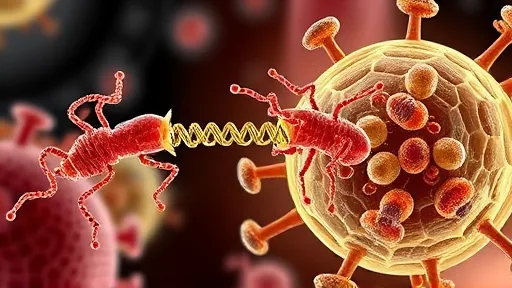
AI changes the calculus. Instead of searching nature for phages that might work, you can generate thousands of candidates in silico, screen them for the ones most likely to be effective, synthesize them, and test them — all in a fraction of the time it would take to find and characterize a natural phage. And because the AI can generate sequences that nature never produced, you are not limited by what evolution happened to stumble upon.
The researchers describe this as “a path toward artificial intelligence-generated phage therapies against rapidly evolving bacterial pathogens.” [1][4] That is a carefully worded scientific statement. Translated into plain language: we now have a way to develop treatments that can evolve at nearly the same rate as the pathogens they are designed to fight.
The Historical Precedent We Keep Ignoring
This is where the 1917 story becomes relevant again. When d’Hérelle discovered bacteriophages, the scientific community was deeply divided. Some saw the potential immediately. Others dismissed it as a curiosity. The development of phage therapy was haphazard — different labs used different protocols, there was no standardization, and results were inconsistent. By the time penicillin became widely available in the 1940s, phage therapy had been largely abandoned in the West, kept alive only in a few places like the Eliava Institute in Tbilisi, Georgia
We are now in a similar moment, but with a different tool. The AI-generated phages are not a finished therapy. They are a proof of concept. But the trajectory is clear: what took d’Hérelle years of painstaking isolation and characterization can now be done in days, with an AI generating thousands of candidates and the lab testing the most promising ones.
The comparison to 1917 is instructive for another reason. The initial enthusiasm for phage therapy was followed by a long period of neglect, and the consequences of that neglect are visible today in the form of antibiotic resistance. We have been slow to learn the lesson that nature’s predators are often our best allies. The question now is whether we will repeat the same mistake with AI-generated phages — either by over-regulating them into irrelevance or by ignoring them until the next crisis forces our hand.
The Real Risk Is Not What You Think
Moritz Hanke, a researcher at the Johns Hopkins Center for Health Security, has argued that there are currently no safeguards capable of effectively preventing the creation of a lethal virus with the help of AI. He told The New York Times that there is “a huge disconnect” between the speed of scientific and technological advancement and the development of regulatory frameworks. [5]
This concern is legitimate, and it deserves serious attention. Three years ago, the Rand Corporation warned that advanced AI systems had the capacity to refine the planning and execution of attacks using biological weapons. The pace of AI development has only accelerated since then.
But here is the uncomfortable truth that gets lost in the fear: the same technology that could theoretically be misused to design pathogens is the technology that could help us defend against them. The AI that can generate novel bacteriophages can also generate novel antiviral drugs. The models that can learn the grammar of genetic code can also identify vulnerabilities in existing pathogens. The tools that raise concerns about bioweapons are the same tools that could produce personalized phage therapies tailored to a patient’s specific infection.
The dual-use dilemma is real, and it is not going away. But framing this entirely as a security threat obscures the actual significance of what was achieved. The researchers did not build a weapon. They built a platform for designing biological tools that never existed before. Whether that platform is used for healing or harm is a question of governance, not technology.
What This Actually Means for Medicine
The practical implications are substantial, and they extend beyond the obvious application to bacterial infections. The ability to design functional viruses from scratch — with precise control over their genetic architecture — opens up possibilities that were previously out of reach.
Consider personalized medicine. Currently, phage therapy is a last resort, used when antibiotics fail and the patient is running out of options. The process is slow and expensive. With AI-generated phages, you could theoretically sequence a patient’s infection, identify the specific bacterial strain, and generate a custom phage designed to target it — all within a timeframe that is clinically relevant.
Consider also the broader field of molecular biomedicine. The same AI models that designed these phages — Evo 1 and Evo 2 — were trained on millions of genomes from all domains of life. They have learned patterns that humans have not yet articulated. The fact that they can generate functional genetic sequences suggests that there are design principles in biology that we have not fully understood, and that AI can help us uncover them.
The researchers worked with bacteriophages because they have relatively small genomes, making them easier to synthesize and manipulate. But the underlying approach is not limited to phages. If the AI can design a functional virus that infects bacteria, it can potentially design other biological systems as well — enzymes, regulatory circuits, even components of more complex organisms.
This is the concrete gain that the fear narrative obscures. Yes, there are risks. Yes, the regulatory frameworks are inadequate. Yes, the technology is advancing faster than our ability to govern it. But the alternative — not developing this technology — means accepting the status quo, where antibiotic resistance kills over a million people a year and the pipeline for new treatments is drying up.
The Time Horizon Problem
Here is the insight that ties it all together: progress and consequence rarely share the same time horizon.
The consequences of neglecting phage therapy in the 1940s did not become fully visible until decades later, when antibiotic resistance became a global crisis. The consequences of developing AI-designed viruses will not be fully known for years, possibly decades. The benefits might materialize sooner — a phage therapy that saves a patient with a resistant infection, a new understanding of genetic design principles, a platform that accelerates biomedical research.
But the risks will also unfold over time. The regulatory frameworks that are inadequate today will become more inadequate tomorrow. The AI systems that can design phages today will be more capable next year, and even more capable the year after that. The window for establishing safeguards is now, while the technology is still in its infancy.
The researchers at Stanford and the Arc Institute have demonstrated something remarkable: AI can invent biology that nature never produced. That is a genuine advance, and it deserves to be celebrated. But it also demands a level of maturity that our institutions have not yet demonstrated. The question is not whether we should develop this technology — that ship has sailed. The question is whether we can develop the wisdom to use it well.
A century ago, d’Hérelle watched his discovery get pushed aside by antibiotics, and the consequences of that neglect are still with us. We have a second chance now. The bacteria are evolving, the antibiotics are failing, and the AI is ready. The question is whether we are ready too.
Sources
4. Science