Bacterial Couriers for Targeted Cancer Drug Delivery
When the Poison Becomes the Vehicle
A bacterium that causes food poisoning would seem like the last thing a cancer patient needs. Yet the same properties that make certain bacteria dangerous — their ability to survive hostile environments, to seek out specific tissues, and to multiply where they land — are precisely what make them useful as drug carriers. The paradox dissolves when the scale changes. At the population level, a bacterial infection is a threat. At the level of a single tumour, a carefully controlled bacterial vehicle can slip past the body’s defences and deposit its payload exactly where it is needed.
This is the premise behind a growing body of research into bacterial drug delivery for cancer. Microorganisms that deliver treatments to tumours could make chemotherapy, radiotherapy and immunotherapy safer and more effective. The idea is not simply to kill tumour cells with bacteria, but to use them as microscopic couriers — shuttling drugs, radioactive isotopes, or immune-stimulating molecules directly into the malignant tissue while sparing healthy organs.
The approach targets a problem that has shaped cancer medicine for decades: how to get enough of a drug into a tumour without poisoning the rest of the body. Chemotherapy circulates everywhere. Radiotherapy damages nearby tissue. Immunotherapy can trigger reactions far from the tumour. A bacterial courier, in contrast, can be engineered to colonise tumours specifically, turning the tumour itself into a drug factory.
From Ancient Observation to Engineered Delivery
The observation that bacteria can accumulate in tumours is not new. It dates back more than a century, when physicians noticed that some cancer patients who developed severe bacterial infections experienced tumour regression. That observation sparked early attempts to use bacteria as cancer therapy, but the approach was crude and unpredictable. For decades, the field remained a curiosity rather than a viable treatment strategy.
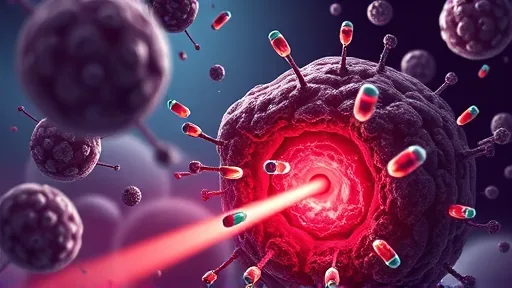
What has changed is the ability to engineer bacteria with precision. Researchers can now modify bacterial surfaces, metabolic pathways, and genetic circuits to control where the microbes go, what they carry, and when they release their cargo. This engineering capability has turned a historical observation into a modern drug delivery platform.
Several independent laboratories have now pushed bacterial delivery from observation to engineering. Batist and colleagues reported in Cancer Immunology, Immunotherapy on bacterial approaches to cancer treatment. Ballister and colleagues published in Nature Biotechnology on engineered bacterial systems. Quispe-Tintaya and colleagues demonstrated in the Proceedings of the National Academy of Sciences that bacteria could deliver radioactive payloads to tumours. [2] Chellakkan Selvanesan and colleagues showed in Science Translational Medicine that bacterial delivery could be combined with other therapies. [3] Chien and colleagues described in Nature Biomedical Engineering a bacterial system for delivering drugs to tumours. [4] Raman and colleagues reported in Nature Communications on bacterial-mediated delivery of immune modulators. [5] Redenti and colleagues published in Nature on bacterial control of drug release. [6]
Each of these studies addressed a different piece of the puzzle. Quispe-Tintaya’s work established that bacteria could carry radioactive material into tumours. [2] Chellakkan Selvanesan’s research showed that bacterial delivery could work alongside conventional treatments. [3] Chien’s team demonstrated a practical system for drug delivery. [4] Raman’s group showed that bacteria could deliver molecules that activate the immune system against cancer. [5] Redenti’s work addressed the timing problem — how to make bacteria release their payload only when they reach the tumour. [6]
The Next Test: Can It Be Replicated?
Bringing the Pieces Together Each study has shown that one component works. The next step is to demonstrate that the components work together — that a bacterium can be engineered to target a tumour, carry a therapeutic payload, release it at the right moment, and do so consistently across patients.
The next step is to show that these components work together in a single, standardised system. What is clear is that the field has moved from proof of concept to the harder work of standardisation. The studies cited here represent different laboratories, different bacterial strains, and different therapeutic payloads. Bringing them together requires solving problems of safety, control, and manufacturing that no single study has yet addressed.
The promise remains substantial. If bacterial couriers can be made reliable, they could change how chemotherapy, radiotherapy, and immunotherapy are delivered. Instead of flooding the body with toxic agents, clinicians could send in microbes that carry the treatment directly to the tumour. The bacteria would find the cancer; the drug would kill it; the rest of the body would be left alone.
Sources
1. DOI: 10.1038/d41586-026-02657-4
2. Proceedings of the National Academy of Sciences
3. Science Translational Medicine
4. Nature Biomedical Engineering
6. Nature