Ancient Fish Fossil Reveals Air Breathing Before Land Animals
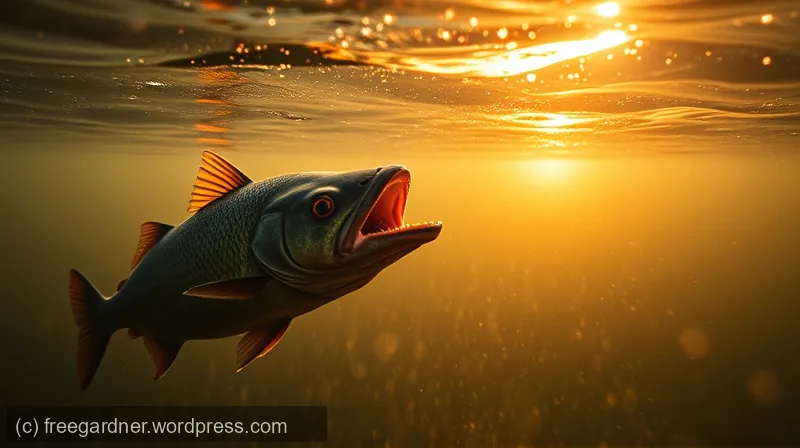
The story of life leaving the water does not begin with a single dramatic leap. It begins with a fish that learned to gulp. 380 million years ago, in the shallow, oxygen-poor waters of what is now Antarctica, a predator named Koharalepis jarviki floated near the surface. It was not a fish that dreamed of land. It was a fish that needed air to survive the heat of a Devonian summer.
The Human Story: Who Found It and Why It Matters
In 1992, a team of paleontologists led by Emeritus Professor John Long of Flinders University discovered a single, precious fossil in Antarctica’s Lashly Mountains[1]. It was the only known specimen of its kind, a fish from the Canowindridae family. For over 30 years, this fossil sat in a museum drawer, its secrets locked inside solid rock. The scientists knew it was important. They just could not see how.
Fast forward to 2026. Dr. Alice Clement, a Research Fellow at Flinders University, and PhD candidate Corinne Mensforth decided to take another look[1]. They did not crack the fossil open. That would destroy it. Instead, they turned to neutron imaging, a technology that uses particles smaller than atoms to see through stone. The Australian Centre for Neutron Scattering at ANSTO provided the beam[2]. Dr. Joseph Bevitt helped operate the machine[2].
The results were published in Frontiers in Ecology and Evolution[3]. The study was supported by the Australian Research Council (grant DP200103398). It was a collaboration that spanned two continents and three decades.
The Scientific Story: What the Neutrons Saw
The braincase of Koharalepis was the prize. This is the part of the skull that protects the brain. In most fossil fish, it is crushed flat. In this one, it was preserved in three dimensions. The neutrons revealed structures that had been invisible to X-rays.
First, the fish had openings in the top of its skull. These are called spiracles. In modern fish, spiracles are used to draw in water. But in Koharalepis, the shape and position suggest something else. They were adapted for gulping air. This is a feature seen in early tetrapodomorphs, the group of fish that includes the ancestors of all land vertebrates.
Second, the scans showed an organ within the brain that detects light. This is the pineal gland, or third eye. It is sensitive to circadian rhythms — the cycle of day and night. In Koharalepis, this organ was large and well-developed. It suggests the fish lived near the surface, where light changes are most dramatic.
Third, the brain shape itself was similar to that of Panderichthys and Tiktaalik, the famous transitional fossils that show the shift from fins to limbs. This places Koharalepis on the evolutionary ladder, one rung below the first animals to walk.
The Water-to-Land Transition: A Closer Look
The journey from water to land did not happen overnight. It took 50 million years. The first fish that could breathe air appeared around 400 million years ago. The first tetrapods — animals with four limbs — appeared around 370 million years ago. Koharalepis lived right in the middle of this window, at 380 million years ago.
Scientists at the University of Chicago and Harvard University have studied other transitional fish[4][5]. Tiktaalik roseae, discovered in 2004 on Ellesmere Island in Canada, had a neck, wrist bones, and lungs. Acanthostega, from Greenland, had eight fingers but still lived in water. Ichthyostega had legs but could not walk well.
Koharalepis adds a new piece to this puzzle. It was not a direct ancestor of land animals. It was a cousin, a side branch that stayed in the water. But it had the same toolkit. The spiracles for air. The pineal gland for light. The braincase shape that would later allow a skull to move on a neck.
The Predator: How It Lived
Koharalepis grew to about 1 meter in length. That is the size of a large dog. It was an ambush predator. It hid among the plants and rocks of freshwater rivers and lakes, waiting for smaller fish to swim by.
But here is the surprise: it had relatively small eyes. For a predator, this is unusual. Most hunters rely on vision. Koharalepis did not. It used its other senses — perhaps lateral line detection of water vibrations, or smell — to find prey in murky water.
This tells us something about its environment. The waters of Devonian Antarctica were not clear. They were full of sediment, algae, and decaying plant matter. Vision was not reliable. The fish that survived were those that could sense the world in other ways.
The Ancient Link Between Australia and Antarctica
The Canowindridae family is named after Canowindra, a town in New South Wales, Australia. In 1955, a road crew there uncovered a massive bed of fossil fish. It became one of the most important Devonian sites in the world.
Koharalepis was found in Antarctica. But it is a close relative of fish found in Australia. This is not a coincidence. During the Devonian Period, Australia and Antarctica were connected. They were part of a supercontinent called East Gondwana. There was no ice. Antarctica was warm, covered in rivers and lakes.
The fish could swim from one continent to the other. They shared the same waters. When the continents later split apart, the fossils were separated by thousands of kilometers of ocean.
Modern Imaging, Ancient Secrets
The technology used to study Koharalepis is called neutron tomography. It is similar to a CT scan, but instead of X-rays, it uses neutrons. Neutrons are particles found in the nucleus of an atom. They can pass through rock but are stopped by certain elements, like hydrogen.
Fossil bones contain hydrogen in their minerals. Neutrons create a detailed map of where the hydrogen is. This reveals the internal structure of the bone, even if it is hidden by surrounding rock.
The Australian Nuclear Science and Technology Organisation (ANSTO) operates one of the world’s most powerful neutron imaging facilities[2]. Dr. Joseph Bevitt has used it to study fossils from the Ediacaran to the Cretaceous[2]. The same technology has been used to look inside Egyptian mummies and Roman swords.
For Koharalepis, neutron imaging was the only option. The fossil was too fragile to cut. The internal bones were too thin for X-rays. Neutrons saw what nothing else could.
What This Means for Science
The study of Koharalepis does not rewrite the story of evolution. It fills in a blank. Scientists already knew that fish developed lungs and limbs. What they did not know was how widespread these adaptations were.
Koharalepis shows that even fish that stayed in the water had the tools for land. The spiracles, the pineal gland, the braincase shape — these were not unique to the direct ancestors of tetrapods. They were common among lobe-finned fish of the Devonian.
This raises a question: if so many fish had these features, why did only one lineage make it onto land? The answer may lie in behavior and environment. The first tetrapods lived in seasonal ponds that dried up. They had to walk to find water. Koharalepis lived in permanent rivers. It never had to leave.
The Broader Picture: Life on the Edge
The Devonian Period is called the Age of Fishes for a reason. The oceans and rivers were full of them. But it was also a time of great change. Plants were moving onto land. Insects were evolving. The atmosphere was changing.
Oxygen levels were lower than today. Carbon dioxide was higher. The water in shallow ponds and rivers could become hypoxic — low in oxygen. Fish that could gulp air had an advantage. They could survive where others could not.
This is the context for Koharalepis. It was not a pioneer. It was a survivor. It adapted to a world that was becoming more difficult. Its air-gulping ability was not a step toward land. It was a step toward staying alive in water.
The Researchers: Who Did the Work
The study was led by Corinne L. Mensforth, a PhD candidate at the Flinders Palaeontology Lab[1]. She has spent years studying the internal anatomy of Devonian fish. Her co-authors include Professor John A. Long, who first described the fossil in 1992, and Dr. Alice M. Clement, a Research Fellow at Flinders University[1].
The neutron imaging was performed by Dr. Joseph J. Bevitt at the Australian Centre for Neutron Scattering[2]. Additional support came from Dr. Matthew McCurry at the Australian Museum and Anton Maksimenko at ANSTO[6][2].
The research was funded by the Australian Research Council (Discovery Project DP 200103398). This is a competitive grant program that supports fundamental science. It is a bet on the value of curiosity.
The Fossil Itself: A Single Specimen
Koharalepis jarviki is known from only one fossil. It was found in the Lashly Mountains of Antarctica, a region that is now covered in ice. During the Devonian, it was a river delta.
The fossil includes the skull and braincase, but not the body. The rest of the fish was lost to erosion. This makes the specimen both precious and frustrating. It gives detailed information about the head, but nothing about the fins or tail.
Still, the head is enough. In vertebrate evolution, the head is where the most important changes happen. The brain, the senses, the mouth, the breathing apparatus — all are in the skull. By studying this one fossil, scientists can infer much about the whole animal.
Parallels in Modern Science
The study of ancient fish is not just about the past. It has connections to modern biology. The pineal gland that detects light in Koharalepis is the same organ that regulates sleep in humans. The spiracles that allowed air gulping are related to the Eustachian tubes in our ears.
Researchers at the University of Cambridge have studied how the neural crest cells in fish embryos form the skull[7]. The same cells in humans form the jaw and face. The genetic program that builds a fish skull is the same one that builds a human skull.
At the Max Planck Institute for Evolutionary Anthropology in Germany, scientists compare the genomes of fish, amphibians, and mammals[8]. They look for the genes that changed during the water-to-land transition. The Hox genes, which control body plan, are nearly identical across all vertebrates.
The Ending: Return to the Surface
The neutrons have finished their work. The fossil is back in its drawer. The data is on a hard drive. The paper is published.
But the image lingers: a fish, 1 meter long, floating near the surface of a warm Antarctic river. It opens its mouth and gulps air. Its third eye senses the changing light. It waits. It has no idea that its descendants will one day walk on land. It does not need to know. It is already perfect for its world.
380 million years later, a machine built by humans sees inside its skull. The fish is gone. The river is ice. But the story is not over. Every time a child takes a breath of air, they are repeating a trick that Koharalepis learned first.
Sources
2. ANSTO