
Classical Math May Mimic Quantum Effects in Life
Sunlight, Cells, and a Ninety-Nine Percent Miracle
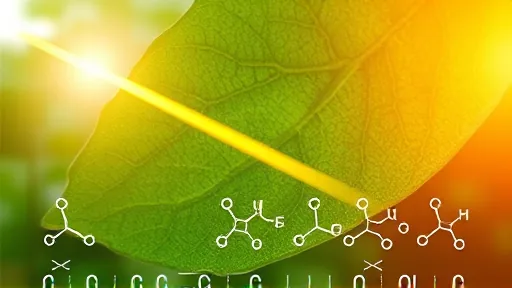
Somewhere above a forest canopy, a photon leaves the sun. Eight minutes later it lands on a leaf. Nearly every time, that packet of light becomes stored chemical energy. The conversion happens with almost no waste — close to one hundred percent efficiency. No human-built solar panel comes close. This near-perfect yield is the puzzle that pulled physicists and biologists into the same room two decades ago.
The machinery behind it is a light-harvesting complex: a structured array of pigments and proteins. When a photon hits, its electromagnetic energy boosts an electron into an excited state. The resulting quasiparticle, called an exciton, travels toward a reaction center. There it is converted into chemical energy that drives the key steps of photosynthesis. The question that nagged researchers was how the exciton finds its way so reliably, without getting lost or wasting energy along the route.
In 2007, Graham Fleming of the University of California, Berkeley tested a provocative idea. [1] If excitons could hold quantum coherence across several molecules at once, they could explore multiple paths to the reaction center simultaneously. Fleming’s team fired extremely fast laser pulses at a bacterial light-harvesting complex to create excitons, then probed them with follow-up pulses. The measurements showed synchronized beats. At the time, those beats looked like evidence of quantum coherence — even in experiments run at room temperature.
Other groups, including Gregory Scholes at Princeton University, ran similar experiments and saw similar beats. The results buoyed a controversial idea: that a warm, wet, and decidedly classical cell could maintain and even exploit fragile quantum states. For a moment, it seemed biology had found a way to reach into the quantum realm and use its strangest properties to survive.
When the Beats Turned Out Classical
Then the wall arrived. Closer examination showed that the beats were not quantum coherence at all. They reflected a resonance between wiggling molecular bonds. That resonance is a real and interesting effect that scientists are still working out. But it is not long-lived, long-range quantum coherence. Richard Cogdell, a photobiologist at the University of Glasgow, summed up the mood plainly: people were disappointed. [1] It would have been exciting if biology had something special no one had realized before.
The disappointment had a deeper cause. Quantumness should not survive long enough to matter for biology.
There is one exception that does not require long-lived coherence. Very small particles, like hydrogen atoms, can quantum tunnel — popping up beyond energetic barriers that would otherwise block them. Tunneling in certain enzymes could explain their speedy reaction rates. But this is not what quantum biologists were after. Tunneling is simple, fleeting, and kind of unavoidable. Even in a flask of dead chemicals, some tiny particles will tunnel through barriers. The real question was whether life can do what dead chemistry cannot: hold quantum states in coherence long enough to use coherence itself as a resource.
Researchers have hypothesized quantum effects in other biological phenomena, including the magnetic sense that helps birds navigate and, more speculatively, human consciousness. Scholes has grown skeptical that effects like coherence and entanglement can scale up in life at all. As he puts it, the scale-up is what gets the wow factor — and the real quantum world is not going to scale up like that. [1]
The Next Step: Classical Networks That Mimic Quantum Math
Scholes returned to his hotel room and jotted down an idea. Maybe the quantum in quantum biology does not come from quantum mechanics at all. Maybe it emerges from wavelike ripples across huge, complex networks. In several papers published over the past three years, Scholes and colleagues have shown that complex networks of classical objects can conspire to produce phenomena that mathematically mimic quantum objects.
The states these networks produce are not truly quantum. They are only quantumlike. They arise when many interacting, oscillating parts add up to a collective whole whose behavior obeys the same mathematics that makes predictions about the quantum world. Strip away the physics from a quantum state and the mathematical object you are left with is a vector — an ordered list of numbers acting like coordinates in a space of possibilities. Quantum states live in a particular kind of vector space called a Hilbert space. One rule of that space says any two states can be added together, and the result is also a valid vector that, once normalized, yields a valid quantum state. That is what superposition gets at mathematically. States are coherent when they have neat phase relationships allowing them to interfere — adding up or canceling out depending on how they line up.
Andrei Khrennikov, a mathematician at Linnaeus University in Sweden, noticed a connection between quantum interference and the classical world in the 1990s. He began borrowing mathematics from quantum mechanics to model probabilities. His idea was that probabilistic outcomes — in fields as different as neuroscience and economics — can interfere with themselves like quantum states in superposition. These states can be mathematically described as vectors in a Hilbert space. Specifically, he showed that networks can be built to produce emergent states that mathematically mimic the simplest quantum unit, a qubit, which has two states like 1 or 0 and can exist in a superposition of both.
Ethan Dickey, a computer scientist at Purdue University, noted that this quantumlike behavior arises strictly from the mathematical structure of the graph. Markus Müller, a physicist at the Institute for Quantum Optics and Quantum Information in Vienna, observed that researchers in the foundations of quantum mechanics have been exploring how to classically re-create aspects of the quantum world for decades. What Scholes has done, Müller said, is show how quantumlike behavior can emerge from relatively unremarkable complex networks of the sort that abound in nature. Sabre Kais, a quantum chemist developing quantum computing algorithms for complex systems at North Carolina State University, called it an exciting new direction, noting that classical systems can mimic some of the key features of quantum information.
The temptation to recast life’s mysteries as quantum is about as old as quantum mechanics itself. Bohr’s contemporary Pascual Jordan spent several decades writing on Quantenbiologie, arguing that life has a unique ability to amplify the strange indeterminism of the quantum world to macroscopic scales.
Scholes now proposes that life might be imitating quantum effects rather than using genuine ones. Maybe quantum biology, at the biggest scales, means using three and a half billion years of evolution to work out how to get the functionality that quantum systems could provide, he said. His question is direct: does it matter if the difference cannot be told? The field may not need the quantum realm to explain what life does. It may only need the math.
Sources
1. Quantamagazine — Quote source (original article)
Mentioned organisations (context, not sources)
- University of California, Berkeley — Organisation (homepage)
- Princeton University — Organisation (homepage)
- University of Glasgow — Organisation (homepage)
- Linnaeus University — Organisation (homepage)
- Purdue University — Organisation (homepage)
- Institute for Quantum Optics and Quantum Information — Organisation (homepage)