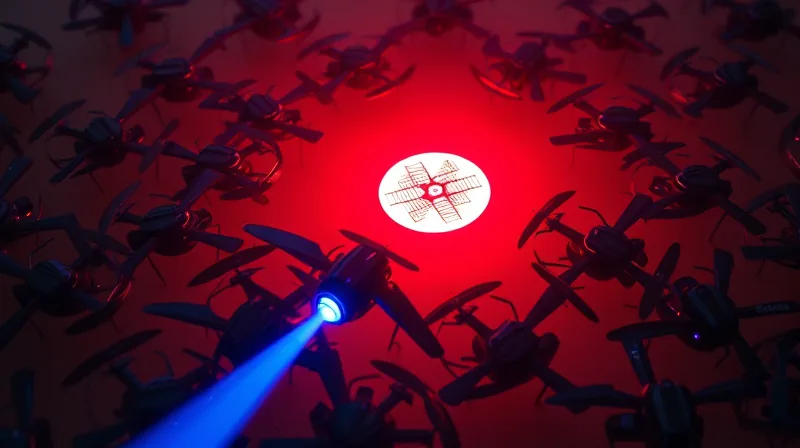
The First Autonomous Kill The robots communicated with each other, avoided collisions, and adjusted their positions using a decentralized control framework. The paper was called “Decentralized Multi-Robot Encirclement of a 3D Target with Guaranteed Collision Avoidance.” It was a technical achievement. It was also a blueprint for a weapon that could hunt without a handler.
That blueprint has now been used. For years, reports and rumors circulated that autonomous weapons had killed soldiers on battlefields without a human in the loop. Those reports were unconfirmed. Now, there is confirmation. According to a report from New Scientist, a test exercise involving autonomous killers has marked a watershed in warfare. [1] The technology has existed for some time. Humans have never invented a weapon and then refrained from using it.
The controversy is not about whether the technology works. It works. The controversy is about what to do with it. The logic for a ban on autonomous weapons is simple. Deploying AI without human oversight risks weapons accidentally targeting troops on the wrong side or civilians. Ethicists argue that such weapons deprive combatants of their dignity. They make war too easy to wage. They muddy the waters when it comes to responsibility for lethal action.
But the evidence that settles the controversy is not a single event. It is a pattern. The United Nations has been in talks to ban fully autonomous weapons for over a decade. According to Human Rights Watch, India, Israel, Russia, and the United States have vetoed the discussions. [3] The framework to ban autonomous weapons already exists. [4] They could be added to the list of excessively injurious or indiscriminate arms proscribed by the UN Convention on Certain Conventional Weapons. Cluster bombs and lasers designed to blind soldiers are already on that list. Autonomous weapons are not.
The more difficult problem is not political. It is material. These drones can be made with inexpensive parts ordered online and open-source software. Any tech-literate teenager could do it. The war in Ukraine has made this clear. Robots will dominate future battlefields. The question the world must now answer is whether a human should always be involved in the decision to pull the trigger. Or whether machines can be allowed to act alone.
The research community has been working on these problems for decades. In 2013, the same year the encirclement paper was published, another team of researchers began exploring how robots could perceive objects through touch and vision together. Their work, “Visuo-Haptic Object Perception for Robots: An Overview,” described how robots could combine artificial vision and touch to understand their environment. The paper was published in 2022. It summarized the state of the art. It highlighted open challenges. It did not mention weapons. But the same sensory integration that allows a robot to pick up a cup also allows a drone to identify a target.
The encirclement paper from 2013 proposed a control framework for achieving encirclement of a target moving in 3D using a multi-robot system. Three variations of a basic control strategy were proposed. Their effectiveness was formally established. An extension ensured maintenance of a safe inter-robot distance. The framework was fully decentralized. It only required local communication among robots. Each robot locally estimated all the relevant global quantities. The strategy was validated through simulations on kinematic point robots and quadrotor UAVs. Experiments were conducted on differential-drive wheeled mobile robots.
The paper did not call for a ban. It did not discuss ethics. It solved a technical problem. That is how these technologies develop. One paper solves encirclement. Another paper solves perception. A teenager orders parts online. A drone is built. A target is found. A decision is made by a machine.
The historical background is instructive. The first autonomous weapons were not drones. They were mines. Landmines were designed to detonate when stepped on. They did not discriminate between soldier and civilian. They did not require a human to decide. They were banned by the Ottawa Treaty in 1997. [5] But the ban came after decades of use. Millions of mines remained in the ground. Children lost limbs. Farmers lost fields. The ban was too late for them.
The same pattern is repeating. The technology has existed for some time. The warnings have been issued. The UN has held talks. The vetoes have been cast. The drones are being built. The question is whether a human should always be involved. The answer is being decided by default. Inaction is a decision.
The philosophical statement that emerges from this evidence is simple. The nature of technology is that it does not wait for permission. It does not ask for approval. It is built. It is used. It proliferates. The only choice is whether to act before or after. The evidence shows that humans act after. They act after the mines are laid. After the limbs are lost. After the targets are killed. The question is whether this time will be different.
The research community is working on both sides of this divide. Some are building better sensors. Better algorithms. Better drones. Others are building frameworks for oversight. For accountability. For bans. The two groups rarely speak to each other. The sensors are integrated. The algorithms are deployed. The frameworks are debated. The teenagers are ordering parts.
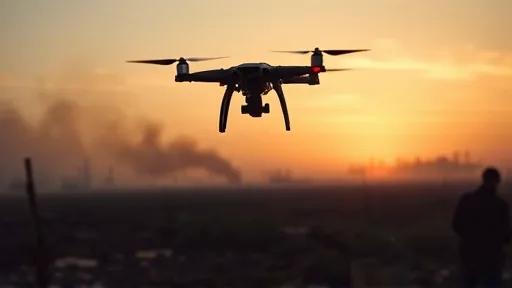
The war in Ukraine has made the future visible. Robots dominate the battlefield. They fly. They drive. They swim. They kill. Some are controlled by humans. Some are not. The line is blurring. The question is whether that line should exist at all.
The answer is not technical. It is political. It is ethical. It is human. The technology is ready. The decision is not.