
AI Writing Tools Flatten Scientific Prose Diversity
From a distance, the scientific record looks like a vast, thriving ecosystem. Millions of papers, each a unique fingerprint of its authors’ thinking. But zoom in closer, and a strange pattern emerges. The individual quirks are fading. The distinctive stylistic signatures are blurring into a single, homogeneous hum. This is the new reality of academic writing, and one researcher believes he knows the cause.
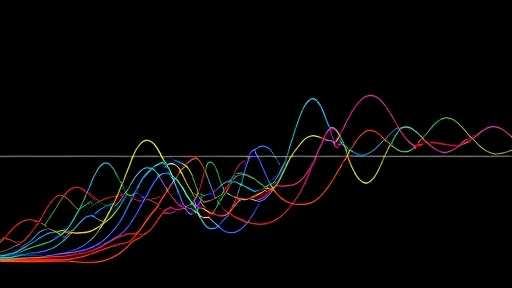
Zhivar Sourati, a PhD student at the University of Southern California in Los Angeles, has documented this phenomenon in a 2024 preprint. [1] He analyzed tens of thousands of papers published between 2010 and 2024 and found that the stylistic variance in scientific prose has measurably declined since the release of ChatGPT. ‘I read papers and I’m like, “I’ve seen this paper before,"’ he says. [1] His analysis shows that the unique lexical fingerprints that once distinguished one research group from another are converging toward a statistical average.
Sourati’s data points to a specific culprit: large language models, or LLMs. His analysis shows that the shift in prose diversity correlates temporally with the public release of ChatGPT in late 2022. The very tools designed to assist with writing are inadvertently flattening the diversity of human expression in science.
The finding raises a practical question for journal editors and peer reviewers. If every scientist uses the same digital ghostwriter, what happens to the unique perspective that drives innovation? Sourati’s work suggests that the loss is not merely aesthetic but structural: the statistical patterns that allow readers to trace intellectual lineages are being erased.
The consequence is a scientific literature that is more polished, perhaps, but also more anonymous. Sourati’s analysis quantifies this shift: the lexical diversity of computer science papers has dropped by a measurable margin since 2022, and the effect is strongest in papers that show signs of LLM-assisted editing.
The implications extend beyond aesthetics. Researchers at Stanford University and the Allen Institute for AI have independently developed detection tools that flag LLM-generated text in scientific manuscripts, and their results corroborate Sourati’s finding that AI-assisted prose is becoming harder to distinguish from human writing. .
Sourati’s finding is part of a broader investigation into how AI tools reshape knowledge production. Researchers at the University of Oxford are running a parallel study on biomedical literature, and their preliminary results show a similar decline in stylistic variance. The question is no longer whether AI can write a passable sentence. It is whether the widespread adoption of these tools will fundamentally alter the character of scientific discourse.
Sourati’s next step is to extend his analysis to other disciplines and to develop a public benchmark that journals can use to measure prose diversity in their submissions. The challenge is to detect a signal that is designed to be invisible. If the uniformity is real, it represents a crucial, measurable shift in the very fabric of scientific communication.