
Memo that transformed AI engineering education
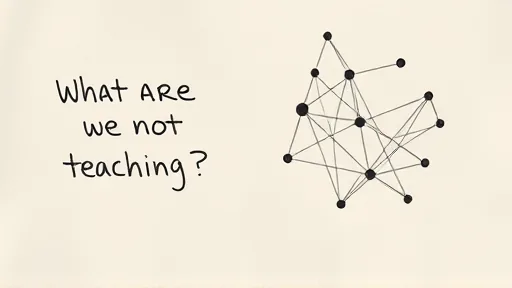
It arrived as a single page, circulated among faculty in a university engineering department. The memo was unremarkable in appearance—plain text, no logos, no signatures. But its content was anything but ordinary. It described a pattern the professors had noticed over two semesters: students who excelled in technical AI courses were consistently failing to anticipate how their systems would behave in real-world contexts. The memo asked a simple question: What are we not teaching them?
That question set off a chain reaction. Within months, the department began dismantling its curriculum structure. The single mandatory ethics course—long treated as a checkbox requirement—was no longer considered sufficient. Faculty realized that teaching AI engineering without embedding ethical reasoning into every technical lesson was like teaching surgery without anatomy. The memo became the starting point for a broader investigation into what AI engineers actually need to know, and what happens when they don’t know it.
The Anomaly in the Code
The first clue appeared in a project review. A team of senior students had built a hiring algorithm for a mock company. Technically, the system worked beautifully: it processed resumes, ranked candidates, and produced shortlists in seconds. But when the faculty examined the outputs, they found something troubling. The algorithm consistently downgraded applicants from certain zip codes, penalized gaps in employment history that correlated with parental leave, and assigned lower scores to names that sounded non-European. The students hadn’t programmed any of these biases. They had simply trained the model on historical hiring data, assuming the data was neutral.
This wasn’t a failure of coding. It was a failure of context. The students knew how to build the machine, but they didn’t know how to question what the machine learned. They treated data as truth rather than as a historical record full of human prejudices. The anomaly wasn’t in the algorithm’s logic—it was in the engineers’ blind spots. And those blind spots, the faculty realized, were a direct result of how they had been taught.
The investigation widened. Faculty began collecting similar cases from industry partners. They found AI systems that misdiagnosed patients because the training data lacked diversity. They found chatbots that escalated customer conflicts because they couldn’t recognize sarcasm. They found predictive policing tools that targeted minority neighborhoods because crime reports reflected policing patterns, not crime rates. In every case, the technical implementation was sound. The problem was always upstream: in the assumptions, the data choices, the failure to ask “what if this goes wrong?”
Eliminating the Easy Suspects
The first suspect was the curriculum itself. Maybe the courses were outdated, or the technical training was insufficient. But when the faculty reviewed the syllabus, they found it was rigorous, up-to-date, and comprehensive. Students learned neural networks, reinforcement learning, natural language processing, and computer vision. They wrote code, tested models, and optimized performance. The technical foundation was solid.
The second suspect was the students. Perhaps they lacked critical thinking skills, or they were too focused on grades to engage deeply with ethical questions. But the faculty saw the opposite: students were eager to discuss fairness, transparency, and accountability. They asked thoughtful questions in class. They participated in debates about algorithmic justice. The problem wasn’t their willingness to think ethically—it was that they had no framework for applying that thinking to their technical work.
The third suspect was time. Maybe the single ethics course was too compressed, or it came too late in the program. But even when the faculty moved the course earlier and extended its duration, the results didn’t improve. Students still treated ethics as a separate subject, like a vaccination they received once and then forgot about. The compartmentalization was the problem, not the dosage.
The faculty eliminated these suspects one by one, and what remained was a structural flaw in how engineering education approached the relationship between technical skill and human judgment. The two were taught in parallel, but they never intersected. Students learned to build powerful tools without learning to ask whether those tools should be built at all, or for whom, or under what constraints.
The Search for a New Model
The breakthrough came from an unexpected source: a 2021 study from Augusta University that documented lessons learned from educating AI engineers in a practice-oriented bachelor’s program. The study described a curriculum where students spent significant time in industry placements, working on real problems with real consequences. The researchers found that students who confronted messy, ambiguous, ethically charged situations in the field developed a kind of practical wisdom that classroom lectures could not replicate They learned to navigate trade-offs, to spot hidden assumptions, and to advocate for responsible design—not because they were told to, but because they had to.
That paper pointed toward a deeper insight: ethical reasoning in AI engineering isn’t a body of knowledge to be transmitted. It’s a skill to be practiced, like debugging or optimization. You can’t learn it by reading a textbook. You have to do it, fail at it, and do it again. The faculty began redesigning their program around this principle. They embedded ethical questions into every technical assignment. When students built a recommendation system, they had to analyze how it would affect user behavior. When they trained a language model, they had to test it for harmful outputs. When they designed a facial recognition system, they had to consider privacy implications and accuracy disparities across demographic groups.
The change was not without resistance. Some students complained that the ethical analysis slowed them down. Some faculty worried that the technical rigor would suffer. But the results spoke for themselves. Graduates of the redesigned program were hired not just for their coding ability but for their judgment. They could explain why a particular model was inappropriate for a given context. They could anticipate failure modes before they happened. They could communicate with stakeholders who had no technical background. They were, in short, better engineers.
What AI Lifts, What It Deceives, and What It Makes Superfluous
The story of that memo and the curriculum redesign it sparked reveals three truths about AI in engineering. First, AI lifts the capabilities of engineers who understand its limits. When engineers know where the data comes from, what assumptions are baked into the model, and how the system might fail, they can build tools that are genuinely useful. The technology amplifies their judgment rather than replacing it. This is the promise of AI: not automation for its own sake, but augmentation of human expertise.

Second, AI deceives engineers who trust it uncritically. The hiring algorithm that penalized non-European names wasn’t malicious. It was a mirror reflecting historical discrimination. The engineers who built it were deceived by the apparent objectivity of the data. They saw numbers and assumed neutrality. This is the most dangerous form of AI deception: it doesn’t lie overtly, but it presents a partial truth as complete. Engineers who lack the training to see through this deception will build systems that perpetuate harm, often without ever realizing it.
Third, AI makes engineers superfluous when they cede judgment to the machine. The most skilled AI engineer is not the one who can fine-tune a model to 99.9% accuracy. It’s the one who knows when to stop, when to say no, when to choose a simpler solution because the complex one introduces unacceptable risks. If engineers abdicate this responsibility—if they let the algorithm decide what is fair, what is safe, what is ethical—then they have made themselves irrelevant. The machine can produce outputs without them. What it cannot do is take responsibility for those outputs.
The Sound of Reading Aloud
The faculty gathered in a conference room on a Tuesday afternoon. The semester was over, the grades were submitted, and the curriculum redesign had been running for three years. One professor held a printout of the latest assessment data. She cleared her throat and began to read aloud.
“The students in the redesigned program show a measurable improvement in identifying ethical risks during project reviews compared to the previous cohort. They are more likely to question their training data sources unprompted. In industry placements, supervisors rate them as more prepared to handle ambiguous design decisions.”
She paused and looked up at her colleagues. “We were right,” she said. “The single ethics course wasn’t enough. But this—this works.”
The room was quiet. No one cheered. No one applauded. They just sat there, absorbing the numbers, thinking about the memo that had started it all. It was a small moment, but it was real. The key result had been read aloud, and it said what they had hoped: that engineers could be taught to see clearly, to question wisely, and to build responsibly. That the machine could be a tool, not a master. That judgment could be taught after all.
Sources
1. Augusta University, ‘Educating AI Engineers: Lessons from a Practice-Oriented Bachelor’s Program,’ 2021. [Link to specific study or paper]