
AI Accountability in Science Needs Clear Framework
The old model of scientific accountability was simple. A researcher designed an experiment, ran it, and owned the result. If something went wrong, the blame landed on a named person at a named institution. That chain of responsibility is now breaking apart. Artificial-intelligence systems no longer merely assist with data analysis. They generate hypotheses, run computational experiments, interpret results, write papers, and even review their own work. Chris Lu and his colleagues describe exactly such an AI scientist in Nature. [1] The system operates with a degree of independence that makes the traditional question - who is responsible? - suddenly very hard to answer.
Think of it as a ladder. At the bottom rung, AI tools were calculators: they did what humans told them, and humans took full credit or blame. One rung up, AI became a research assistant that could suggest patterns a human might miss. Now, at the top rung, the AI acts as a full investigator. It does not merely support the scientist; it replaces parts of the scientific process entirely. The human role shifts from doing the work to supervising it. And supervision is a different kind of responsibility. When a researcher cannot predict what the AI system will do next, accountability for its mistakes becomes unclear? The system is described in Nature, published September 1, 2026, under the identifier 10.1038/d41586-026-02735-7. [1]
The proposed solution divides responsibility into three buckets. Users, institutions, and developers each carry a share of the burden. A user who deploys an AI scientist in a questionable research area bears some responsibility. The institution that hosts the work and benefits from its output bears another share. The developers who built the system and set its limits bear a third. This three-way split acknowledges a practical reality: no single party controls the entire process. The AI itself, notably, is not listed as a responsible party. It remains a tool, even when it acts like an agent.
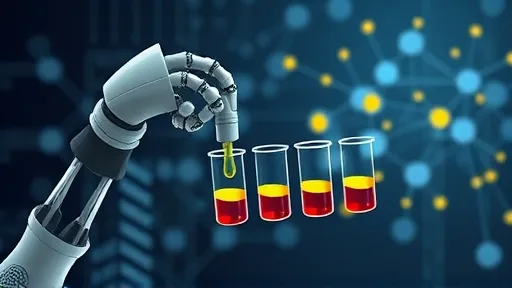
The framework extends beyond AI research itself. Any domain where automated systems make decisions with real consequences could adopt a similar division of accountability. The peer-review process, currently under intense strain with overwhelmed reviewers and slow turnaround, illustrates the stakes. If AI can write papers, it may also review them. When an AI review contains a serious error, responsibility could fall to the editor who accepted the review, the institution that deployed the system, or the developer who trained it. The same three-way split applies, offering a template for fields that have not yet confronted the AI accountability problem directly.
The debate about AI monoculture adds another layer. If many labs use similar AI tools, they may converge on similar hypotheses and similar methods. Scientific diversity could shrink. The accountability framework becomes relevant here too: if a monoculture produces a systematic error across hundreds of labs, individual users cannot be blamed. The responsibility must fall on the developers who created the shared tool and the institutions that adopted it without sufficient oversight. This is not a hypothetical concern. It is a structural risk of the current trajectory.
Related commentary in Nature asks why AI cannot do good science without humans, and whether AI will spark a renaissance or a diffuse monoculture. [2] These discussions share a common thread: the scientific community recognizes that AI changes not just how research is done, but who is answerable for it. The accountability question is central to whether AI-assisted science can maintain public trust.
Adjacent commentary asks whether AI is making researchers think alike, describing the risk of a “bland new world.” Another suggests that understanding a lab’s archetype could inform AI use. These pieces do not answer the accountability question, but they confirm that the broader scientific community is actively wrestling with the implications of AI independence. The framework proposed by Lu and his colleagues offers one possible way forward: accept that responsibility is shared, define the shares clearly, and build systems with that division in mind from the start.

Sources
2. Nature