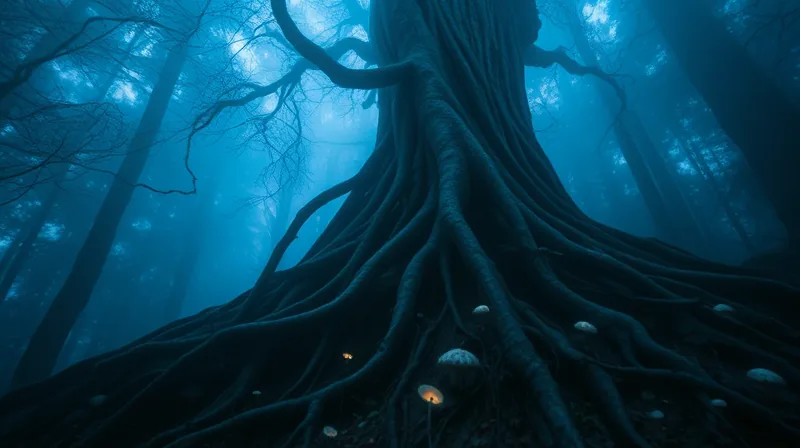
A World Where Death Begins and Birth Ends
From the vantage point of a satellite circling the planet, the blue marble below seems stable, predictable, governed by rules that have held for millennia. But what if the very foundation of life itself operated on a principle we have completely misunderstood? What if the soil beneath our feet, the forests stretching across continents, and the fungal networks connecting them held the key to a radically different origin story? The question sounds like science fiction, yet it forms the backbone of a new literary exploration that asks readers to invert everything they know about existence, time, and the cycle of being.
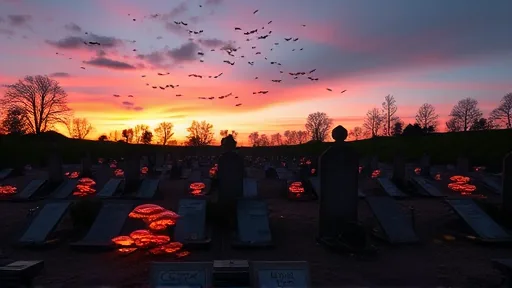
The premise is deceptively simple, yet it unravels the fabric of reality. In this imagined universe, life does not begin with the union of cells or the spark of conception. Instead, it starts with spontaneous fungal generation in vast burial plots, where the dead give rise to the living through a process that defies biological convention. The journey of existence runs backward to forward, ending not in the grave but in the maternity ward, a complete inversion of the natural order we accept without question. This is the world that author Chloe Benjamin has spent six years constructing, a universe nearly identical to ours except for this one fundamental, world-altering difference.
The scope of this project is staggering, ranging from the steps of Lone Mountain in San Francisco to the deepest points of the ocean beneath Antarctica. Benjamin, who grew up in the city’s Outer Richmond neighborhood, developed an ethos of embracing uncertainty that served her well through this ambitious undertaking. The fickle weather of her childhood home and the inconsistent reliability of the 38 Geary bus line taught her a valuable lesson about the creative process. As she explained during a recent interview at her Berkeley home, a lack of confidence at the outset of any project is precisely what sustains her interest over the years of writing it.
A Decade of Solitary Creation
The journey to publication took nearly a decade, with the first draft alone requiring six years of dedicated work. For Benjamin, this represented uncharted territory in her career as a novelist. She has never taken this long on a book, and the extended timeline reflects the complexity of what she was attempting to build. The result is a genre-crossing epic that defies easy categorization, arriving in bookstores on September 1 after years of solitary creation. The sheer ambition of the project makes the timeline almost understandable, given the intricate world-building required to make such a fantastical premise feel grounded and real.
This latest work arrives after a significant gap since her previous novel, “The Immortalists,” which was published years earlier. Benjamin acknowledges the difference between the two projects with a sense of relief that she can finally discuss the new book openly. The genre is completely different, the scope has expanded dramatically, and the creative challenges she faced were unlike anything she had encountered before. For years, she lived alone in this imagined world, carrying its weight and complexity without the ability to share it with readers or even fellow writers. The isolation of such a prolonged creative endeavor is difficult to overstate.
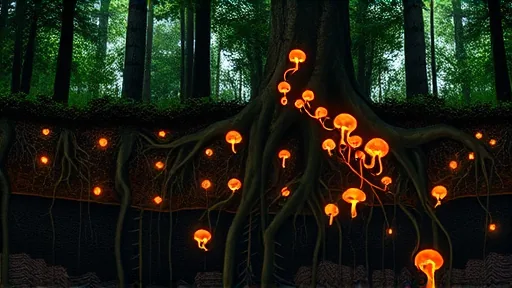
The novel’s central conceit borrows elements from familiar cultural touchpoints, yet transcends them all. There is a teaspoon of Christopher Nolan’s time-bending science fiction film “Tenet” in the way time flows in unexpected directions. A dash of the Brad Pitt-led fantasy drama “The Curious Case of Benjamin Button” appears in the reversal of life’s trajectory from death to birth. A pinch of the fungal apocalypse depicted in HBO’s “The Last of Us” colors the role that fungi play in this alternate reality. But the elevator pitch fails to capture the full depth of what Benjamin has created, as the novel extends far beyond its speculative premise.
The book also examines the incredible burden placed on women who balance motherhood with professional passion, a theme that resonates deeply in contemporary discourse. It takes a hard look at the increasingly desperate isolation of those who study our shrinking ice caps, scientists working at the edge of the world as the ground literally melts beneath them. Woven throughout is a painful yet hopeful meditation on loss and grief, the universal human experiences that connect us across time and circumstance. These threads combine to create a tapestry that is both deeply personal and broadly relevant to our current moment.
Researching the Real to Ground the Imagined
Despite the fantastical nature of the premise, Benjamin grounded her work in extensive research and consultation with experts across multiple fields. She spoke with a vast cast of specialists to give her fictional universe a foundation in observable reality. Among her most valuable sources were scientists working at McMurdo Station in Antarctica, the continent’s largest scientific research facility and the site of one of the novel’s most pivotal moments. [1] These researchers provided firsthand accounts of life at the edge of the world, where isolation and extreme conditions shape both the work and the people who do it.
The mycology research proved equally essential, sending Benjamin down a rabbit hole of fungal study that she had not anticipated. She joined fungus foraging expeditions, learning to identify species in their natural habitats. She spoke with botany professors who helped her understand the complex relationships between fungi and the plant life they support. She even attended a women’s mushroom conference, an event she described as covering everything from how to make a tincture to participating in a grief circle. The experience was, in her words, truly amazing, opening her eyes to a world she had never fully appreciated. [1]
Sometimes the most valuable sources emerged unexpectedly, through chance encounters and fortunate coincidences. Liz Griffith, owner and manager of the Wisconsin sustainable apple farm Door Creek Orchard, discovered that Benjamin had been a customer for a long time without either woman realizing the connection. During the pandemic restrictions of 2020, when the orchard was only allowing customers in by appointment, Benjamin emailed with a logistical question. Griffith, who had recently read and loved Benjamin’s first two books, was stunned to discover that the author was among her customers.
The exchange that followed demonstrated the serendipitous nature of creative collaboration. Griffith wrote back casually, expressing hope that the writing was going well. Benjamin responded with surprise and appreciation, mentioning that she was starting research on her third novel and wondering if the orchard could serve as a source for her. Griffith immediately agreed, recognizing an opportunity to contribute to a project she could not yet fully imagine. The connection proved valuable for Benjamin’s research, as orchards turned out to be a mycologist’s dream environment.
The Symbiotic Life Under the Orchard
Griffith explained that fruit trees prefer rich soil containing abundant mycorrhizal fungi, which form symbiotic relationships with tree roots. The trees give the fungi life, and the fungi give right back to the trees, creating a mutually beneficial partnership that sustains entire ecosystems. This hidden world operates beneath our awareness, largely unexplored by humans despite its fundamental importance to the health of forests and orchards alike. The title of Benjamin’s book, “Under Story,” captures this invisible dimension perfectly, pointing to the layers of existence we rarely consider.
There are distinct advantages and challenges to building a book around areas of scientific discovery that still contain abundant mystery. On the positive side, such subjects offer writers tremendous creative freedom, free from the constraints of pedants eager to pick at nits. The unknown leaves room for imagination to flourish without constant correction from experts who might otherwise challenge every detail. On the negative side, they require building an entire world from unfamiliar materials, inventing physics and biology that must remain internally consistent even as they depart from our understanding of reality.
Benjamin is quick to acknowledge her limitations, emphasizing that she is not a scientist. She was trying to invent the physics and the biology of this universe, a process that presented tough moments throughout the writing process. Yet she found the challenge inherently thrilling, the difficulty itself providing motivation to continue. The painstaking process of world-building, of creating rules and then living within them, became its own reward, sustaining her through the long years of composition.
The timing of the novel’s publication may prove fortunate in ways Benjamin could not have anticipated when she began. Nine years ago, authors, especially women, were more strictly pigeonholed by genre, expected to remain within established categories. But the literary landscape has shifted dramatically since then, with dystopian fiction often incorporating supernatural or science fiction elements and interest in romantasy growing exponentially. Benjamin had concerns about how her publisher might react to a cross-over work, but they were actually excited about it, recognizing the changing tastes of readers.
Benjamin believes that we are living in such a difficult period historically that offering some element of science fiction or fantasy creates a sense of relief and a little bit of escapism. But it also provides a way to think, with hope, about what could be possible for our world. The novel arrives at a moment when readers are hungry for stories that transport them beyond the immediate crises of daily life while still offering meaningful engagement with the challenges we face. The combination of entertainment and reflection, of wonder and wisdom, represents the best of what speculative fiction can offer.