A 120-Year Wait for the Sun’s Hidden Crown
For centuries, astronomers treated the Sun’s ghostly outer atmosphere as a frustrating obstacle. Every time they tried to study the brilliant solar surface, this faint halo ruined their observations. The wispy glow, known as the corona, only revealed itself during the brief moments when the Moon completely blocked the Sun. Scientists saw it as a nuisance, a veil that hid the star’s true face from their instruments. Yet this same frustrating veil would eventually become one of the most studied phenomena in all of astrophysics. The mistake was not in the observations themselves, but in dismissing what they revealed.
The corona is not merely a decorative ring of light around the Sun. It is a searing envelope of superheated gas that extends millions of kilometres into space. Its temperature defies ordinary physics, reaching millions of degrees while the Sun’s visible surface sits at a comparatively cool 5,500 degrees Celsius. This contradiction puzzled researchers for generations. How could the outer layers be so much hotter than the surface beneath them? The answer, it turned out, lay in magnetic fields that twist and snap, releasing energy that heats the corona to extremes.
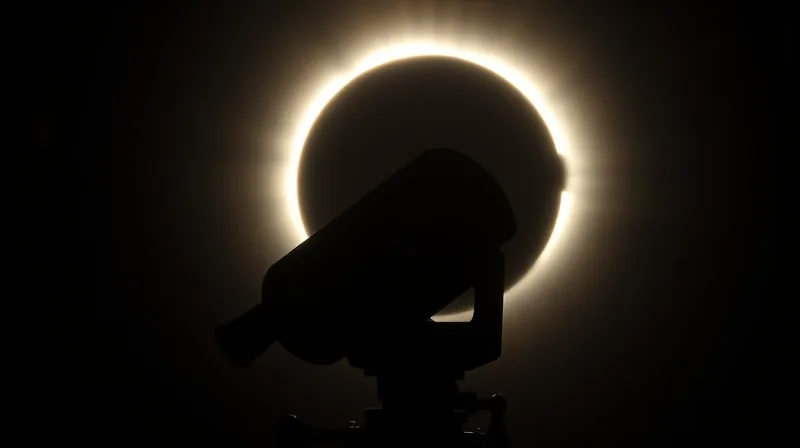
Total solar eclipses became the only natural laboratory where scientists could observe this mysterious region. When the Moon slides perfectly between Earth and the Sun, it casts a narrow shadow onto our planet’s surface. People standing in the darkest part of this shadow see the Sun’s face completely blocked out. In that darkness, the corona blossoms into view, a shimmering crown of plasma that stretches across the sky. These moments are rare, brief, and geographically fleeting, making every eclipse a precious scientific opportunity.
On Wednesday 12 August 2026, such a shadow will cross Greenland, Iceland, and northern Spain, with the path of totality passing over the Iberian Peninsula [1] This event carries particular weight for the Iberian Peninsula. It marks the first total eclipse visible from mainland Spain since 1905, a gap of more than 120 years, and the first to cross the country in over a century Generations of Spanish astronomers have waited their entire careers for this moment. The rarity of the event has galvanised institutions across Europe to prepare extensive observation campaigns.
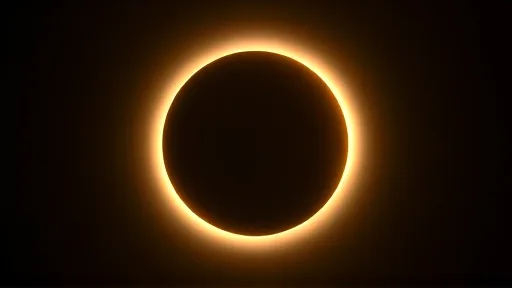
The European Space Agency has prepared a special response to this occasion. ESA’s live broadcast from the Observatorio Astrofísico de Javalambre will allow anyone to experience this rare phenomenon from anywhere in the world. [1] This mountain-top observatory in eastern Spain offers an unobstructed view of the sky, making it an ideal vantage point for the eclipse. The broadcast transforms a geographically limited event into a global experience. Viewers who cannot travel to the path of totality can still witness the corona’s reveal in real time.
ESA is also working with the City and University of León to organise a free in-person event. [3] This gathering invites people to come together for a day of interactive workshops, talks and live observations. The partnership between a space agency, a city government, and a university demonstrates how celestial events can unite different sectors of society. Educational activities will help attendees understand the science behind the spectacle. Families, students, and curious citizens will have the opportunity to engage with researchers directly.
The practical challenge of viewing an eclipse safely has created an unexpected crisis across Europe. Retailers and distributors report that eclipse glasses are running out across the continent. The surge in demand caught suppliers off guard, as millions of people seek to watch the event without damaging their eyes. Specialised solar filters, which block harmful radiation while allowing safe viewing, have become scarce commodities. This shortage highlights the tension between public enthusiasm and safety requirements.
The scarcity of protective eyewear has prompted public health warnings from astronomical organisations. Experts emphasise that looking directly at the Sun, even during an eclipse, can cause permanent retinal damage. The danger is particularly acute because the partial phases of the eclipse, when the Sun is still visible, are just as hazardous as totality itself. Many vendors have sold out of certified glasses, leaving late buyers scrambling for alternatives. Some have resorted to unsafe methods, such as using regular sunglasses or exposed film, which do not provide adequate protection.
For those who miss this eclipse, a better one is coming in 2027. Astronomers have already mapped the path of the next major total solar eclipse, which promises to offer even more spectacular viewing conditions. The 2027 event will cross regions with clearer skies and longer durations of totality. This forward-looking perspective helps maintain public interest in solar science between eclipses. It also gives researchers another opportunity to study the corona and its mysteries.
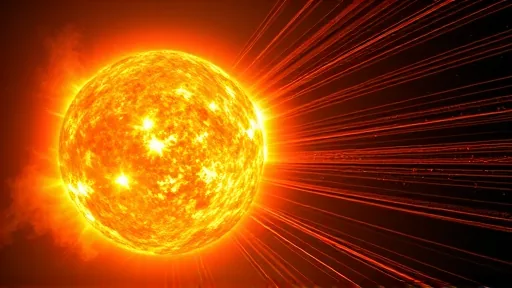
Yet the central contradiction remains unresolved. The more scientists learn about the corona, the more they realise how little they understand about its fundamental physics. The heating mechanism that raises coronal temperatures to millions of degrees still lacks a complete explanation. Magnetic reconnection, wave heating, and nanoflares have all been proposed as potential culprits. Each theory explains part of the observations, but none accounts for all of them.
The eclipse of 12 August 2026 will provide new data, but it will also raise new questions Every observation of the corona reveals structures and dynamics that previous models failed to predict. The shadow that briefly reveals this hidden layer of the Sun is itself a reminder of how much remains unknown. As the Moon passes between Earth and the Sun on Wednesday 12 August, scientists will capture images and spectra that may reshape their understanding. The wispy atmosphere that once seemed like a mere obstacle has become the central puzzle of solar physics, and each eclipse brings researchers closer to an answer that continues to elude them.