
A Number Read Out, Not Understood
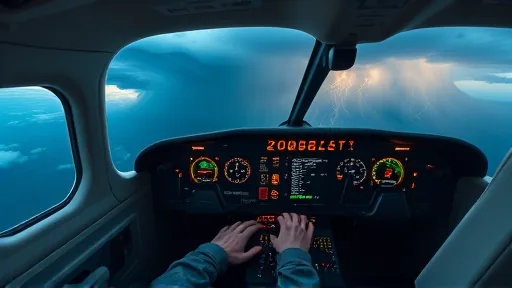
On a calm September morning, a single-engine Cessna Caravan lifted off from Buchanan Field Airport in Concord, California, and turned south toward Phoenix. It then swung east to Fort Worth, touched down at Shaw Air Force Base in South Carolina, and finished at Dare County Regional Airport off the North Carolina coast. The zigzag route covered 3,200 miles, threading through busy airspace and steering around storms. [1] A safety pilot sat aboard the entire time and never once reached for the controls. Joby Aviation, which ran the project, reported that the journey was completed without a human hand on the aircraft. [1] Somewhere in that flight, software weighed a storm cell against a fuel margin against a slot in a landing pattern and chose a path. Nobody in the cockpit made that choice. The machine did, resolving an equation and moving the aircraft.
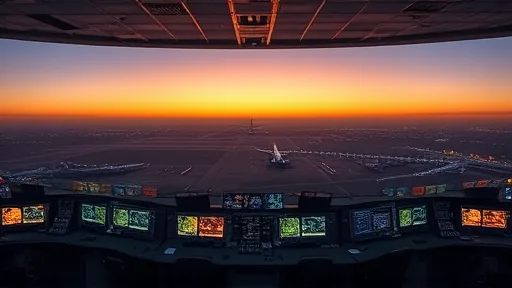
That is the shape of the thing now arriving in aviation: not a robot that replaces a pilot’s hands, but a system that absorbs the pilot’s judgment and returns an answer with no account of how it got there. The Cessna is the visible version. The quieter version is already sitting in air traffic facilities, sorting the sky.
The Groundstop and the Question Nobody Could Answer
On September 27, Transportation Secretary Sean Duffy posted a video announcing a new air traffic management tool. He called it a game changer, said it would save time and cut delays, and gave it a name that spelled out its ambition: Strategic Management of Airspace, Routes and Trajectories, or SMART. The software, built by the Boston data company Air Space Intelligence, uses predictive models to anticipate scheduling conflicts before controllers have to solve them by hand. [1]. The FAA framed it as an aid rather than a replacement, a way to keep more of the national airspace open while holding the safety line. [1].
Almost three weeks later, on Friday the 13th, the agency issued a national groundstop that froze airline schedules worldwide. Officials said quickly that they had found no evidence of a cyberattack and no sign that SMART had caused the communications failure behind the decision. [1]. But when Homeland Security Secretary Markwayne Mullin was asked that night whether he could definitively rule out an AI failure, he offered only that nothing was certain at that moment. [1]. The honest answer was also the unsettling one. A system had been folded into the machinery of flight, and when the machinery seized, the people responsible could not say with confidence whether the new intelligence inside it had played a part. The tool had not replaced the controllers, but it had complicated the human chain of cause and effect that once explained what went wrong.
The Conservative Industry and the Fast Intrusion
Air travel has spent a century earning a reputation for technological caution, and the caution was never timidity. When lives hang on every decision, proven and slightly dated beats brilliant and untested. Mary Schiavo, an aviation lawyer and former inspector general at the Department of Transportation, describes a regulatory culture that prioritizes reliability because failure carries severe consequences, and that treats certification as a matter of demonstrated proof rather than promised capability. [1]. That culture usually means incremental change, not radical change. AI is arriving anyway, and it is arriving fast.
The roots run back to the early 2000s, when better batteries and cheaper microelectronics turned drones from hobbyist curiosities into capable, affordable machines. Officials concluded that robots and people would eventually share the sky and that the infrastructure to separate them had to be built first. [1] In 2007 the federal government launched the Next Generation Air Transportation System, known as NextGen, which mandated broad changes over the following decades. [1]. Among its requirements was that by 2020 aircraft in the United States carry ADS-B, a system that continuously broadcasts position and heading to everyone nearby. [1]. With a road map to robot-friendly airspace in place, Amazon and Walmart began planning drone delivery at scale, and Google unveiled Project Wing, which by 2018 was carrying food, coffee, and medicine to 164 homes near Canberra, Australia. [1]. The next year the pilot expanded to Christiansburg, Virginia. Costs were high and service was slow, but those programs were never meant to be businesses. They were operational training for what came next.
The Copilot Who Was Never Going to Be Hired
Around the same period, startups began building electric vertical takeoff and landing aircraft, or eVTOLs — essentially oversized drones with room for a pilot, for now, designed to carry a few people a short distance. By 2022 there were 600 models under development. [1]. Joby unveiled the design of its S4 in 2020, promising a pilot and four passengers, 100 miles or more, at speeds up to 200 mph. The S4’s maiden flight took place last year. Commercial launch seemed imminent, then slipped, then slipped again. The engineering was only part of the problem. Someone had to design the airspace, train the humans who would supervise the machines, and build an economic framework in which the machines could earn money. A Joby representative identified in the source only as Bowles calls the process a very important, safe, careful dance. [1].
The economics point in one direction. Paying a human to fly a handful of paying passengers is expensive enough to erase the margin, which means the aircraft will eventually have to fly themselves. That is the moment the human role stops being supplemented and starts being removed. If self-driving is hard for cars, it is harder for aircraft, where a control system failure is not merely dangerous but likely deadly.
Europe ran the experiment in miniature. In 2017, Airbus and Dassault asked the European Union Aviation Safety Agency to consider letting airliners operate with a single pilot, with automated systems shouldering the copilot’s workload and taking over entirely if needed. [1]. Pilots revolted. The European Cockpit Association, a union of airline pilots, argued that the change would remove an independent safety professional from the flight deck and hand operators greater influence over the safety judgments a pilot would otherwise make. [1]. Last year the agency shelved the plan. [1]. The copilot’s seat survived — for now — because a union could name what would be lost. A drone corridor has no such constituency.
What the Controllers Already Know
The FAA has been issuing waivers for delivery drones to fly beyond the visual range of their operators since 2023, and the rule change could become permanent by the end of this year. [1]. Amazon says it will expand drone delivery to 500 locations across the country by year’s end; Walmart plans service from 270 stores by the end of 2027. [1]. Anthony Vittone, chief operating officer of the drone technology company DroneUp, told Sherwood News that within five to 10 years the service will be completely ubiquitous, and that people will wonder how they lived without it. [1]. The maximal vision, as industry insiders describe it, is hundreds of thousands of drones serving most or all of the American population. [1].
Joby has flown point-to-point eVTOL trips within New York City, from John F. Kennedy Airport to heliports in Manhattan, and similar flights in California and Texas, all under the eVTOL Integration Pilot Program the administration rolled out this March. [1]. Bowles describes these demonstrations as the front edge of a rollout that will proceed through nonpaying passengers, then paying passengers, then true A-to-B service, each stage under increasing oversight. [1]. Eventually the pilot leaves the aircraft. The question is what leaves with him.
The Controller Who Stopped Traffic to Win an Argument
A recording from LaGuardia Airport on a Tuesday evening in November 2026 shows what human judgment looks like. A Southwest 737 bound for Dallas was cleared to taxi to runway 13 with instructions to give way to an Embraer E170 off its left, taxi via L, B, G, and hold short of runway 22. The Southwest crew read the clearance back correctly and then cut off the Embraer anyway. The controller’s response was to stop traffic, walk the pilots through their mistake, extract an admission, hand them a phone number for a possible pilot deviation, and then broadcast to the frequency that Southwest looked like it had just decided to do whatever it wanted.
The pilots erred; the instruction’s word order probably contributed, since the give-way order arrived after the runway assignment and left the Embraer’s location vague. But the controller’s conduct is the instructive part. He had discretion, and he used it to prove a point in public rather than to move airplanes. Every human in that exchange was performing exactly the kind of contextual reasoning that AI is now being invited to absorb — weighing a crew’s confusion against the cost of delay, deciding whether a rebuke serves safety or ego. The recording is a reminder that human judgment is not uniformly good. It is also a reminder that it is accountable, audible, and arguable. A model that makes the same call produces no recording, no tone of voice, and no one to ask why.
A Frozen Network Cannot Hallucinate, Which Is Not the Same as Being Right
The FAA’s own framing of SMART is modest: predictive software that helps controllers head off scheduling snags, not software that replaces them. But modest framing hides a real design question. If the program feeds nonsensical information into the system, will the humans in the loop catch it? A recently retired FAA employee, speaking anonymously, calls the rollout a Pandora’s box the agency will regret, and describes an approach that pushes new technology through without understanding the complexity of the national airspace system. [1]. Almost two dozen Democratic lawmakers sent a letter to the Government Accountability Office in October asking it to review the program, citing fears that it might hallucinate safety-critical information. [1].
The technical reality is more subtle than the word hallucinate suggests. Researchers are focused on deterministic neural networks — models trained offline whose weights are frozen before deployment. These cannot invent facts the way a chatbot can, but they can fail in other ways. Darren Cofer, a researcher at Collins Aerospace, noted in a 2021 paper that when such systems encounter situations absent from their training, they can generate unexpected and potentially dangerous outputs. [1]. The failure mode is not fabrication. It is confident extrapolation into territory the model has never seen, delivered with the same fluency as its routine answers. A controller receiving that output has no signal that anything is wrong.
The Arithmetic of Fewer People
SMART’s stated purpose is to make controllers’ jobs easier. Its likely consequence is to make fewer controllers necessary. In May, the FAA cut its staffing target for active air traffic controllers from the 2024 goal of 14,633 to 12,563, citing modern staffing models and scheduling tools. [1]. The agency hopes the technology eases a chronic shortage by requiring fewer workers. Other industries have yet to see AI-generated efficiencies actually materialize as promised, but the staffing number moved anyway. The tool arrived, and the headcount followed, before anyone could demonstrate that the tool had earned the reduction.
Michael McCormick, a professor of air traffic management at Embry-Riddle Aeronautical University, sees genuine value in prediction. [1]. With enough computing power to model an aircraft’s entire trajectory, he says, you can see where conflicts will develop, and the governing axiom of the discipline is that the sooner a potential conflict is known, the less effort it takes to resolve. Schiavo is more bluntly supportive, calling the program an important improvement and noting that nobody wants the current aviation environment with midairs, runway incursions, myriad near misses, delays, groundings, loss of separation, and long taxi or clearance wait times. [1]. Both are describing a system that makes the human’s job easier. Neither is describing a system that keeps the human’s job.
The Corridor Where No Human Can Keep Up
The decisive shift will not happen in the airspace controllers manage today. It will happen in the corridors reserved for autonomous aircraft — the airspace around drone hubs and eVTOL vertiports, where swarms of robot aircraft will move too densely for human pilots and human controllers to separate by voice. McCormick is explicit that the objective in those corridors is not to use traditional air traffic control, because the traditional system would be overwhelmed by the volume and complexity of airframes in motion. [1]. The human method is not being improved there. It is being declared inapplicable.
What replaces it is a machine managing machines, with the human role reduced to oversight of a process that runs faster than oversight can follow. The comparison will be live and measurable: one system with human decision-makers, another with AI, operating side by side. That is the feedback loop, and it cuts both ways. Any computer-based system can be attacked, and any AI creative enough to generate novel solutions is capable of generating a crucial error that no one in the loop is positioned to catch. The absence of a human does not just remove a safeguard. It removes the person who would have noticed.
The Gap Between Progress and Consequence
The
Cessna crossed the country without a hand on the controls. The groundstop froze the world, and officials could not say whether the new intelligence had a hand in it. The staffing target fell before the tool that justified it had proven itself. These are not contradictions. They are the ordinary arithmetic of deployment, in which the benefit arrives on schedule and the cost arrives on a delay nobody has budgeted for. Progress and consequence run on different clocks, and the interval between them is where the human role quietly disappears — not abolished by decree, but eroded by a thousand reasonable decisions to let the system handle it. By the time the bill comes due, the people who might have read the situation are no longer in the room, and the machine is still flying.
Sources
Mentioned organisations (context, not sources)
- Air Space Intelligence — Organisation (homepage)
- FAA — Organisation (homepage)
- Department of Homeland Security — Organisation (homepage)
- Department of Transportation — Organisation (homepage)
- Amazon — Organisation (homepage)
- Walmart — Organisation (homepage)
- Google — Organisation (homepage)
- Airbus — Organisation (homepage)
- Dassault — Organisation (homepage)
- European Union Aviation Safety Agency — Organisation (homepage)