
AI Tutor Success Depends on Student Self Explanation
A Counterintuitive Result in Computer Science Education
When researchers at the University of Pittsburgh set out to build an AI tutor for introductory programming courses, they expected to confirm what everyone already believed: that artificial intelligence could help students learn faster and more effectively. What they found instead was a puzzle that took two revisions of their paper to untangle. The study, published on arXiv in August 2025 and revised in September (Lekshmi Narayanan et al., 2025), examined how a self-explanation tutor affected students working through CS1 worked examples — the standard practice problems that teach foundational programming concepts The initial hypothesis was straightforward. Give students an AI that asks them to explain their reasoning, and their understanding deepens. The results were not so simple.
The Difference Between Explaining and Understanding
The tutor, developed by Arun Balajiee Lekshmi Narayanan and four co-authors, did something specific: it prompted students to articulate why they took each step as they worked through example code This is called self-explanation, a technique long established in educational psychology. The premise is that when learners put their reasoning into words, they expose gaps in their own understanding. The AI’s role was to ask the right questions at the right moments — not to provide answers, but to demand them from the student. What the researchers discovered is that this approach works, but not for the reasons they initially assumed: the effect depended entirely on whether students actually thought before they typed.
Where the Gain Actually Lives
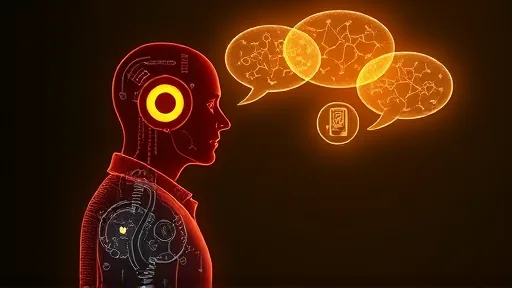
The concrete improvement the study documents is not in test scores or completion rates — those are downstream effects. The gain is in something harder to measure but more durable: the quality of a student’s reasoning while solving problems. When the AI tutor prompted self-explanation, it interrupted the common pattern of copying code without comprehension. It forced a pause. That pause, repeated across dozens of problems, changed how students approached unfamiliar material. The researchers found that the tutor’s value was not in what it told students, but in what it required them to tell themselves. This is a subtle distinction with large consequences. Most educational AI is designed to deliver information more efficiently. This one was designed to slow students down in a specific, productive way.
The Temptation to Overclaim
It would be easy to read this study as proof that AI tutors work. That would be a mistake, and the researchers are careful to avoid it. The effect they measured is real but conditional. The AI could not force anyone to think. It could only create a structure in which thinking became more likely. This is the boundary between correlation and causation that plagues so much AI research in education. A tool that correlates with improved outcomes is not the same as a tool that causes them. The Pittsburgh team’s contribution is that they identified the mechanism, not just the correlation. The mechanism is self-explanation, and the AI is simply a delivery vehicle for it.
What the Revision Reveals
The two versions of the paper tell their own story. The first submission in August 2025 presented the tutor and its results The September revision suggests refinements to the analysis — a sharper distinction between students who engaged deeply and those who did not. The researchers did not simply report that their AI tutor helped. They reported under what conditions it helped, and why those conditions matter. That precision is what separates a useful contribution from a press release.
The Consequence That Follows
If the value of an AI tutor lies in the cognitive demand it places on the learner, then the design question changes entirely. The goal is no longer to make learning easier or faster. The goal is to make it harder in the right way — to introduce friction where friction produces understanding. This runs counter to the dominant trend in educational technology, which treats student frustration as a problem to be solved rather than a signal to be heeded. The Pittsburgh study suggests that the most effective AI in the classroom may be the one that does the least, and asks the most. It points toward a future where artificial intelligence in education is judged not by how much it knows, but by how much it makes students know.