Data center noise sparks political backlash across America
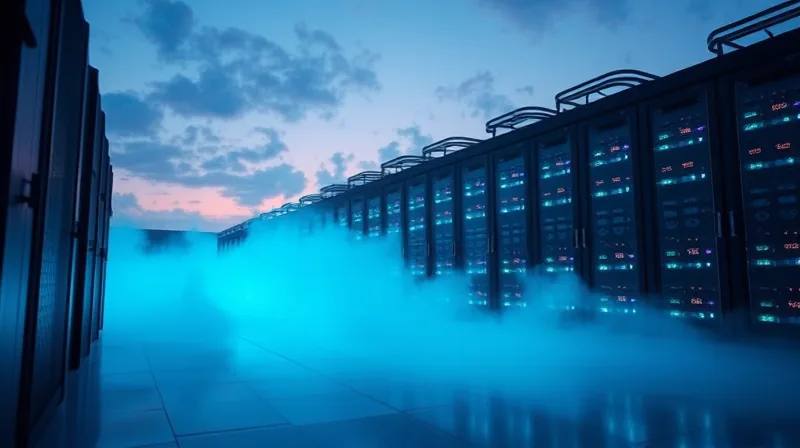
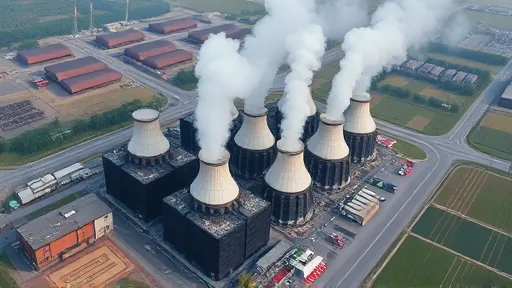
From a hilltop in northern Virginia, you can hear the data center before you see it. The hum is low, constant, industrial — a sound that never stops, not at night, not on weekends, not ever. The facility sits on what was farmland five years ago. Now it consumes enough electricity to power 30,000 homes, and the cooling towers release steam around the clock. The people who live nearby say the noise has changed their sleep, their health, their property values. They have attended county meetings, written letters, filed lawsuits. None of it matters. The machine keeps running.
This is the moment where AI stops being a story about innovation and becomes a story about power — not computing power, but political power. Who decides where the infrastructure goes? Who absorbs the costs? And what happens when the answer is: no one you can vote out?
The Politics of the Unwanted
New York Governor Kathy
Hochul signed the first statewide moratorium on new data centers on July 14, 2024. The executive order paused environmental permits so lawmakers could figure out how to regulate facilities that power AI technology USA TODAY. It was a politically safe move — 71% of Americans oppose data center construction in their communities, according to a Gallup poll cited in the same report Gallup That number includes majorities of Democrats, Republicans, and independents. Hating data centers might be the only bipartisan consensus left in American politics.
The opposition has real teeth. In Utah, residents packed a county commissioner meeting to fight a facility backed by celebrity investor Kevin O’Leary. In Virginia, activists have succeeded in passing local moratoriums. Some politicians have lost their seats over the issue. Yet other Democratic governors have avoided similar action. Maine’s Janet Mills vetoed a bill that would have led to a moratorium. Gavin Newsom let a similar bill die in California, despite individual communities in his state banning the facilities outright.
The pattern is revealing. Lawmakers find data centers attractive because they bring jobs and tax revenue. The economic argument is straightforward: a single facility can employ hundreds of people and generate millions in local taxes. But the costs are borne by the people who live nearby — the noise, the water consumption, the air pollution, the transformation of rural landscapes into industrial zones. The benefits are diffuse, concentrated among developers and investors. The costs are local, immediate, and impossible to ignore.
The Infrastructure That Eats Everything
A single large data center can consume 100 to 200 megawatts of electricity — enough to power a small city. The cooling systems require millions of gallons of water per day. The backup generators run on diesel and emit particulate matter. The buildings themselves are windowless, sprawling, and lit at night like prisons. They are, in every meaningful sense, industrial facilities disguised as technology infrastructure.
The growth has been explosive. In 2020, there were roughly 500 data centers in the United States. By 2025, that number had more than doubled Statista. The projections for 2030 suggest another doubling. This is not a niche industry — it is the physical backbone of cloud computing, streaming, social media, and increasingly, artificial intelligence. Every query sent to an AI model, every image generated, every video processed requires computation that happens in one of these buildings.
The environmental impact is staggering. Data centers currently account for about 2% of global electricity consumption, a figure that is expected to rise to 8% by 2030. The carbon footprint of training a single large AI model can exceed the lifetime emissions of five cars MIT Technology Review The water consumption for cooling is depleting aquifers in drought-prone regions. In Northern Virginia, the epicenter of data center development, local utilities have had to build new power plants specifically to serve these facilities.
The Regulatory Gap
The problem is not that data centers are unregulated — it is that the regulations were written for a different era. Environmental review processes were designed for factories and power plants, not for buildings that consume electricity but produce no physical product. Zoning laws treat them as commercial development, not industrial. Noise ordinances were written for construction sites, not for facilities that generate constant low-frequency hums.
New York’s moratorium is an attempt to close this gap. The executive order gives lawmakers time to study the issue and craft regulations that address the specific characteristics of data centers. But the order is temporary, and the political calculus is clear: Hochul is up for reelection in November 2026, and the moratorium gives her a popular issue to run on. Her office told reporters that the legislation is still on the table, but the executive order allows her to claim credit for the first statewide action of its kind.
This is how regulation works in practice — not through careful planning, but through political opportunism. A crisis emerges, public pressure builds, and a politician seizes the moment. The result is often imperfect, but it is better than nothing. The question is whether other states will follow New York’s lead, or whether the industry will successfully lobby against regulation in other jurisdictions.
The People Who Pay the Price
In rural Virginia, a woman named Linda watched her property value drop by 40% after a data center was built next to her farm. The noise kept her awake at night. The lights from the facility made it impossible to see the stars. She attended every county meeting, spoke at every hearing, wrote to every elected official. The facility was approved anyway. The developer argued that the economic benefits outweighed the local costs, and the county board agreed.
This is the fundamental asymmetry of data center development. The people who benefit are not the people who pay. The jobs go to skilled technicians who commute from elsewhere. The tax revenue goes to the county budget, not to the neighbors. The electricity and water come from public utilities that serve everyone, but the consumption is concentrated in a single facility. The noise and light pollution affect only the immediate area, but the people who live there have no direct recourse.
The Gallup poll confirms what Linda and her neighbors already know: the opposition is broad and deep. 71% of Americans oppose data centers in their communities. The reasons vary — environmental concerns, quality of life, property values — but the sentiment is consistent. People do not want these facilities in their backyards, and they are willing to fight to keep them out.
The Industry Response
The data center industry has responded with a familiar playbook. They emphasize the economic benefits, the jobs created, the tax revenue generated. They point to the need for AI infrastructure to maintain American competitiveness. They argue that regulation will slow innovation and drive development overseas. They hire lobbyists, fund political campaigns, and run public relations campaigns to soften opposition.
The arguments have some merit. Data centers do create jobs, though not as many as promised. They do generate tax revenue, though often at the expense of other development. The AI industry does need infrastructure, though the environmental costs are rarely factored into the calculations. But the fundamental question remains: who decides where these facilities go, and who bears the burden?
The industry’s preferred answer is the market. Developers buy land, apply for permits, and build where they can get approval. Local governments compete for the tax revenue, offering incentives and fast-tracking permits. The result is a race to the bottom, where communities bid against each other to attract facilities that none of them actually want.
The Political Calculus
Hochul’s moratorium is a smart political move, but it is also a sign of deeper problems. The fact that a governor can unilaterally pause environmental permits for an entire industry suggests that the regulatory framework is broken. The fact that other governors have refused to act suggests that the industry’s lobbying power is substantial. The fact that 71% of Americans oppose these facilities but they keep getting built suggests that democratic processes are not working as intended.
The political dynamics are complex. Data centers are popular with business interests and economic development officials, but unpopular with voters. The industry has deep pockets and long political reach. The opposition is diffuse and local, without the resources to compete with corporate lobbying. The result is a policy stalemate, where nothing changes until a crisis forces action.
New York’s moratorium is that crisis moment. It creates a window for regulation, but the window will not stay open forever. The industry will push back, the political pressure will shift, and the moment will pass. The question is whether lawmakers will use the time wisely, or whether they will simply wait for the moratorium to expire and return to business as usual.
The Deeper Problem
The data center debate is not really about data centers. It is about the relationship between technology and democracy. When a technology creates massive infrastructure demands, the people who bear the costs should have a say in where that infrastructure goes. When an industry consumes public resources — electricity, water, land — the public should have a say in how those resources are used. When a facility affects the quality of life for an entire community, that community should have the power to say no.
Currently, they do not. The regulatory framework is designed for a different era, and the industry has learned to exploit the gaps. Local governments are outmatched by corporate legal teams. Environmental review processes are slow and cumbersome. Zoning laws are vague and inconsistent. The result is a system that favors development over community, profit over people, speed over deliberation.
New York’s moratorium is a step in the right direction, but it is only a step. The real work is building a regulatory framework that gives communities real power over the infrastructure that affects their lives. That means strengthening environmental review processes. It means updating zoning laws to account for the specific characteristics of data centers. It means creating mechanisms for community input that actually matter. It means recognizing that the right to say no is as important as the right to build.
The Unspoken Consequence
There is a question that no one in the debate wants to answer. If data centers are so unpopular, so environmentally destructive, and so politically toxic, why are they being built at all? The answer is that they are being built because the technology they support is considered essential. AI, cloud computing, streaming — these are not optional luxuries. They are the infrastructure of modern life, and they require physical facilities to operate.
This is the unspoken consequence of the data center debate. The opposition to data centers is really opposition to the technology they support. If people do not want data centers in their communities, they are implicitly saying that they do not want the services those data centers provide. They want the benefits of AI without the costs, the convenience of cloud computing without the infrastructure, the entertainment of streaming without the environmental impact.
This is not a sustainable position. The costs of technology are real, and they must be borne somewhere. The question is not whether to have data centers, but where to put them and how to regulate them. The answer cannot be “not in my backyard” — because the backyards are running out. The answer must be a system that distributes the costs fairly, that gives communities real power, and that acknowledges the trade-offs involved.
The Path Forward
New York’s moratorium is a beginning, not an end. It opens a space for conversation, for regulation, for rethinking the relationship between technology and community. But the conversation must happen quickly, because the industry is not waiting. Every day that passes, more facilities are planned, more permits are filed, more communities are confronted with the choice between development and quality of life.
The path forward requires several things. First, a national conversation about the environmental costs of AI infrastructure, and who should bear them. Second, updated regulations that treat data centers as what they are — industrial facilities with significant environmental and community impacts. Third, mechanisms for community input that give real power to the people who live near proposed facilities. Fourth, a recognition that the benefits of technology must be balanced against the costs, and that the costs cannot be externalized onto the most vulnerable communities.
The alternative is the status quo, where facilities are built where they are least opposed, where the costs are borne by those with the least political power, and where the industry continues to grow without accountability. That is not a sustainable path. It is a recipe for backlash, for regulatory chaos, and for the kind of political conflict that New York’s moratorium is trying to prevent.
The Final Consequence
The data center debate reveals something uncomfortable about the relationship between technology and democracy. The infrastructure of the digital age is physical, not virtual. It requires land, water, electricity, and labor. It creates winners and losers. It imposes costs on communities that did not ask for them. And the people who make the decisions about where that infrastructure goes are not accountable to the people who bear those costs.
This is the final consequence that no one wants to draw. The technology we have built is not neutral. It has physical requirements that conflict with the needs of communities. It creates externalities that must be managed. And the current system for managing those externalities is broken. The result is a growing conflict between the demands of technology and the rights of communities, a conflict that will only intensify as AI infrastructure expands.
New York’s moratorium is a recognition of this conflict. It is an attempt to pause the machine long enough to ask the hard questions. But the machine will not stay paused for long. The pressure to build, to expand, to compete is too strong. The question is whether the pause will be used wisely, or whether it will be just another moment in the long history of technology outrunning democracy.
The hum from the data center in Virginia does not stop. It does not care about elections, about regulations, about the people who live nearby. It is the sound of a technology that has outgrown its infrastructure, a system that has outpaced its governance, a future that has arrived before we were ready. The question is not whether to silence it, but whether democracy can catch up to the machine before the machine reshapes democracy entirely.
Sources
1. New York Governor Kathy Hochul
2. Gallup