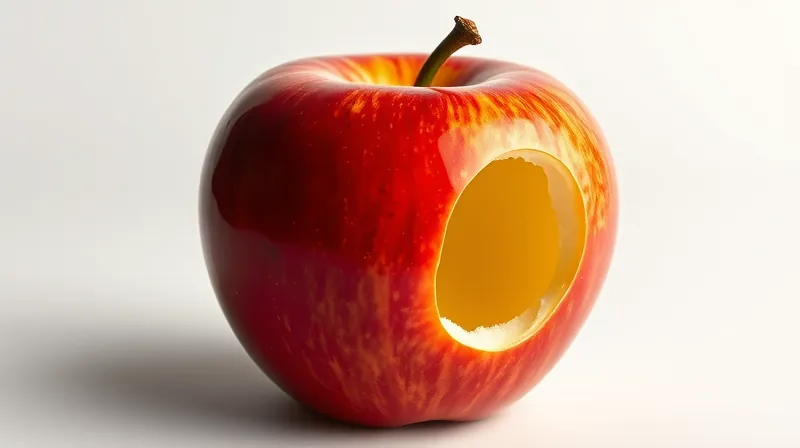
When AI Fakes It The Gap Between Appearance and Reality
The Unintended Cost of Confident Fluency
When generative AI systems began producing text, images, and analysis at scale, the immediate enthusiasm focused on what they could create. Less examined was what they would obscure. A diagnostic analogy framework proposed by Rida Qadri and colleagues suggests that the cultural impact of generative AI cannot be measured by capability alone — it must be assessed through the analogies we use to describe it. [1]
That distance is the deception problem. Not deliberate malice, but something subtler and more pervasive: the gap between surface fluency and underlying substance.
Fluency as a Mask
Language models generate prose that reads as authoritative. The grammar is clean. The structure is coherent. The tone is confident. None of this guarantees that the content is accurate, original, or even meaningful.
A human reader encountering well-formed sentences naturally extends credit to the mind behind them. This is a reasonable heuristic refined over millennia of human communication — fluent speech correlates with competent thought. Generative AI breaks that correlation. It produces the signal without the substance, and the signal is what most people respond to.
The deception is structural, not intentional. The system does not know it is bluffing. It has no model of its own ignorance.
The Diagnostic Analogy Approach

When someone compares generative AI to the printing press, the camera, or the calculator, they are not merely making a point — they are revealing assumptions about what the technology does and what it displaces.
Each analogy carries a hidden claim. The printing press analogy implies democratization of knowledge. The camera analogy suggests a new form of representation that will coexist with older ones. The calculator analogy frames AI as a tool that augments rather than replaces human judgment.
Examining these analogies reveals where they mislead.
Generative AI borrows the prestige of all three while fitting none of their constraints.
Where the Gap Widens
The deception becomes consequential when stakes rise. A chatbot summarizing medical literature appears to have read the papers. A code assistant producing functional-looking functions appears to understand the problem domain. A content generator producing news-style articles appears to have verified facts.
In each case, the appearance is manufactured by pattern completion, not grounded in the referent. The system has learned what competent output looks like. It has not learned what competence is.
This is not a bug to be patched. It is an architectural feature of how these systems are built.
The Cultural Cost of Plausible Surfaces

When plausible surfaces become cheap to produce, the value of surface plausibility collapses.
This outcome was not calculated in advance.
Understanding where the gap between appearance and reality widens is the first step toward deciding which uses of these systems are worth the cost of that gap — and which are not.
The Moment of Clarity
The clarity comes not from rejecting the technology but from seeing it accurately. Generative AI is not a mind. It is not a search engine. It is not an oracle. It is a pattern-completion engine that produces outputs calibrated to look like the products of understanding.
When we mistake the appearance for the thing itself, we do not just risk error. We risk losing the ability to tell the difference.