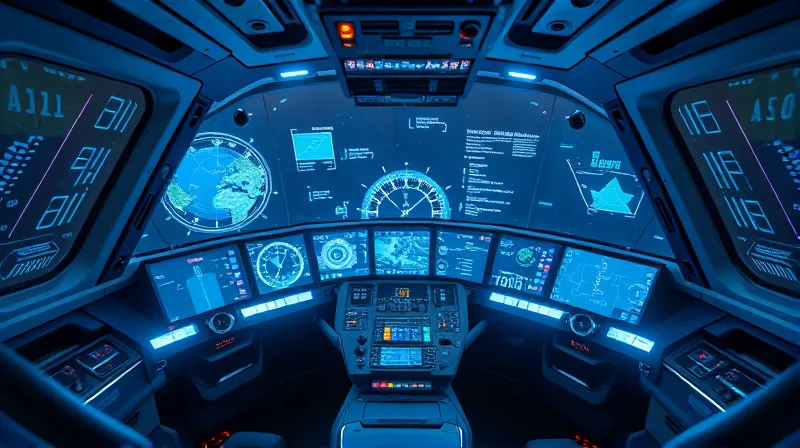
AI onboard spacecraft replaces ground control delays
Meta commentary - no external expert source; basis: Techcrunch (2026-09-22). #MetaSynapsis
Most conversations about artificial intelligence and spaceflight begin with whether machines can replace human explorers. That framing misses what is actually happening. The more interesting development is narrower and more concrete: AI is beginning to take over the parts of spaceflight that humans were never particularly good at in the first place.
The Real Bottleneck Was Never Brains
When NASA sends a spacecraft to an asteroid, the vehicle does not fly itself in any meaningful sense. Teams of flight controllers on the ground tell it what to do, when to do it, and how to correct when something drifts. The OSIRIS-REx mission, which reached its target in 2018, relied on large teams of flight controllers working in rotating shifts to keep one robot on course NASA. [1] That is a small village working around the clock to keep a single spacecraft on track.
The cost of that arrangement is not just money. It is time. Every command sequence has to be planned, checked, transmitted, and confirmed. Light travel time adds minutes or hours between question and answer. A spacecraft near an asteroid cannot ask for help in real time. It waits.
What Autonomy Actually Buys
AstroForge’s next probe, Autonomy-1, takes a different approach MSN. [1] A small transformer-based AI model will run onboard, making decisions without waiting for a signal from Earth MSN. [1] This is not about replacing human judgment with machine judgment. It is about removing the round-trip delay that makes human judgment useless in certain moments.
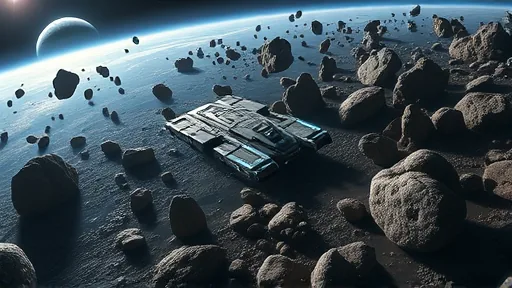
Consider what happens when a spacecraft approaches an unfamiliar object. The lighting shifts. The surface is not what the models predicted. A thruster fires a fraction of a second late. On Earth, controllers see this minutes after it occurred. By then, the window for correction may have closed. An onboard system sees it immediately and responds immediately. The gain is not intelligence. The gain is presence.
The Shift in Professional Roles
If AI handles real-time navigation and hazard response, what happens to the hundred people per shift? They do not disappear. Their work moves upstream. Instead of babysitting a spacecraft through every maneuver, they design the decision boundaries the AI operates within. They define what counts as safe, what counts as an anomaly, and what the vehicle should do when it encounters something no one anticipated.
This is a different skill set. It rewards people who can think in terms of constraints and failure modes rather than joystick reflexes. The flight controller of the past was a skilled operator. The flight controller of the near future is more like a systems philosopher — someone who decides what the machine should value when it cannot ask for guidance.
Why This Matters Beyond Space
What makes the AstroForge approach notable is not that it uses AI. It is that the AI is small enough to run on a spacecraft with limited power and computing resources. A transformer model that fits within those constraints would represent a genuine engineering achievement rather than a marketing claim. The company is betting that a modest model making fast decisions beats a brilliant model making slow ones.
The Reversal
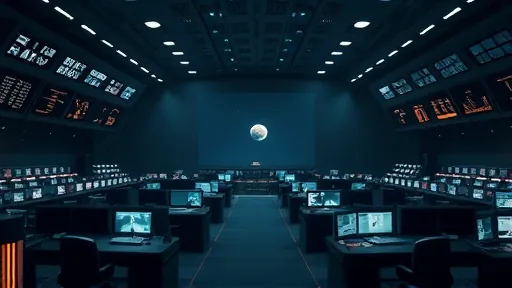
Here is the part that reframes everything. The goal of onboard AI is not to make spacecraft smarter than the teams on the ground. It is to make those teams unnecessary for the tasks they were never suited to perform. The hundred operators per shift were not there because spaceflight requires a hundred minds. They were there because the architecture demanded it — because the spacecraft could not think for itself, so humans had to think for it, slowly and expensively.
Remove that constraint, and the number drops. Not to zero, but to a handful of people doing higher-order work: setting objectives, reviewing outcomes, handling the truly novel situations that no model was trained for. The AI does not replace the team. It replaces the need for the team to be large, tired, and always on call.
The question was never whether machines can explore space. It was whether exploration truly requires a village standing behind every robot. For a growing class of missions, the answer is no.