The Body in Freefall Is a Slow-Motion Patient
The Dragon spacecraft carries experiments that treat the International Space Station less like a laboratory and more like a clinical trial and an agricultural station rolled into one. [2] The first of these is a precision health investigation that sends small, lab-grown models of the human brain — not whole organs, but tissue constructs that mimic neural architecture — to the orbiting outpost for five weeks. [2] Researchers compare the space-flown tissue models against identical copies kept on Earth. The question is narrow and sharp: what does a short spaceflight do to human brain tissue at the cellular level? The answer could reveal how neural cells respond to stress and lay groundwork for countermeasures against brain-health risks on future missions to the Moon and beyond.
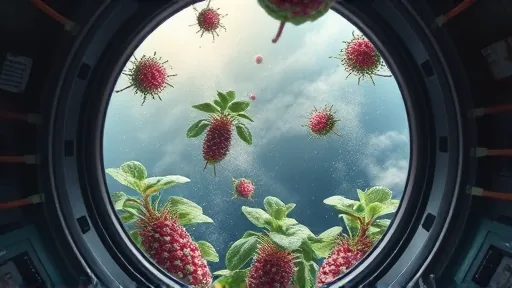
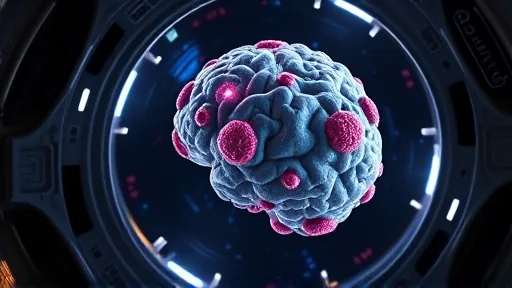
A second investigation turns to plants, but not for nutrition alone. It tests whether crop diseases develop faster and more severely in microgravity. Researchers compare molecular and structural changes between Earth-grown and station-grown plants infected with a disease-causing fungus. The findings could guide plant breeding on Earth toward disease-resistant crops and help reduce yield losses in future space agriculture systems. Space crops already serve multiple functions: they provide nutrition, add dietary variety, offer psychological benefits during extended missions, absorb carbon dioxide, produce oxygen, and recycle water. Those functions grow more critical as human missions push farther from Earth.
A Lab the
Size of a Paperback
The spacecraft also carries the first test of a compact microplate reader that arrived aboard the space station earlier this year. The device is small enough to hold in one hand but potentially transformative: it detects and measures biomarkers such as antibodies, antigens, and proteins. The Commercially Enabled Rapid Space Science initiative tests whether the reader can analyze samples aboard the station and return data quickly, rather than waiting for samples to be shipped back to Earth. The practical payoff is timely detection of infections and other health issues in astronauts, plus expanded science capacity in remote exploration locations where resupply is difficult.
A fourth investigation returns for its fourth and final planned stay aboard the station. [2] It studies how antibiotic-resistant bacteria survive and evolve in microgravity. Astronauts repeatedly sample surfaces throughout the station to monitor for drug-resistant organisms. The work could help develop ways to protect astronauts against bacterial infections during long-duration missions. On Earth, the findings could offer insight into how superbugs develop from the overuse of antibiotics.
NASA’s Biological and Physical Sciences Division pioneers this research by using space environments to conduct investigations not possible on Earth. Studying biological and physical phenomena under extreme conditions advances fundamental knowledge required to go farther and stay longer in space, while also benefiting life on Earth. The division’s precision health and space crops portfolios frame the work as a bridge between astronaut health and terrestrial medicine.
The four investigations share a single trajectory: they treat the station as a place where the human body and the plants that sustain it can be studied under conditions no Earth-bound laboratory can reproduce.