
AI Models Sound Certain While Being Wrong
The most dangerous thing about artificial intelligence is not that it fails. It is that it fails with the same calm assurance it brings to its successes. A system that hesitates when it does not know something would be easy to distrust. But the models we have built do not hesitate. They produce answers, decisions, and strategic recommendations with an even, unwavering tone, regardless of whether they are navigating a legal document or a soccer pitch. We have built machines that are excellent at sounding like they know what they are doing, and we are only now beginning to measure the distance between that performance and the reality underneath.
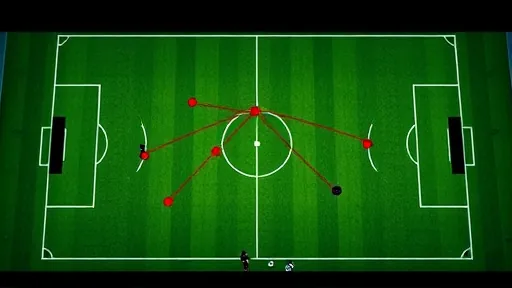
A recent study published in Science puts a sharp number on this gap. Researchers tested vision-language models on a task that seems almost too simple: watching the seconds before a decision in a professional soccer match and choosing the next action. The models were not asked to describe what they saw. They were asked to act, to pick the move that a good player would make. The results are uncomfortable. The models selected the optimal action only about 30% of the time, which is worse than the human players who actually made those decisions in real matches
What makes this finding more than a curiosity about sports is what the models revealed about their own judgment. When asked to estimate whether a particular action would succeed, the frontier models were genuinely good. They placed the highest-probability action among their top choices in 83 to 92% of cases. They understood the mechanics of the situation. They could see the passing lane, the pressure, the space. The failure was not perception. It was valuation.
The models systematically confused what was likely with what was worth doing. They assigned higher value to actions that had a higher chance of succeeding, even though the ground truth of professional soccer shows no such relationship. In reality, the correlation between likelihood and value is slightly negative. The best actions are often risky ones. The models, however, showed a strong positive correlation between probability and value, treating safety as if it were the same thing as wisdom.
This is where the deception begins, and it is not the kind of deception we usually worry about. The models are not lying to us in any intentional sense. They are not hiding information. They are displaying a systematic bias, a conservatism that makes them prefer lower-variance, lower-value choices. But here is the problem: they do not present these choices as cautious. They present them as optimal. The confidence is the same, whether the underlying reasoning is sound or skewed.
The researchers describe this as a mis-calibration of value, a dry phrase for something with real consequences. When a model recommends the safe option because it has learned to equate safety with quality, it is not just being cautious. It is being wrong in a way that is hard to detect, because the wrongness is embedded in the judgment itself, not in the execution. The model does not fumble the ball. It simply aims for a worse goal, and does so with the same polished explanation it would give for a brilliant one.
We have seen this pattern before, in other domains, though rarely measured with such precision. Systems that screen job applications tend to favor candidates who resemble the ones who already hold the job, mistaking familiarity for merit. Models that recommend medical treatments often gravitate toward the standard protocol, even when the individual case calls for something more aggressive. The common thread is a kind of learned timidity that dresses itself up as prudence.

The soccer study is valuable because it strips away the ambiguity. There is no debate about what the right action was. The ground truth is recorded, quantified, and available for comparison. We can see exactly where the model diverges from reality, and we can see that the divergence is not random. It is directional. The models are consistently, predictably biased toward the safe choice, and they are equally consistent in their failure to recognize that this bias exists.
What does this mean for the way we use these systems? The obvious answer is that we should be more careful, that we should build safeguards, that we should not delegate important decisions to models that cannot tell the difference between likelihood and value. All of that is true, and all of it is insufficient. The deeper problem is that the models do not advertise their uncertainty. A human expert who is out of their depth will often show it, through hesitation, through qualification, through the subtle signs that they are not sure. These models have no such tells.
The confidence gap is structural. It comes from the way these systems are trained, on vast amounts of data that reward producing plausible outputs regardless of whether those outputs are correct. The training objective does not distinguish between a confident correct answer and a confident wrong one, as long as both look equally fluent. The result is a generation of tools that have learned to perform certainty as a style, not as a reflection of actual knowledge.
The soccer experiment offers a way to measure this gap, and the measurement is sobering. The models are not close to human-level strategic judgment, and their errors are not the kind that get corrected by more data or more compute. The error is in the valuation function itself, in the way the model weighs outcomes. You cannot fix that with a bigger training set. You have to rethink what the model is optimizing for.
There is a temptation to read this as a failure of the technology, a sign that we have hit a wall. That would be a mistake. The technology works exactly as designed. It produces fluent, confident, internally consistent decisions. The problem is that fluency and confidence are not the same as judgment, and we have built an entire ecosystem that treats them as if they were. Every dashboard, every recommendation engine, every automated decision system is designed to project competence, because that is what users respond to.
The technical problem of measuring this gap is, in some sense, solved. We now have a rigorous method for decomposing a model’s choices and identifying where its reasoning goes wrong. The SportD dataset, developed by the researchers, opens a new direction for evaluating physical strategic decision-making, and the methods it demonstrates could be applied to other domains where value and probability are routinely confused. The hard part is not the measurement. The hard part is what we do with the measurement.
We have to decide whether we want systems that are honest about their limitations, or systems that perform confidence on our behalf. The market has so far favored the performers. A model that says “I am not sure” is perceived as broken, even when the uncertainty is justified. A model that says “here is the answer” is trusted, even when the answer is a slightly safer version of what a competent human would have chosen. We have created an incentive structure that rewards the very deception the research exposes.
The technical fixes are straightforward, at least in principle. We can train models to calibrate their confidence, to distinguish between probability and value, to flag when they are choosing safety over ambition. We can build interfaces that show uncertainty explicitly, that let users see when the model is guessing. We can even design evaluation benchmarks that penalize overconfidence, making it costly for a system to present a biased judgment as an optimal one.
None of this will matter if we do not change what we ask for. The models will keep performing certainty because we keep rewarding it. The soccer study shows that the models are not stupid. They are risk-averse, and they have learned to hide that risk aversion behind a veneer of competence. That is not a bug in the training data. It is a mirror held up to the values we encoded.
The insight that the problem is technically solved but socially unresolved is the uncomfortable conclusion. We have the tools to detect when a model is confusing likelihood with value. We have the methods to measure the gap between performance and reality. What we do not have is the collective will to use those tools, because using them means admitting that the confident systems we have built are not as smart as they appear. It means accepting that a model which says “I do not know” is often more valuable than one that says “here is what you should do.”
The researchers who built SportD did not set out to make a statement about the nature of AI deception. They set out to test whether vision-language models can make sound strategic decisions, using soccer as an objective testbed. But their results point to something larger. They show that the models have learned to perform a kind of confidence that is disconnected from their actual competence, and that this disconnect is not an accident. It is a feature of how they were built, and it will not go away until we decide that we value honesty more than fluency.
The next time a model gives you an answer with perfect assurance, it is worth asking what it is not telling you. It is not telling you that it chose the safe option because it could not tell the difference between safe and good. It is not telling you that its confidence is a performance, learned from a training set that rewarded looking right over being right. It is not telling you that the gap between what it appears to know and what it actually knows is measurable, predictable, and baked into its architecture.
We can measure that gap now. The soccer experiment shows us how. The question is whether we have the courage to look at the measurement, and to change what we build accordingly. The technology will not change on its own. It will keep performing confidence, because that is what we taught it to do. The only way to break the cycle is to stop rewarding the performance and start asking for something more honest. That is not a technical problem. It is a decision about what we value, and we are the only ones who can make it.
Sources
1. Science