
AI Budgets Match Document Complexity to Cut Waste
The gap between what AI researchers publish and what ends up in real products has always been wide. Papers promise breakthroughs; deployments deliver incremental tweaks. But every so often, a result emerges that bridges that gap with unusual clarity. The BudgetDoc framework, detailed in a new study by researchers at a major university, is one such result It tackles a problem most users never see: the cost of making an AI model think too hard.
Large language models do not have a single “intelligence” setting. They have reasoning budgets — internal allowances for how much computation they can spend on a given query. Most systems today allocate that budget uniformly, treating every document with the same computational generosity. This is wasteful. A simple invoice and a dense legal contract receive identical processing power, even though they demand wildly different levels of analysis.
The waste is not just financial. Over-thinking carries a measurable penalty. When a model spends excessive reasoning effort on straightforward material, its accuracy can actually decline. It starts finding problems that do not exist, second-guessing clear answers, and producing output that is more convoluted than correct. The study’s authors call this the “over-thinking penalty,” and it is a genuine obstacle for anyone trying to build dependable document-processing tools.
Enter BudgetDoc, a benchmark designed to make these trade-offs explicit. It tracks how model performance shifts across different budget levels for three document tasks, providing something the field has lacked: supervised data on the relationship between spending and outcome. This is not an abstract exercise. It is the kind of groundwork that turns a vague intuition — “maybe we are spending too much” — into a measurable, testable problem.
The practical payoff comes from DRB, a compact estimator built on top of BudgetDoc. At roughly one billion parameters, it is small enough to run as a pre-flight check before a larger model gets to work. DRB predicts how well a given model will perform at various budget levels, allowing a system to match its spending to the actual difficulty of the document in front of it. The result is a dynamic allocation strategy that adapts on the fly.
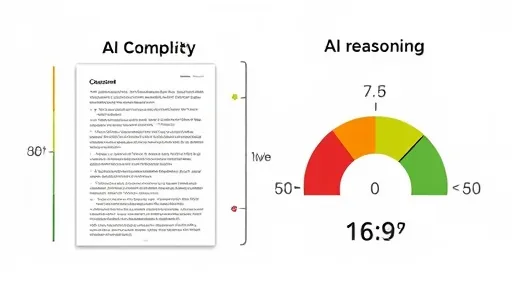
Tested across five frontier models and three datasets, the approach delivers a striking outcome. In nine of fifteen configurations, dynamic allocation matched or improved accuracy compared to always using the maximum budget — while dramatically cutting costs The efficiency gain does not come at the expense of quality. It comes from the simple realization that most documents do not need maximum effort, and that recognizing this fact is itself a valuable capability.
The architecture of DRB is worth examining, because it reveals something about how AI systems are evolving. It pairs a vision encoder with a small language model, letting it assess the visual layout of a document — the tables, the density, the structural complexity — before deciding how much reasoning to allocate. This is a fundamentally different approach from the brute-force paradigm that has dominated the field. Instead of making models smarter in isolation, it makes them smarter about when to think hard.
There is a feedback loop at work here that deserves attention. Every time DRB correctly predicts a low budget for a simple document, it generates data that can refine future predictions. Every time it misjudges a complex layout, that failure becomes training material. The system improves through deployment, not just through pre-training. This is the kind of self-reinforcing progress that turns a research prototype into a genuinely useful tool.
The implications extend beyond document processing. The same principle — predicting difficulty before committing resources — applies to any domain where computational cost scales with reasoning depth. Customer support systems that route queries based on predicted complexity. Code review tools that allocate more analysis to risky changes. Medical documentation systems that escalate based on ambiguity. The pattern is universal: know the cost before you pay it.
Critics might argue that a 0.753 weighted F1 score leaves room for improvement They would be right, but they would also be missing the point. The estimator does not need to be perfect. It needs to be good enough to avoid the worst outcomes — the wasted compute on trivial tasks, the degraded accuracy from over-thinking, the latency that frustrates users waiting for answers that should be instant. In those terms, the system is already delivering value.
The deeper question is one of responsibility. When a dynamic allocation system decides that a document is simple and routes it to a minimal reasoning budget, who is accountable if the judgment is wrong? The study shows that DRB’s predictions are reliable enough to match or beat maximum-budget baselines in most configurations. But “most” is not “all.” The remaining cases are where the human operator must stay engaged, monitoring outcomes and adjusting thresholds when the system’s confidence outpaces its accuracy.

This is the quiet reality of AI progress. The headline-grabbing breakthroughs are impressive, but the incremental gains — the ones that cut costs without cutting quality, that make systems faster without making them dumber — are what actually change how people work. BudgetDoc and DRB represent that second category. They do not promise artificial general intelligence or magical capabilities. They promise something more mundane and more valuable: the ability to spend AI resources where they matter.
The study leaves open questions that will shape future work. How well does DRB generalize to entirely new document types? Can the approach scale to multi-modal reasoning beyond text and layout? What happens when the estimator itself becomes the bottleneck? These are good problems to have. They signal a field that is maturing, moving from the question of “can AI do this?” to the more practical question of “should AI do this, and at what cost?”
For now, the takeaway is straightforward. Smart allocation beats uniform spending. Knowing when to think hard is a capability worth building. And the tools to do it are smaller, cheaper, and more accessible than the models they govern. That is the kind of AI progress worth paying attention to — not because it dazzles, but because it works.