
AI Model Gives Hurricane Warnings an Extra Day of Lead Time
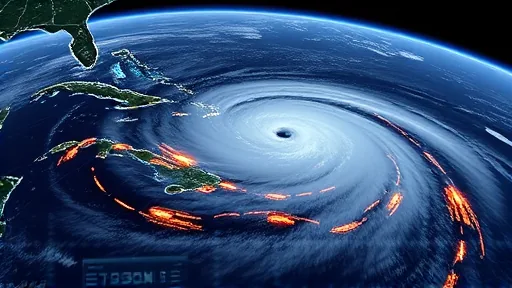
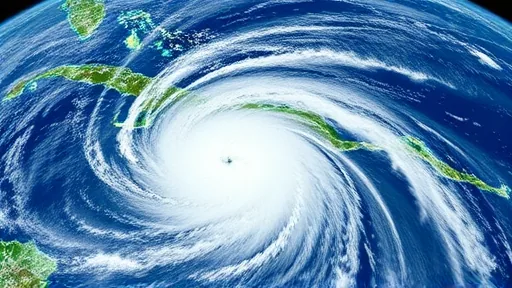
The gap between what AI researchers publish in journals and what actually reaches people in harm’s way is usually a canyon. Papers announce breakthroughs, companies issue press releases, and then the work quietly dissolves into the noise of the next product launch. Every so often, though, the pipeline holds. In October 2025, a storm system formed over the Caribbean Sea, and the difference between a paper’s promise and a practical tool became a matter of life and death. WeatherNext, an AI model developed by Google’s DeepMind and Google Research, had been tested in simulations for months. When Hurricane Melissa began to brew, forecasters at the US National Hurricane Center decided to trust what the model was telling them — a decision that would give communities in Jamaica something they had rarely received before: time.
The model predicted, five days before landfall, that the storm would hit Jamaica as a Category 5 hurricane, and it did so with 80 percent confidence. [1] The National Hurricane Center’s operational data confirmed the model’s accuracy in real time For the people living in the storm’s path, that prediction meant the difference between a frantic scramble and a prepared evacuation. The National Hurricane Center could issue warnings earlier than ever before, staging supplies and moving resources while the storm was still a distant threat. This was not a marginal improvement or a theoretical gain. It was a full extra day of lead time, on average, compared to what existing models could offer. A prediction that took three days to make with previous technology now arrived in two. On the ground, that extra day translated into organized evacuations, secured homes, and lives that did not need to be lost.
What makes this achievement remarkable is not just the accuracy of the prediction, but the method behind it. Traditional weather models rely on physics-based simulations that crunch enormous amounts of atmospheric data to project how a storm will develop. They are slow, computationally expensive, and limited by the resolution of the data they consume. AI models, by contrast, learn patterns from historical weather data and apply those patterns to new situations. The challenge has always been that extreme events are rare, and machine learning needs ample examples to make reliable predictions. There simply are not enough hurricanes in the historical record to train a model exclusively on them. The DeepMind team solved this problem with a clever workaround: they trained the model to be good at weather in general, and cyclones specifically as a special case. The general knowledge filled the gaps left by the scarcity of storm data.
The Scale Problem That Physics Could Not Solve
Hurricanes are uniquely difficult to predict because they operate at multiple scales simultaneously. Predicting a storm’s track — the direction it is traveling — requires data about global weather patterns: the position of cold fronts, the behavior of prevailing winds, atmospheric pressure systems spanning thousands of miles. Predicting a storm’s intensity, however, demands much finer-grained information about local atmospheric and ocean conditions. These two tasks require different types of data, different resolutions, and different computational approaches. Traditional models have always struggled to excel at both. Early AI models, for their part, managed the track prediction quite well. But intensity forecasting remained a stubborn weakness, and intensity is often what determines whether a storm is a manageable inconvenience or a catastrophic event.
A storm can intensify rapidly, sometimes overnight, transforming from a weak system into a major hurricane with little warning. This is precisely what happened with Melissa. The storm strengthened from a Category 1 to a Category 5 in a frighteningly short window, and the National Hurricane Center was able to predict that escalation while the storm was still in its early stages. That prediction marked a first: never before had the center forecast a Category 5 hurricane when the storm was only at Category 1 strength. The implications of this capability extend far beyond a single storm. Rapid intensification is one of the most dangerous aspects of hurricane behavior, catching communities off guard and overwhelming emergency response systems. If AI models can consistently predict these sudden escalations, the entire approach to hurricane preparedness may need to be rethought.
The researchers who developed WeatherNext were themselves skeptical of their own results. When they tested the model on retrospective data — feeding it past weather conditions and asking it to predict what had already happened — the accuracy was so high that they questioned whether the model would perform as well in real-time situations. Real-world forecasting involves messy, incomplete data and unforeseen variables that historical records cannot capture. But when forecasters began incorporating the model into their live operations, the performance held. Kate Musgrave, tropical cyclone group lead at the Cooperative Institute for Research in the Atmosphere and an author on the paper published in Nature, admitted that everyone was surprised at just how well the model did in real-time demonstrations. [4] The paper, which appeared in Nature in late 2025, documented the model’s performance across multiple storm systems. The skepticism that greeted the retrospective results proved unfounded.
The Black Box That Physicists Are Learning To Trust
Perhaps the most puzzling aspect of WeatherNext’s success is that it achieves these results using lower-resolution atmospheric data than traditional models require. The physics-based models that forecasters have relied on for decades need high-resolution inputs to accurately predict storm intensity. The AI model, by contrast, works with relatively coarse data and still produces superior predictions. This apparent contradiction has stunned the meteorological community. When the DeepMind researchers told colleagues that their model was using lower-resolution inputs, the response was shock. The conventional wisdom held that fine-grained data was essential for intensity forecasting. The AI model’s success suggests that the lower-resolution data contains more predictive signal than anyone previously believed possible.
The researchers do not fully understand what the model is picking up on. It is, at the end of the day, a black box. The AI system has identified patterns in the lower-resolution data that correlate with storm intensity, but the nature of those patterns remains opaque. This is not a limitation to be dismissed, though. The model’s unexplained insights are giving physicists something they have not had before: a signal that something about storm behavior is not yet fully understood. When an AI system outperforms human-designed models using less information, it suggests that the underlying physical processes are more complex, or at least more subtle, than current theories account for. The black box is not just a practical tool; it is a window into phenomena that science has yet to explain.
The model does not produce a single prediction but rather a range of potential scenarios for a developing storm. This ensemble approach captures the inherent uncertainty in weather forecasting, accounting for the possibility that small deviations in current conditions could lead to dramatically different outcomes. The “butterfly effect” is not just a theoretical concept in meteorology; it is a practical challenge that forecasters grapple with daily. By generating multiple scenarios, the AI model gives forecasters a sense of the probability distribution of possible outcomes, allowing them to communicate risk more effectively to the public. During the 2025 season, the model generated 1,000 scenarios per storm — an expansion of possibilities that would be computationally impossible with traditional numerical models, which simply do not have the computing power to run that many simulations in real time.
Why Humans Still
Matter in the Age of Prediction
Mike Brennan, director of the US National Hurricane Center, is quick to emphasize that WeatherNext is a tool, not a replacement for human judgment. The model provides forecasts, but translating those forecasts into actionable warnings requires expertise that no AI system has yet mastered. A hurricane is not just a track or an intensity forecast, Brennan notes. It requires experts to interpret what those predictions mean for specific communities: which areas will flood, which infrastructure will fail, which populations are most vulnerable. The impacts are what kill people, and impacts are inherently local and contextual. An AI model can predict a storm’s path with remarkable accuracy, but it cannot know that a particular neighborhood has a poorly maintained levee or that a hospital needs extra time to evacuate its patients.
The human element also provides a crucial layer of skepticism. Forecasters do not rely on any single model, no matter how impressive its track record. WeatherNext is one of many tools in their toolbox, and Brennan cautions that no model is guaranteed to perform well consistently. A model that excelled last year, or for a particular storm, might not be the best choice for the next season or the next hurricane. This humility is essential in a field where wrong decisions can have catastrophic consequences. The cost of a false alarm is measured in wasted resources and eroded public trust; the cost of a missed warning is measured in lives. Forecasters must balance these risks constantly, and they do so by weighing multiple models, historical patterns, and their own experience.
The other major development is that Google DeepMind has open-sourced the WeatherNext models used during hurricane season. Researchers around the world can now access, test, and improve upon the system. This openness could accelerate scientific discovery in ways that extend far beyond operational forecasting. Ferran Alet, a research scientist at Google DeepMind and one of the paper’s lead authors, expressed excitement about what the research community might uncover. [2] The open-source release allows independent verification of the model’s claims. The model’s unexplained success at predicting storm intensity from lower-resolution data could lead to new insights into how cyclones work. AI is giving researchers new tools to probe the laws of the universe, Alet said, and the implications may reach far beyond meteorology.
The Real Cost of Inaction
The story of WeatherNext is not just a tale of technological triumph. It is a reminder that the gap between what AI can do and what AI actually does in practice is often measured in years and billions of dollars. The model was developed, tested, validated, and deployed in a remarkably short time, but this is the exception rather than the rule. For every AI breakthrough that reaches the people who need it, there are countless others that languish in academic papers and corporate slide decks. The systems and incentives that govern AI development do not always align with the urgent needs of the real world. A model that can predict hurricanes with unprecedented accuracy is valuable only if forecasters actually use it, and using it requires trust, training, and institutional willingness to change established procedures. The 2025 season demonstrated that such institutional change is possible when the stakes are clear.
The broader lesson is that AI’s most profound impacts may come not from replacing human expertise but from augmenting it. The forecasters who used WeatherNext did not become obsolete; they became more effective. The model gave them more time, more scenarios, and more confidence in their predictions. It did not tell them what to do with that information. That judgment remained human. The partnership between machine learning and human expertise proved to be the winning formula, and it is a template that could apply to countless other domains where decisions have life-or-death consequences.
As the climate continues to change, the frequency and intensity of extreme weather events are likely to increase. The ability to predict these events with greater accuracy and earlier lead times will become ever more critical. The work done by the DeepMind team and their collaborators at the National Hurricane Center is a proof of concept, a demonstration that AI can deliver concrete, measurable improvements in a domain where the stakes could not be higher. The question now is whether this success can be replicated and scaled. Can similar models be developed for other types of extreme events? Can the approach be adapted to different regions and different climatic conditions? The answer will determine whether the 24-hour gift that WeatherNext gave to Jamaica becomes a standard feature of disaster preparedness worldwide, or remains a remarkable one-off achievement.
Sources
1. US National Hurricane Center
4. Nature