AI agents take over quantum lab calibration work
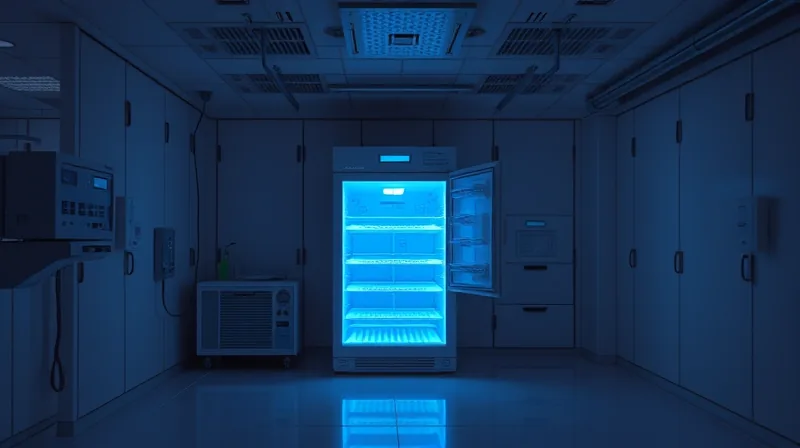
The lab at MIT runs through the night without anyone watching it. A machine, cooled to near absolute zero, holds a chip with artificial atoms that must be measured thousands of times before they can be trusted. The person who used to sit at the console, adjusting parameters and interpreting noisy signals, is somewhere else now — designing the next experiment, reading papers, or simply sleeping. The agent that replaced her at the bench does not understand quantum mechanics. It does not need to. It only needs to follow the workflow she taught it, and that has proven to be enough. Source: OpenAI
The Disappearing Middle
Graduate student Beatriz Yankelevich spent months learning a craft that is now being automated out from under her feet. [1] The craft is qubit calibration, a tedious but delicate sequence of interdependent measurements that determines how a quantum processor behaves. Every chip that comes out of the fabrication line must be characterized, and each characterization takes days of careful, adaptive work. The skill required is real: knowing when a signal is weak, when the hardware has drifted, when to re-tune a pulse sequence. It is exactly the kind of knowledge that experienced researchers accumulate over years, and exactly the kind of knowledge that turns out to be transferable to a machine. Source: OpenAI
What Yankelevich discovered is that the transfer is nearly complete. Using an AI agent connected to Codex, she handed over the entire routine calibration process to a system that runs measurements, analyzes results, and decides what to try next. [1] The agent operates the hardware, reads the data, and refines its approach without human intervention. When signals are clear, it completes standard sequences flawlessly. The researcher becomes a supervisor who checks in occasionally, not a practitioner who performs the work. The distinction matters because it signals a shift in what it means to be a scientist at the bench. Source: OpenAI
The historical pattern here is uncomfortable to acknowledge. Every field has its apprenticeship model, where newcomers learn by doing the repetitive work that experts have outgrown. In experimental physics, that meant spending weeks on calibration runs, developing an intuition for the equipment that no textbook could provide. The intuition was the hidden curriculum, the real education beneath the official one. When an AI agent takes over the routine measurements, it also takes over the opportunity to develop that intuition. The question becomes whether the next generation of scientists will understand their instruments the way their predecessors did, or whether they will become managers of tools they never fully mastered. Source: OpenAI
The Tyranny of the Measurable
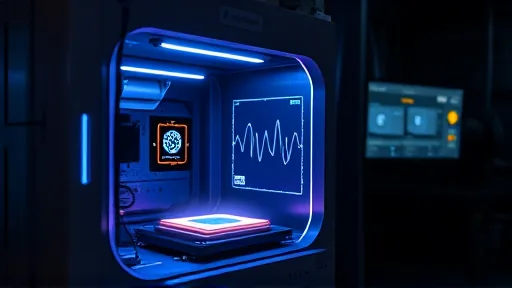
The superconducting qubits that Yankelevich works with are called artificial atoms because they mimic the discrete energy levels of real ones. Microwave pulses move them between states, and the returning signals reveal their properties. The calibration process is a chain of dependent measurements, where each result determines the parameters of the next. Experienced researchers develop a feel for when the chain is broken, when the physics has shifted in ways that the software does not expect. They recognize the difference between a noisy signal and a meaningful anomaly, between a hardware problem and a physical phenomenon. Source: OpenAI
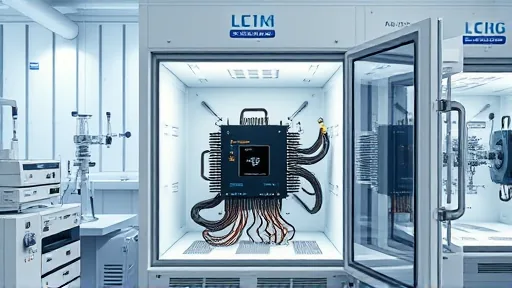
The agent that replaces them has no such feel. It has skills, provided by Yankelevich, that explain how to run and evaluate each experiment. It has the chip’s design targets as a reference. It chooses parameters, operates the hardware, and analyzes the data according to the rules it was given. When the signals are clear, this works beautifully. When they are weak or noisy, the agent struggles, taking longer to find suitable parameters and sometimes requiring guidance. The limitation is not a failure of the technology but a revelation about the nature of the work. The routine parts of calibration are rule-based, and rules can be encoded. The ambiguous parts are judgment-based, and judgment is harder to transfer. Source: OpenAI
The uncomfortable implication is that much of what we call expertise is actually pattern recognition that can be automated. The researcher who can look at a noisy spectrum and know immediately that the qubit has drifted is drawing on thousands of hours of exposure to similar spectra. That exposure can be digitized, encoded, and reproduced in a model. The tacit knowledge that Michael Polanyi described, the knowledge that we have but cannot articulate, turns out to be more articulable than we thought — if we have the patience to extract it. Source: OpenAI What the AI agent does is not magic. It is the systematic codification of a human skill, made explicit and repeatable. Source: OpenAI
The Division of Labor, Redrawn
The EQuS group now regularly uses agents for routine chip characterization, a task that once consumed days of researcher time. Yankelevich can run agents overnight while she works in the cleanroom or sleeps. She checks in from her phone, reviews what they have done, and steers them when something needs fixing. The immediate benefit is obvious: experiments progress without constant supervision, and researchers focus on higher-level work. The less obvious cost is that the researchers are no longer the ones who know the machine intimately. They know what they want the machine to do, and they know how to direct the agents that make it happen. But the tactile relationship with the instrument, the sense of its quirks and moods, is mediated now. Source: OpenAI
Yankelevich has built infrastructure to guide agents through measurement, theory, and chip design. She can have multiple agents working on different problems simultaneously, each pursuing its narrow goal while she focuses on interpretation, experiment design, and planning. This is the new division of labor in experimental science: humans set directions, agents execute routines, and the boundary between the two shifts constantly. What was once a single role, the bench scientist who does both, has split into two roles. The question is which role will be considered the real job, and which will be seen as the support work that anyone — or anything — can do. Source: OpenAI
The pattern is not unique to quantum computing. Every field that involves routine measurement, calibration, or monitoring is facing the same shift. The pathologist who screens slides, the quality control engineer who tests batches, the astronomer who calibrates telescope images — all of them are discovering that their skills can be encoded and automated. The work that defined their professional identity, the work they spent years learning to do well, is becoming the work that machines do instead. The compensation is that they can now spend more time on the parts of their job that require creativity and judgment. The cost is that the creativity and judgment are built on a foundation of routine experience that new practitioners will no longer have. Source: OpenAI
The Lost Apprenticeship
There was a time when learning experimental physics meant spending hours in the lab, watching the equipment, developing an instinct for when something was wrong. The graduate student who calibrated qubits for days was not just collecting data. She was learning to hear the machine, to notice the subtle signs that indicated a problem before it became catastrophic. This apprenticeship was inefficient, but it produced scientists who understood their instruments at a level that no manual could capture. They knew the equipment the way a musician knows an instrument, with a familiarity that transcends intellectual understanding. Source: OpenAI
The AI agent that now runs those calibrations has no such understanding. It has rules and skills, and it applies them consistently. It does not have hunches or intuitions, and it does not develop them through experience. When something unexpected happens, when the physics does not match the model, the agent cannot recognize the novelty. It needs a human to notice that the pattern has broken and to decide what it means. The researchers who supervise these agents are becoming experts at noticing when the agents are confused, at recognizing the signs that something needs human attention. This is a new skill, but it is not the same skill as the one it replaces. Source: OpenAI
The danger is that the new skill will not be enough. The researcher who never calibrated a qubit by hand, who never spent days developing an intuition for the machine, may not recognize the subtle anomalies that indicate a fundamental problem. The agent can handle the routine cases, but the interesting cases are almost always the anomalous ones. The history of science is full of discoveries that came from noticing that something did not fit, that the expected pattern was broken. If the next generation of scientists delegates the routine work to agents, they may lose the opportunity to notice the unexpected. The agents will run the experiments, but they will not be surprised by the results. Source: OpenAI
What the Machine Cannot Name
The most revealing moment in Yankelevich’s account is when she describes checking in on her agents from her phone. She can see what they have done, steer them if something needs fixing, or explore a different direction. The agents are working while she is elsewhere, making progress on problems that once required her full attention. This is the promise of AI in the laboratory: not replacing the scientist but multiplying her, allowing her to be in several places at once, to pursue multiple lines of inquiry simultaneously. The researcher becomes a conductor, directing an orchestra of agents that each play their part. Source: OpenAI
But there is a subtle loss in this arrangement. The scientist who directs agents from her phone is not the same scientist who would have sat at the bench, watching the data stream in real time. The distance changes the relationship. She sees the results, but she does not see the process. She knows what the agents did, but she does not know how it felt to do it. The embodied knowledge, the sense of the machine that comes from being physically present, is gone. The question is whether that knowledge matters, whether it contributes to the scientific enterprise in ways that cannot be measured. Source: OpenAI
The history of experimental science suggests that it does matter. The great experimentalists were not just people who designed clever experiments. They were people who knew their equipment intimately, who could feel when something was wrong, who had an almost physical relationship with their instruments. This knowledge was not articulable, which is why it could not be written down or taught explicitly. It was acquired through hours of practice, through the kind of repetitive work that AI agents now perform. If that work is automated, the knowledge may disappear with it. The next generation of scientists may be more efficient, but they may also be more disconnected from the physical reality they study. Source: OpenAI
The Efficiency Paradox
The argument for AI agents in the laboratory is compelling. They work around the clock, they do not get tired, they do not make careless mistakes. They can run hundreds of measurements while a human sleeps, and they can do it consistently. The efficiency gains are real, and they are not trivial. A task that once took a researcher several days can now be completed overnight. The group at MIT has embraced this, using agents routinely to handle the characterization of standard chips. The researchers are freed to do more interesting work, and the science progresses faster. Source: OpenAI
The paradox is that this efficiency may come at the cost of the very skills that make good experimentalists. The routine work was not just a burden to be eliminated. It was a training ground, a place where young scientists learned the craft. The graduate student who spent days calibrating qubits was not wasting time. She was building the foundation for her future work, developing the intuition and judgment that would allow her to design novel experiments and interpret ambiguous results. If that training is automated away, the foundation may never be built. The scientists of the future may be excellent at directing agents, but they may lack the deep understanding that comes from hands-on practice. Source: OpenAI
The comparison that illuminates this is the relationship between a pilot and an autopilot. Modern aircraft can fly themselves, but pilots still train extensively in manual flight. They do this not because they will need to fly manually on every trip, but because the manual training gives them an understanding of the aircraft that they need when the automated systems fail. The same logic applies to experimental science. The AI agents can run the routine measurements, but the researchers need to understand what the agents are doing, to be able to step in when something goes wrong. The question is whether they can develop that understanding without doing the routine work themselves. Source: OpenAI
The Unseen Curriculum
Yankelevich’s experience suggests that the answer is complicated. She has built the infrastructure that allows agents to work on her problems, and she has learned to direct them effectively. She is not a passive observer of the automation. She is actively shaping it, teaching the agents what to do, and learning from their successes and failures. The relationship is collaborative, not replacement. The agents extend her reach, allowing her to tackle more problems than she could alone. They do not make her superfluous. They make her more productive. Source: OpenAI
But this is the experience of someone who already has the skills that the agents are automating. Yankelevich learned to calibrate qubits before she taught the agents to do it. She knows what the measurements mean, and she can recognize when the agents are confused. The question is what happens to the next graduate student, the one who joins the group after the agents are already in place. Will that student learn to calibrate qubits by hand, or will she learn to direct the agents that do it? Will she develop the deep understanding that comes from hands-on practice, or will she become a manager of automated tools, skilled in directing but not in doing? Source: OpenAI
The answer is not clear, and it may not be the same for everyone. Some students will seek out the hands-on experience, recognizing that it is valuable even if it is not necessary. Others will accept the automation as the new normal, focusing on the higher-level skills that the agents cannot provide. The outcome will depend on the culture of the field, on whether the apprenticeship model is preserved alongside the automation. The technology does not determine this. The choices of the people who use it do. The question is whether they will make the choices that preserve the best of both worlds, or whether they will sacrifice the unseen curriculum for the sake of efficiency. Source: OpenAI
The Measure of a Scientist
The shift that Yankelevich describes is not just about quantum computing. It is about the nature of expertise in a world where machines can learn the routine parts of any job. The bench scientist who calibrated qubits was doing work that was essential but not creative. The work was necessary for the science to proceed, but it was not the science itself. The science was the design of the experiment, the interpretation of the results, the decision about what to try next. The calibration was the support work, the preparation that made the science possible. Source: OpenAI
The automation of that support work is not a tragedy. It is an opportunity to focus on what matters, to spend more time on the creative parts of science and less on the repetitive parts. But it is also a challenge, because it raises the question of what we value in scientists. If the routine work can be done by machines, then the value of a scientist lies in the parts that cannot be automated. The design of novel experiments, the interpretation of ambiguous results, the recognition of unexpected patterns — these are the skills that will matter in the future. The question is whether they can be developed without the foundation of routine practice. Source: OpenAI
The researchers at MIT are navigating this transition in real time. They are using the agents to handle the routine measurements, and they are spending their time on the higher-level work. They are not resisting the automation, and they are not being replaced by it. They are using it to become better scientists, to do more interesting work, to push the boundaries of what is possible. The agents are tools, and the researchers are the ones who wield them. The relationship is not adversarial. It is collaborative. Source: OpenAI
The Future Without the Bench
The lab at MIT will continue to run through the night, with agents measuring qubits and refining their parameters. The researchers will check in from their phones, steering the agents when needed and reviewing their results. The routine work will be automated, and the researchers will focus on the creative work that only humans can do. This is the future of experimental science, and it is not necessarily worse than the past. It is different, and the difference brings both gains and losses. Source: OpenAI
The gains are clear: more experiments can be run, more data can be collected, more problems can be tackled. The losses are subtler: the loss of the apprenticeship experience, the loss of the embodied knowledge that comes from hands-on practice, the loss of the intimate relationship between the scientist and the instrument. These losses are real, but they are not inevitable. They depend on the choices that the scientific community makes about how to use the new tools. If the community values the unseen curriculum, it will find ways to preserve it. If it values only efficiency, it will let it go. Source: OpenAI
The comparison that shows what would be possible, if different choices had been made, is the comparison between the scientist who calibrates qubits and the scientist who directs the agents that do it. The first scientist knows the machine intimately, has a feel for its behavior, can recognize when something is wrong. The second scientist is more productive, can run more experiments, can focus on the creative parts of science. The ideal would be a scientist who is both, who has the deep understanding and the ability to leverage the automation. Whether that ideal is achievable depends on whether the scientific community is willing to invest in both kinds of training, to preserve the apprenticeship while embracing the automation. The technology is ready. Whether the scientific community is ready to preserve the apprenticeship alongside it is a choice it has not yet made. Source: OpenAI
Sources
1. MIT