
Children Teach Us What We Forgot About Trust
Meta commentary - no external expert source; basis: Rss.arxiv (2026-09-24). #MetaSynapsis
In 1961, Stanley Milgram ran an experiment at Yale that still unsettles us. Ordinary people, told by a figure in a lab coat to administer what they believed were painful electric shocks to a stranger, kept pressing the button. Most of them. The lesson everyone took was about obedience to authority. The lesson almost everyone missed was about calibration: none of those subjects had any way to check whether the authority deserved the trust they granted it. They had no instrument, no feedback, no moment of verification. They simply assumed.
We are building the same trap again, this time with chatbots, and this time for eight-year-olds.
The design question nobody asked the children
A study by Deniz Ozturk and eleven co-authors, published on arXiv in September 2025, does something quietly radical. Ozturk et al., 2025 They did not ask children to rate a chatbot someone else had built. They handed the children the tools and asked them to build one. The environment let kids adjust the traits that determine whether you should trust a system: how confident it sounds, how transparent it is about its limits, how formal, how assertive. Then it let them set rules and a persona. The children were not test subjects evaluating a product. They were designers making decisions about what trustworthiness should look like.
That inversion matters more than the findings. Every previous study of children and AI positioned the child as a consumer, a user, someone on the receiving end of decisions made in conference rooms they will never enter. The child was the object of the design. Here the child is the author of it. And when you make a child the author, you find out what they actually believe about trust — not what they have been trained to say about it.
They reasoned about confidence and transparency as levers, not as decorations. They understood, in their own vocabulary, that a chatbot which never admits uncertainty is not a helpful chatbot. It is a confident one. The gap between those two words is where the whole problem lives.
What we outsourced and did not notice
Adults have been quietly delegating calibration to the systems themselves. A recommendation engine decides what is relevant. A ranking algorithm decides what is credible. A language model decides what sounds authoritative. At each step, the human judgment that used to sit between information and belief has been removed, not because anyone argued it should be, but because the replacement was convenient and the removal was invisible.
This is the specific way AI makes a human skill superfluous: not by doing the task better, but by doing it so smoothly that the task stops being recognized as a task. Nobody fires the fact-checker. The fact-checker’s job just stops appearing on the org chart. Nobody tells you to stop asking “how would I know if this were wrong?” The question simply never comes up, because the answer arrives pre-packaged with the confidence of a system that has no stake in being right.
Milgram’s subjects were not cruel. They were uncalibrated. They had been placed in a situation where the machinery of trust ran without a single checkpoint, and they did what uncalibrated people do. We have now built that situation into the daily infrastructure of childhood, and we have done it while calling it education, entertainment, and assistance.
Why this cannot be patched
The obvious response is technical: build better transparency features, add uncertainty indicators, train models to say “I don’t know.” This is the response that gets funded, because it is the response that fits inside a product roadmap. It is also the response that misses what the children in Ozturk’s study were actually doing.
The children were not asking for a better dashboard. They were making judgments about character. When a child decides how confident a chatbot should sound, they are not tuning a parameter. They are asking what kind of entity they are talking to, and whether that entity deserves the thing they are about to give it. That question is not a feature. It is an ethical act, and it cannot be automated, because the moment you automate it, you have removed the human from the only position where the judgment has meaning.
A system that tells you when to trust it has already decided the question for you. A system that shows you a confidence score has already chosen the scale. The design of trustworthiness is a moral design, and moral design done by a vendor on behalf of a user is not moral design. It is moral outsourcing. The children, given the levers, did the work themselves. That is the finding.
The thing the children understood
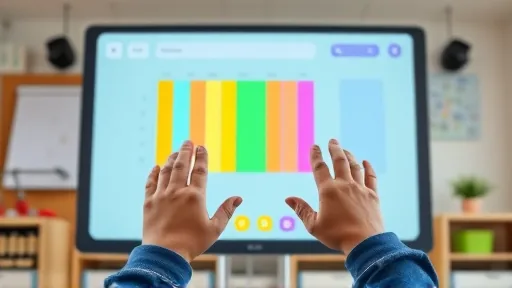
Ask a child to build a chatbot that should be trusted, and watch what they do with the confidence dial. They do not max it out. They do not treat certainty as a virtue. They treat it as a cost, something you spend when you have reason to, something that becomes suspicious when it is free.
Adults have been trained out of this. We have spent two decades in environments where confidence is the default setting and hesitation reads as weakness — in search results, in feeds, in the voices that answer our questions without ever saying “I am not sure.” The children have not yet learned that the confident answer is the one you are supposed to accept. They are still asking the Milgram question, the one the subjects never got to ask: how would I know if this were wrong?
The study does not tell us to hand children more chatbots. It tells us something harder. Ozturk et al., 2025 The skill we are making superfluous — the willingness to interrogate the authority in front of us — is the skill we are least able to replace. We can build a system that sounds trustworthy in an afternoon. We cannot build a person who knows when to withhold trust, because that person has to be raised, and the raising happens in the same rooms where the screens are.
They were doing the work we have stopped doing. The question is whether we notice before they stop too.